





What is the Solstice, Exactly?
Beyond just being the 'longest day', the summer solstice is a precise astronomical moment. The word 'solstice' comes from the Latin solstitium, which means 'sun stands still'. This is because, on this day, the sun appears to halt its northward journey
across our sky before beginning its slow creep back south. For the Northern Hemisphere, it marks the point when the sun reaches its highest and northernmost position for the entire year. It’s the official start of astronomical summer, a peak of solar energy and daylight that ushers in the warmest season.
The Planet's Elegant Tilt
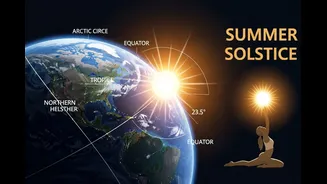
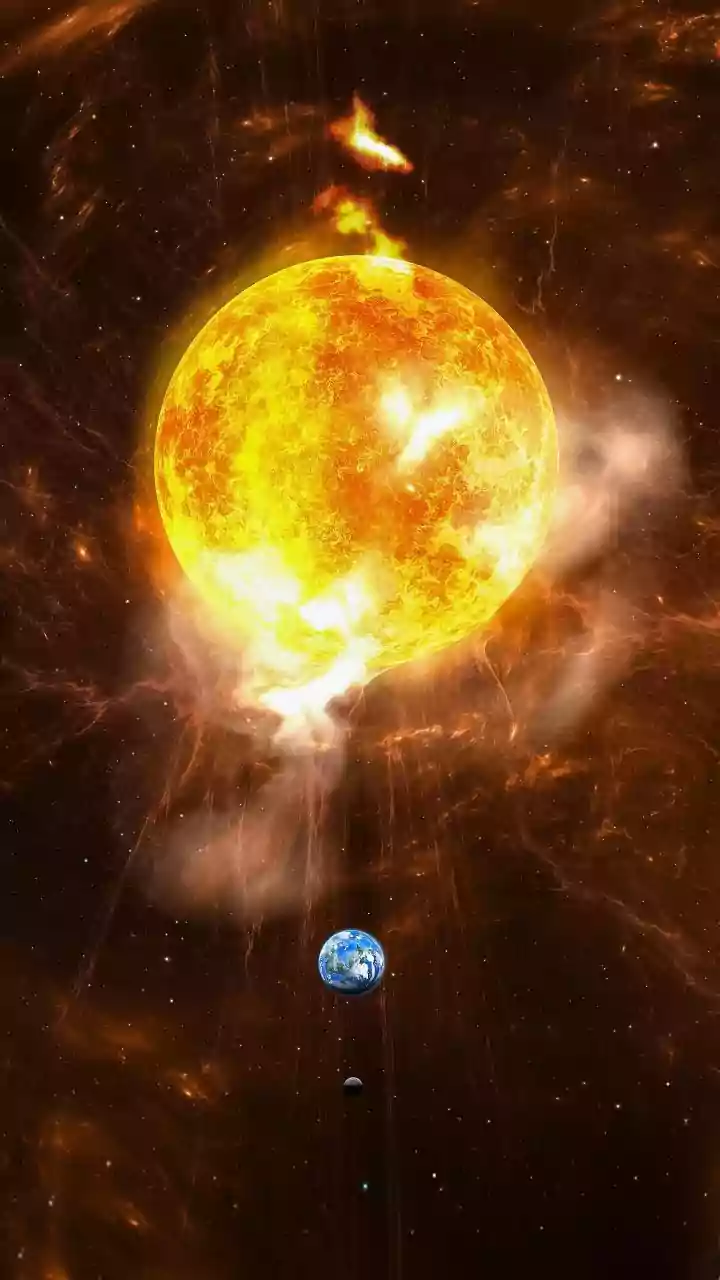
The secret behind the solstice isn't about the Earth's distance from the sun—in fact, we're actually further from the sun during the Northern Hemisphere's summer. The real magic is in our planet's tilt. Earth spins on an axis that is tilted at approximately 23.5 degrees. Think of it like a spinning top that isn’t perfectly upright. As our planet makes its year-long journey around the sun, this tilt means different parts of the globe receive more direct sunlight at different times. Around June 21, the Northern Hemisphere is tilted most directly towards the sun. This orientation means the sun's rays hit us at a more direct angle and for a longer period, giving us our longest day and the warmth of summer.
A Solstice Experience Across India
While the entire Northern Hemisphere enjoys its longest day, the experience varies with latitude. In India, this means cities further north will see a noticeably longer day than those in the south. For example, on the solstice, a city like Delhi or Chandigarh might experience over 14 hours of daylight. In contrast, a southern city like Bengaluru or Chennai will have a day that is shorter, though still the longest of its year, at around 13 hours. This geographic reality is a direct consequence of the Earth's curve and its tilt. The further north you are from the equator, the more pronounced the effect of the summer solstice becomes.
The Sun’s Highest Arc
Another 'geometric reality' you can observe is the sun's path across the sky. On the solstice, it traces its highest and longest arc. At solar noon, the sun will be at its highest point in the sky for the year. For most of India, which lies north of the Tropic of Cancer, the sun will still be slightly to the south even at its peak. However, for places situated directly on the Tropic of Cancer (which passes through states like Gujarat, Madhya Pradesh, and West Bengal), the sun will be almost directly overhead at noon, casting minimal shadows. This celestial alignment has fascinated astronomers for millennia.
How to 'Celebrate' the Extra Daylight
So, how can you 'celebrate' this astronomical event? You don’t need a grand ritual. The best way is to simply acknowledge and enjoy the extra light. Plan an evening walk after work and notice how late the sky stays bright. Have dinner outdoors, on a balcony or in a park. It’s a perfect day for sunset photography, as the 'golden hour' lasts just a little bit longer. Or you can simply pause for a moment to appreciate this quiet, predictable, and beautiful rhythm of our solar system. It’s a celebration of light, warmth, and the simple fact that we live on a tilted, spinning planet hurtling through space.