





114 vs Australia, Perth, 1992: The Boy Who Stood on Burning Deck
Long before the world bowed to the Master Blaster, an 18-year-old Tendulkar announced his genius on the world's fastest and bounciest pitch. In 1992, on a WACA ground in Perth known for its treacherous cracks and hostile pace, India's batting line-up
had crumbled against a formidable Australian attack. But a teenaged Tendulkar produced a masterclass of 114 runs. It was an innings of stunning audacity and technical perfection, filled with crisp cuts and punches against bowlers like Craig McDermott and Merv Hughes. While India lost the match by 300 runs, Tendulkar’s century was a statement of defiance. He later said this knock gave him the confidence that he could score runs anywhere in the world, against any attack. It wasn't just a hundred; it was the birth of a legend.
143 vs Australia, Sharjah, 1998: The Desert Storm
This innings is part of cricket folklore. In the blistering Sharjah heat, India needed to chase a daunting target set by Australia to qualify for the Coca-Cola Cup final. A literal sandstorm interrupted play, revising the target to 276 in 46 overs. What followed was a cricketing storm unleashed by Tendulkar. He launched a brutal assault on an attack featuring Shane Warne, Damien Fleming, and Michael Kasprowicz. His 143 off 131 balls was an innings of pure aggression and dominance. He didn't win the match for India, but his knock single-handedly dragged the team past the required net run rate to secure a place in the final. Two days later, on his birthday, he would score another century to win the trophy, but the 'Desert Storm' remains his most iconic ODI onslaught.
136 vs Pakistan, Chennai, 1999: The Tragic Masterpiece
Greatness isn't only about victory; it's also about courage in heartbreak. Chasing 271 to win a tense Test match against Pakistan, India collapsed to 82 for 5. Tendulkar, battling severe back spasms, waged a lone war against a world-class attack featuring Wasim Akram, Waqar Younis, and Saqlain Mushtaq. He masterfully shielded the tail-enders and constructed a brilliant 136, taking India to the brink of a historic win. With just 17 runs needed, a tired shot led to his dismissal. The crowd gave him a standing ovation, but the hope was gone. India's last three wickets fell for just four runs, and they lost by 12 runs. Tendulkar was so devastated he didn't come out for the Man of the Match award, but the innings remains a testament to his incredible grit under immense pain and pressure.
241 vs Australia, Sydney, 2004: The Zen-Like Monk
Before this innings, Tendulkar was in a rare slump, repeatedly getting out to his favourite shot: the cover drive. In the final Test of the series at Sydney, he decided to completely eliminate the stroke from his game. What resulted was an extraordinary display of mental discipline. For over 10 hours, he batted without playing a single cover drive, frustrating a world-class Australian attack. He compiled an unbeaten 241, an innings of supreme patience and self-denial that powered India to a massive total of 705. The match ended in a draw, securing a 1-1 series result for India on Australian soil. This knock was not about domination but about mind over matter, proving Tendulkar could conquer not just bowlers, but his own instincts.
200 vs South Africa, Gwalior, 2010: The ODI Everest
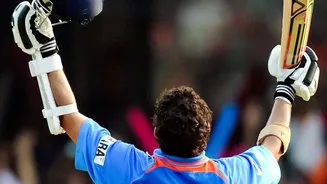
For nearly four decades of one-day international cricket, a double century was a mythical barrier. On February 24, 2010, Sachin Tendulkar became the first man on the planet to conquer it. Against a potent South African attack including Dale Steyn and Jacques Kallis, the 37-year-old master played an innings that was both elegant and destructive. He pierced the field with 25 boundaries and three sixes, pacing his innings to perfection. As he approached the milestone, the entire stadium and a billion people watching held their breath. A single steered past point in the final over sealed the historic moment. The unbeaten 200 off just 147 balls was not just a record; it was a demonstration that even in the 21st year of his career, Tendulkar was still pushing the boundaries of what was possible in the sport.