




Meet Your New Pantry Staple
First, let's get acquainted with our star ingredient. Moringa, known to many as the drumstick tree, is a plant celebrated for its nutrient-dense leaves. While fresh moringa leaves (murungai keerai, shevaga chi pan) are a staple in many regional cuisines,
they aren't always available. This is where moringa leaf flakes come in. These are simply fresh moringa leaves that have been harvested, washed, and dried at a low temperature to preserve their goodness, then lightly crushed. Think of them as a more potent, shelf-stable version of kasuri methi, ready to be sprinkled into your cooking at a moment's notice. They pack all the benefits of the fresh leaf into a convenient, long-lasting form that’s perfect for the modern Indian pantry.
A Nutritional Power-Up
The reason moringa is often called a 'superfood' lies in its incredible nutritional profile. These tiny green flakes are densely packed with vitamins and minerals. They are an excellent source of Vitamin C, which is crucial for immunity, and Vitamin A, vital for eye health. Furthermore, moringa leaves contain significant amounts of iron, potassium, calcium, and protein. They are also rich in antioxidants, compounds that help protect your body's cells from damage. Adding just a spoonful to your dal is an effortless way to increase your intake of these essential nutrients, turning an already healthy meal into something even more beneficial for your well-being. It’s a simple upgrade that works hard for your health.
What About the Taste?
If you're worried about a strong, overpowering flavour, you can relax. Dried moringa leaf flakes have a mild, earthy, and slightly grassy taste, often compared to spinach or matcha green tea. When added to a flavourful dal, this taste doesn't compete with the spices; it complements them. The moringa adds a subtle, savoury depth that enhances the overall flavour profile of the lentils. It lends a 'green' note that makes the stew taste fresher and more complex, without announcing its presence too loudly. For most people, the change in taste is minimal and pleasant, blending seamlessly into the familiar comfort of a well-made dal.
The Hack: Timing Is Everything
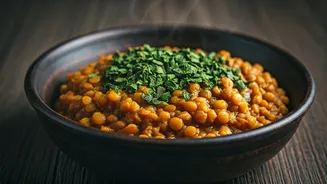
Here is the most crucial part of the hack: *when* to add the flakes. Many of moringa's valuable nutrients, especially vitamins like C, are sensitive to heat. If you add the flakes while the dal is still bubbling away on the stove, you risk boiling away a lot of its goodness. The best method is to finish cooking your dal as you normally would. Prepare your tadka, let the lentils simmer, and get the consistency just right. Then, turn off the heat. Just before serving, stir a teaspoon or two of the moringa leaf flakes directly into the pot. The residual heat of the dal is enough to rehydrate the flakes and release their flavour and nutrients without destroying them. Stir, let it sit for a minute, and then serve. That's it.
Perfect Pairings and Other Ideas
This hack works beautifully with almost any lentil stew. It’s especially good in simple dals like toor (arhar) dal, masoor dal, or moong dal, where its subtle earthiness can shine. In more robust dals like dal makhani or sambar, you might want to add a little extra, but the principle remains the same. But don't stop at lentils! Once you have a jar of moringa flakes in your kitchen, you can start experimenting. Stir them into sabzis and vegetable curries at the end of cooking. Blend them into your morning smoothie for a hidden nutrient boost. You can even knead a spoonful into your roti or paratha dough to infuse your daily bread with extra vitamins. It’s one of the most versatile and healthy ingredients you can keep on hand.