








The Problem with Temperature
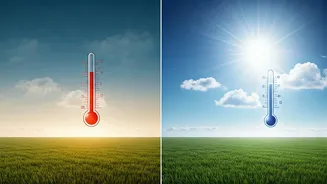
Relying only on the air temperature is like trying to understand a movie by watching only one scene. It provides a piece of information but lacks critical context. When you exercise, your body generates heat. To cool down, it pumps blood to the skin and,
most importantly, sweats. The effectiveness of this natural cooling system isn't just dependent on how hot the air is; it's dramatically affected by other atmospheric conditions that a simple thermometer can't measure.
It’s Not the Heat, It’s the Humidity
The phrase is a classic for a reason: it's true. Humidity, or the amount of moisture in the air, is a crucial factor. Your body cools itself when sweat evaporates from your skin. But when the air is already saturated with moisture, that evaporation process slows down dramatically or even stops. This means your body can't cool itself effectively, causing your core temperature to rise and putting you at a greater risk of heat exhaustion and heat stroke. This is why weather forecasts often provide a "heat index" or "feels like" temperature, which combines air temperature and humidity to give a more accurate sense of the heat stress on your body.
When the Air Itself Is a Risk
Another invisible threat is poor air quality. The Air Quality Index (AQI) measures major pollutants in the air, including ozone and particulate matter. When you exercise, your breathing rate increases, meaning you inhale a greater volume of these harmful pollutants. This can lead to a tight chest, coughing, and labored breathing, and can be especially dangerous for children, older adults, and anyone with existing heart or lung conditions. As a general rule, an AQI below 100 is considered safe for most people, but when it climbs higher, it's wise to reduce the intensity of your workout or move it indoors.
The Professional’s Metric: WBGT
For a truly comprehensive assessment, many sports organizations and the military use the Wet Bulb Globe Temperature (WBGT). This metric is more advanced than the heat index because it accounts for temperature, humidity, wind speed, sun angle, and cloud cover (solar radiation). It measures how heat and humidity affect sweat evaporation, how much heat is being absorbed from direct sunlight, and the ambient air temperature. While most people don't need to calculate WBGT for a casual jog, its use by professionals highlights just how seriously environmental factors are taken for ensuring safety during strenuous activity in the heat.
Sun, Wind, and Personal Factors
Beyond the major metrics, other elements play a role. Direct sun exposure can increase the heat stress on your body by up to 15°F compared to exercising in the shade. In cold weather, wind chill can dramatically increase the risk of frostbite and hypothermia. You should also consider personal factors. Things like your current fitness level, how acclimated you are to the conditions, hydration status, and even medications you're taking can all influence how your body responds to environmental stress. Gradually increasing your workout intensity over one to two weeks can help your body adapt to hotter weather.