




Why Your AC Is a Fern’s Worst Enemy
Ferns are living relics of ancient, damp forests. They thrive in environments with high humidity, where the air is thick with moisture. Popular indoor varieties like the Boston fern, Maidenhair fern, and Bird’s Nest fern all share this love for a humid atmosphere.
Your air conditioner, however, is designed to do the exact opposite. As it cools the air in your home, it also pulls moisture out of it, drastically lowering the ambient humidity. For a fern, this is like being stranded in a desert. The dry air causes moisture to evaporate rapidly from their delicate fronds, leading to brown, crispy edges, wilting, and eventual decline. You might try to compensate by watering more frequently, but this often leads to a different problem: root rot from waterlogged soil, while the leaves above remain parched. The core issue isn't a lack of water in the soil, but a lack of moisture in the air.
The Self-Watering Pot Solution
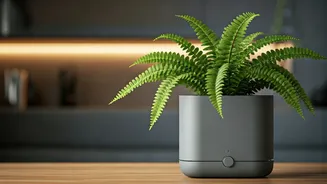
This is where a self-watering pot becomes a game-changer. These clever containers are designed with a built-in water reservoir at the bottom and a wicking system (often a fabric rope or a porous potting mix) that draws water up into the soil as needed. This creates a consistently moist, but not soggy, soil environment. By providing a steady, reliable source of hydration from below, the pot helps counteract the rapid moisture loss caused by the dry, air-conditioned environment. The plant can 'drink' at its own pace, ensuring its roots get exactly the amount of water required to stay healthy. This steady supply helps the fern remain turgid and resilient, even when the air around it is less than ideal. It’s a low-maintenance solution that mimics the constant dampness of a forest floor, reducing your watering chores and, more importantly, saving your plant from the stresses of a feast-or-famine watering cycle.
A Step-by-Step Guide to Repotting
Moving your delicate fern requires a gentle touch. First, choose a self-watering pot that is only slightly larger than the current one—about 1-2 inches wider in diameter. A pot that is too large can hold excess soil and water, increasing the risk of root rot. Before you start, water your fern thoroughly a few hours in advance to reduce transplant shock. To repot, prepare the new self-watering pot by setting up the wicking system according to its instructions. Add a layer of high-quality, well-draining potting mix. Gently squeeze the sides of the fern's current pot to loosen it, then turn it sideways and carefully slide the plant out, supporting the base. Avoid pulling it by its fronds. Inspect the root ball, gently teasing out any tightly bound roots, but be careful not to disturb them too much. Place the fern into the new pot, ensuring it sits at the same depth it was in its original container. Fill in the gaps with fresh potting mix, patting it down lightly. Do not compact the soil, as this can hinder the wicking action. Finally, fill the reservoir and give the topsoil a light initial watering to help it settle and activate the wicking process.
Care and Maintenance After the Move
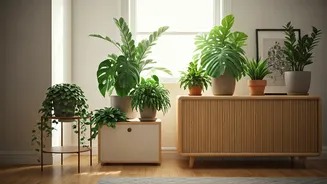
For the first few weeks, your job is to observe. Keep the water reservoir topped up, but don't let the plant sit in a full reservoir indefinitely. Most pots have an indicator to show the water level. The top layer of the soil should feel slightly dry to the touch, while the lower layers remain moist thanks to the wick. This is normal and healthy. Resist the urge to top-water unless the soil becomes completely bone-dry. The self-watering system is designed to handle the hydration. To give your fern an extra boost of happiness, continue to mist its fronds every few days. This provides the topical humidity that the AC strips away and complements the work the pot is doing at the root level. Grouping it with other plants can also help create a small microclimate with slightly higher humidity. With this setup, your fern will be much better equipped to handle the indoor climate, and you’ll spend less time worrying and more time enjoying its lush, green beauty.