





An Inheritance of Living Architecture
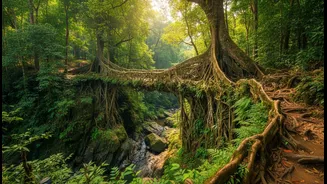
For centuries, the Khasi and Jaintia peoples of Meghalaya have cultivated a unique solution to crossing the region's ferocious, rain-swollen rivers: living root bridges. Known locally as ‘Jingkieng Jri’, these are not built structures but guided ecosystems.
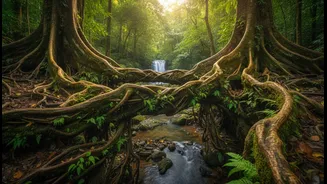
The aerial roots of the Ficus elastica, or rubber tree, are patiently woven and guided across streams, often using bamboo scaffolding. Over 15 to 25 years, these roots grow, thicken, and intertwine to form a sturdy, living suspension bridge that gets stronger with time and can last for centuries. These bridges are more than just crossings; they are a symbol of a profound harmony between humans and nature, a philosophy of sustainable existence that is woven into the Khasi way of life. They connect remote villages, enabling access to farms, schools, and markets in some of the world's most challenging terrain.
Modern Pressures on Ancient Structures
Despite their resilience, these bio-engineered marvels face unprecedented threats. The allure of modern, concrete-and-steel infrastructure often leads to the neglect and abandonment of the traditional root bridges. As older trails fall into disuse, so does the communal knowledge and effort required for their upkeep. Furthermore, a surge in tourism, while economically beneficial, has brought its own set of problems. Unregulated footfall weakens the delicate structures, and misguided construction of concrete supports near the bridges can damage the very root systems that give them life. Climate change also looms as a threat, with erratic rainfall and increased flooding potentially damaging the bridges and the trees themselves. Accidental fires and deforestation add to the list of dangers threatening to erase this unique cultural practice.
A New Generation of Guardians
In response to these challenges, a passionate movement led by local youth has taken root. Individuals like Morningstar Khongthaw have become 'living bridge activists', inspiring their peers to take ownership of their heritage. In 2018, Khongthaw founded the Living Bridge Foundation, a group dedicated to educating the community, especially young people, about the importance of preserving and repairing these structures. These youth-led groups organize expeditions into the forests to carry out maintenance on older bridges, learning the intricate, centuries-old techniques from village elders. They are not just preserving the old but also creating the new, having established the frameworks for several new root bridges, ensuring the tradition continues for generations to come.
Blending Tradition and Modern Solutions
These conservation drives are not simply about looking to the past; they are a dynamic blend of traditional wisdom and modern strategy. Youth groups are actively involved in making tourism sustainable. They work with communities to determine the carrying capacity of each site and develop alternative tourist experiences like cultural events and birdwatching to manage footfall without sacrificing local income. This involves a delicate balance of educating visitors and sometimes implementing regulations to protect the most fragile bridges. The work of these young conservationists is crucial to the ongoing effort to have the living root bridge cultural landscapes recognised as a UNESCO World Heritage Site, a process that began when they were added to the tentative list in 2022.
A Model for the Future
The efforts in Meghalaya are gaining national attention as a powerful model for community-based conservation. Organisations like the Syrwet U Barim Mariang Jingkieng Jri Cooperative Federation Ltd. now bring together dozens of villages to collectively manage their natural resources. This approach has been supported by government bodies like the Meghalaya Basin Development Authority (MBDA) and international organisations like the UNDP, which partner with local institutions rather than replacing them. By establishing learning centres, creating nurseries for native species, and reviving traditional forest trails, these partnerships empower the youth and the wider community. They are proving that ecological preservation and cultural identity can go hand-in-hand, creating a resilient future rooted in ancestral knowledge.