





A Frozen Frontier Beyond Neptune
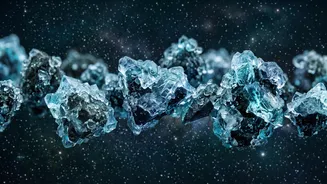
The Kuiper Belt is a vast, doughnut-shaped region of space that begins just past the orbit of Neptune, some 4.5 billion kilometres from the Sun. Often described as a cosmic graveyard of leftovers from the solar system's formation, it is home to millions
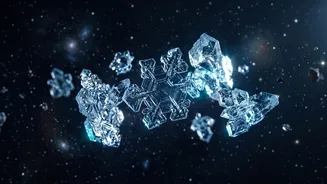
of icy bodies, including dwarf planets like Pluto. For decades, this region was considered a deep-frozen, static museum, preserving materials in the same state they were in 4.6 billion years ago. The objects here are so cold, with temperatures around 50 Kelvin (minus 223 degrees Celsius), that volatile compounds like methane and ammonia exist as solid ice. Because of this, scientists believed these worlds were largely inactive, a stark contrast to the dynamic geology of planets closer to the Sun.
Whispers of Water in Cosmic Dust
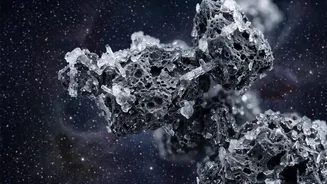
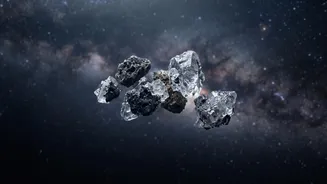
A recent study led by NASA scientist Lindsay Keller analyzed 12 microscopic interplanetary dust particles, each just a fraction of the width of a human hair. These grains were captured by high-altitude aircraft in Earth's stratosphere. Analysis showed that these tiny particles contained clay minerals, such as saponite and serpentine, which can only form when liquid water reacts with rock. This means that the parent bodies these dust grains came from—icy objects in the Kuiper Belt—must have had liquid water inside them at some point in their history. While the Kuiper Belt is frozen solid today, it's possible that heat from radioactive decay within these objects was once enough to melt interior ice, creating transient pockets of liquid water.
Tracing a Grain of Dust Home
But how can scientists be sure these dust particles came from the far-off Kuiper Belt and not the much closer asteroid belt? The answer lies in their 'travel scars'. As dust drifts through space, it's bombarded by energetic particles from the Sun, which leave tiny damage tracks within the minerals. By counting these tracks, scientists can determine how long a grain has been exposed to space. The dust in this study had track densities about 100 times greater than what would be expected for dust originating from the asteroid belt, indicating a much longer journey from the outer solar system. This provided strong evidence that they began their slow, spiraling journey toward the Sun from the icy realm beyond Neptune.
A Different Kind of Water
The discovery was more than just finding evidence of water. The water that formed these minerals was different. The team measured the oxygen locked inside the clays and found it was enriched with 'heavy' oxygen isotopes (oxygen-17 and oxygen-18). This unique chemical signature suggests the water in the Kuiper Belt originated from a primordial reservoir that remained separate and isolated from the materials that mixed and formed the inner solar system. For decades, planetary scientists predicted such a reservoir existed, created when ultraviolet light from the young Sun broke apart carbon monoxide molecules in the primordial nebula, but physical proof was rare. These dust grains provide compelling evidence that this distinct water source not only existed but was a key ingredient in the formation of bodies in the outer solar system.
Rewriting the Story of Our Solar System
This finding fundamentally challenges the old view of the Kuiper Belt as a collection of inert, frozen relics. It suggests a more dynamic history where, deep inside these icy bodies, geological processes were taking place. The presence of liquid water, even for a short time billions of years ago, opens up new possibilities for the chemistry that could have occurred. This is part of a broader shift in understanding, supported by data from NASA's New Horizons mission, which revealed Pluto to be a surprisingly active world, and other studies suggesting geothermal activity on dwarf planets Eris and Makemake. These frigid worlds may be far more complex than we ever imagined, with warm hearts hidden beneath their icy crusts. Understanding these processes helps us piece together the complete story of how our planetary system, including Earth, came to be.