

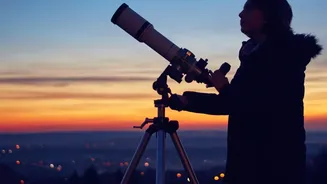


The Challenge of Urban Skies
The biggest hurdle for any city-based stargazer is light pollution. The combined glow from streetlights, buildings, and traffic creates a bright haze called 'skyglow' that washes out all but the brightest celestial objects. While this artificial twilight
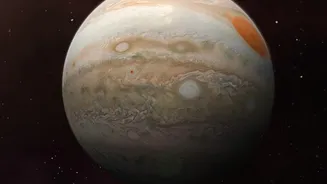
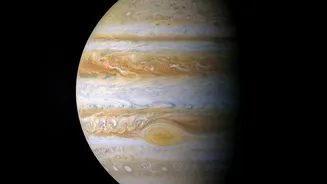
makes it nearly impossible to see faint stars or the Milky Way, it can't completely hide everything. The Moon, and more importantly, the bright planets of our solar system—like Venus, Jupiter, Saturn, and Mars—are often powerful enough to punch through the glare. The trick isn't just about looking up; it's about knowing exactly where and when to look, and how to distinguish a planet from a plane or a distant radio tower.
Your Phone is a Pocket Planetarium
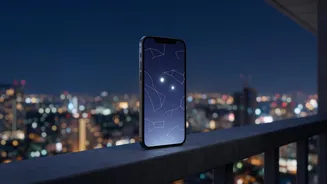
This is where your smartphone becomes an indispensable tool. Modern astronomy apps turn your device into a powerful, portable planetarium that does the hard work for you. Using your phone’s built-in GPS and compass, these apps generate a real-time map of the sky from your exact location. You simply point your phone towards the sky, and the app identifies the stars, constellations, and planets in your field of view. Many use augmented reality (AR) to overlay this information directly onto your camera's view, making identification foolproof.
Key Features for City Stargazers
While many apps are packed with features for professional astronomers, city dwellers should focus on a few key things. Look for an app with a simple, intuitive interface and a strong AR mode. A 'point-to-identify' function is non-negotiable. Another crucial feature is a notification system for celestial events, such as when a bright planet is rising or when the International Space Station is due to pass overhead. Finally, a 'red light' or 'night mode' is essential. This changes the app's interface to a dim red, which helps preserve your night vision and makes it easier for your eyes to adjust to the darkness—even the relative darkness of a city balcony.
Top Apps to Get You Started
The app store can be overwhelming, but a few stand out for their ease of use and powerful free versions. Star Walk 2 is often praised as a great option for beginners, with beautiful graphics and a user-friendly design. SkyView Lite is another excellent, no-frills choice known for its simplicity; just point and identify. For those wanting a bit more depth, Stellarium Mobile offers a huge database of celestial objects even in its free version and is based on a well-respected desktop program. These apps provide more than enough power for a casual user to start identifying planets tonight.
Your First Planet Sighting: A Quick Guide
Ready to try it out? First, find the best possible viewing spot. This could be a park, a rooftop, or even just the darkest corner of your balcony, away from direct streetlights. Let your eyes adjust to the dark for at least 10-15 minutes; avoid looking at your phone or other bright screens during this time. Once adjusted, open your chosen astronomy app. Hold your phone up and slowly scan the sky. The app will highlight any bright objects. Planets often appear as intensely bright 'stars' that, unlike actual stars, do not twinkle. Once the app confirms you're looking at Jupiter or Venus, put the phone down and try to spot it with your own eyes. You'll be surprised how clearly it stands out once you know where it is.