

First, Find the Station
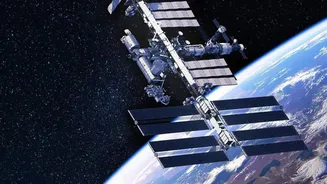
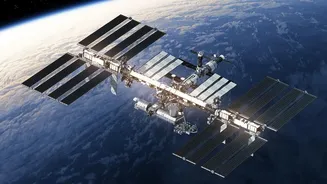
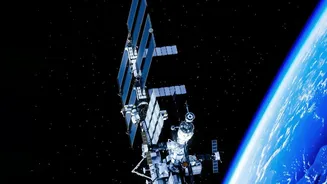
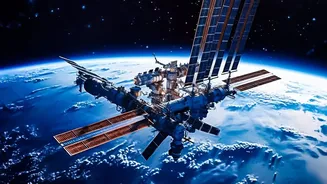
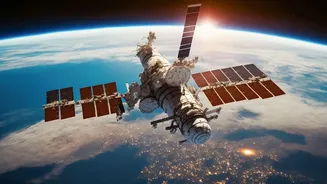
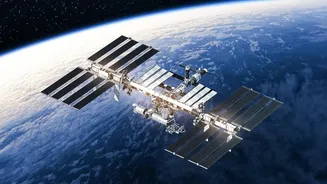
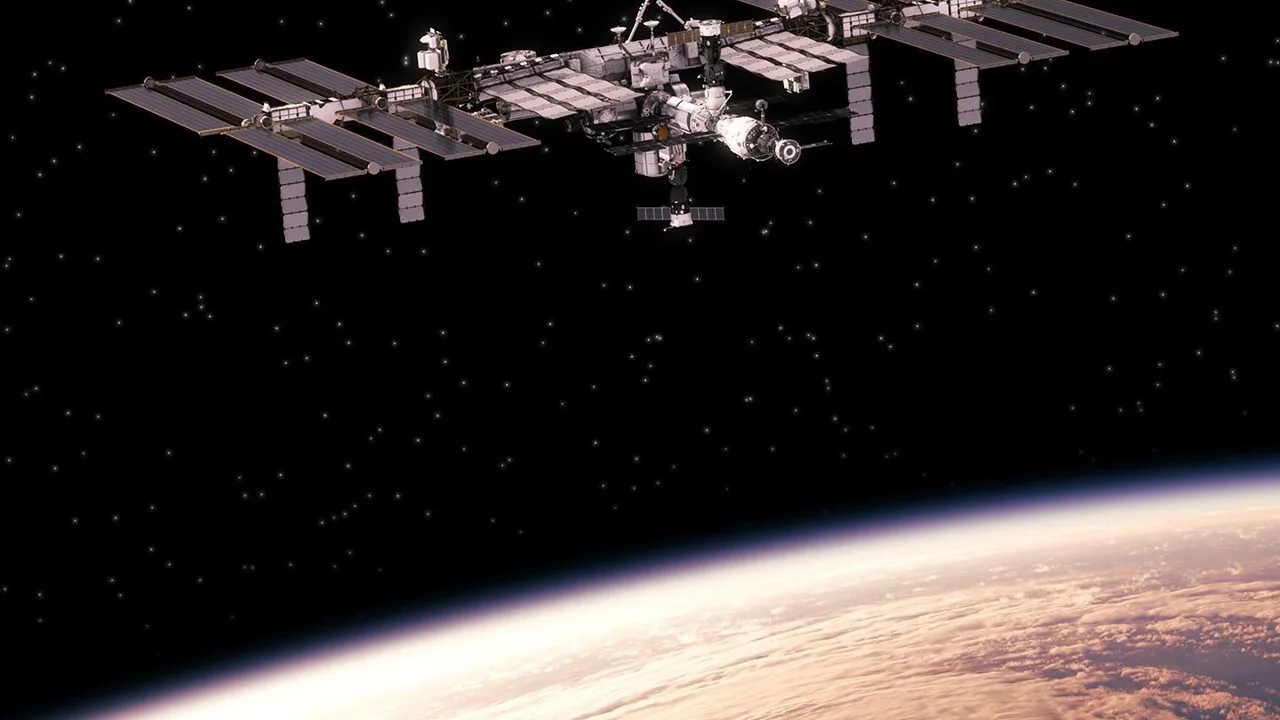
You don't need a telescope to see the International Space Station (ISS); it's visible to the naked eye and can be brighter than any star. The key is knowing when and where to look. NASA's 'Spot The Station' website and mobile app are the gold standard.
Simply enter your location, and it will provide a list of upcoming viewing opportunities, including the exact time, duration, and the path it will take across your sky—for example, from northwest to southeast. These sightings happen within a few hours of sunrise or sunset, when the station, flying at 28,000 kph, is high enough to catch the sun's rays while you're in twilight. Several other free apps can also send you alerts, so you never miss a pass.
The Main Event: What to Expect
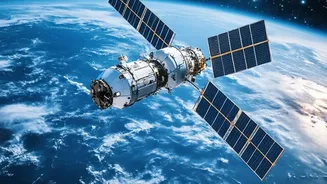
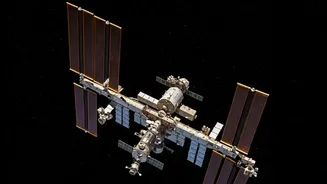
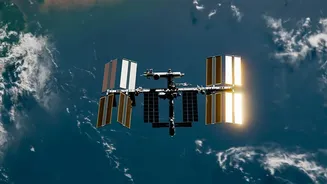
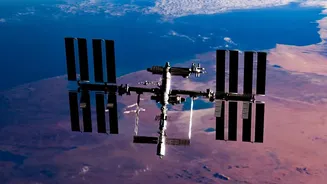
An ISS pass is not a fleeting moment like a shooting star. It can last for several minutes. What you're looking for is a very bright, fast-moving point of light that travels steadily across the sky. Unlike an airplane, it does not have flashing lights. Its brightness comes from sunlight reflecting off its massive solar arrays. Depending on the angle, it can appear as bright as the planet Venus. Find a comfortable spot with a clear view of the horizon, give your eyes a few minutes to adjust to the dark, and watch as this human-made star makes its journey across your field of view before disappearing back into Earth's shadow.
Don't Go Inside Yet
Once the ISS is gone, your night of sky-watching has just begun. Your eyes are already adjusted to the dark, making it the perfect time for more stargazing. You don't need expensive gear. While a good pair of binoculars can reveal stunning details, like the craters of the moon or the moons of Jupiter, your eyes are all you need to start. The biggest hurdle for many is light pollution. If you live in a city, try to find a spot away from direct streetlights, perhaps a park or a rooftop. Hazy skies can amplify city glow, so clear, crisp nights are best for seeing fainter stars. Give your eyes at least 20-30 minutes to fully adapt to the darkness for the best experience.
Connecting the Dots: Easy Constellations
With the ISS as your opening act, turn your attention to the classics. Some constellations are easy for beginners to find. Ursa Major, also known as the Big Dipper, is one of the most recognizable patterns in the northern sky and a great guidepost for finding other stars. Cassiopeia, shaped like a distinctive 'W' or 'M', is visible year-round. In the summer months, look for Cygnus, the Swan, which forms a large cross in the sky. For those in the Southern Hemisphere, the Southern Cross, or Crux, is an unmistakable beacon. Using a stargazing app can be a massive help. Apps like SkyView, Star Walk, or Stellarium use your phone's GPS and compass to show you exactly what you're looking at when you point your phone to the sky.
Look for Wandering Stars
While stars remain in fixed patterns, planets wander. On any given night, several planets might be visible as bright, non-twinkling 'stars'. Jupiter is often the brightest object in the sky after the Moon and Venus, and Saturn has a distinct yellowish glow. To know which planets are visible, a quick search online or a look at your stargazing app will give you their current positions. Spotting a planet can be just as exciting as seeing the ISS, another world visible with just your eyes. In light-polluted areas, focusing on bright targets like planets, the Moon, and prominent star clusters can be especially rewarding when fainter objects are washed out.