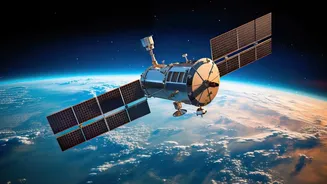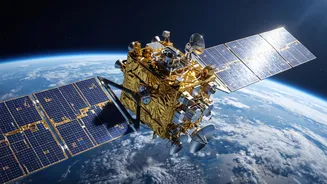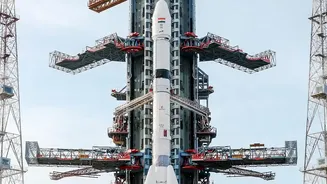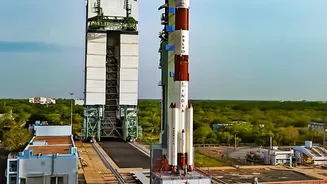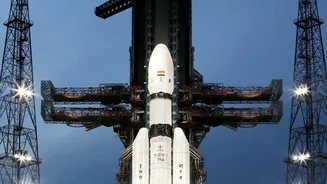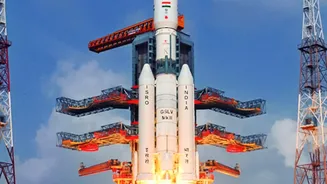





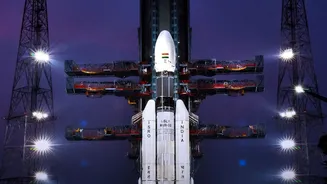

Rather than a quick fix for its NavIC navigation system, ISRO is playing the long game. The agency is prioritizing the launch of a new-generation satellite, a strategic move that favors a long-term upgrade over immediate service restoration.
The Challenge with NavIC
India's homegrown
navigation system, NavIC (Navigation with Indian Constellation), has been facing significant operational hurdles. Developed as a strategic asset to reduce dependence on foreign systems like the US-owned GPS, especially after access was reportedly restricted during the 1999 Kargil War, NavIC requires a minimum of four functional satellites to provide basic positioning services. However, the constellation has been weakened. The primary issue has been the premature failure of imported rubidium atomic clocks on many of the first-generation IRNSS satellites. These clocks are the heart of any navigation system, providing the ultra-precise timing needed to calculate a location on Earth. A series of these failures, combined with some satellites simply reaching their end-of-life and a setback in launching a replacement satellite (NVS-02), reduced the number of fully operational satellites to just three, temporarily crippling NavIC's ability to provide standalone navigation.
A Strategic Pivot, Not Just a Patch
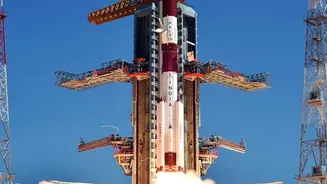
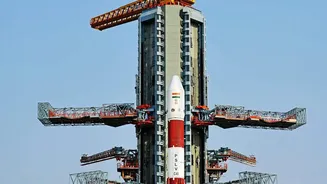
Faced with a depleted constellation, ISRO had two choices: launch a like-for-like replacement to quickly restore the minimum four-satellite service, or invest in a more advanced, future-proof solution. The headline-making decision is that ISRO has chosen the latter. Instead of a simple 'service restoration' mission which would mean deploying another first-generation satellite, the agency is focusing on its 'navigation mission'—the deployment of the second-generation NVS series of satellites. A recent launch, NVS-03, was a part of this very strategy. This move signals a deliberate shift from merely patching holes in an aging system to actively building a more robust and capable one for the future. It's a trade-off between a short term fix and long term strategic strength.
Meet the Next Generation NVS Satellites
The new NVS series satellites are a significant leap forward. One of their most critical upgrades is the inclusion of indigenously developed rubidium atomic clocks. Developed by ISRO's Space Applications Centre, these clocks are designed to be more reliable and avoid the issues that plagued the imported clocks on the initial satellites. Furthermore, the NVS satellites are designed for a longer mission life of 12 years, compared to the 10 year lifespan of their predecessors. Perhaps most importantly for expanding civilian use, the new satellites transmit signals in the L1 frequency band, in addition to the existing L5 and S bands. The L1 band is the most widely used frequency for GPS and is compatible with the single frequency chips found in most smartphones and wearable devices, a key step in making NavIC a common feature for consumers.
Why This New Mission Makes More Sense
Prioritizing a new navigation mission is about upgrading India's sovereign capabilities. The successful launch of NVS-03 has already restored NavIC to its minimum operational configuration of four satellites, bringing positioning services back online. By continuing to launch more NVS satellites, ISRO isn't just replacing old hardware; it's modernizing the entire system. This approach enhances NavIC's reliability, which is crucial for both civilian and strategic users. For the military, a dependable, indigenous navigation system is non negotiable for guiding munitions and troop movements, ensuring India does not have to depend on foreign networks in a conflict. For civilians, the addition of the L1 band paves the way for wider adoption in logistics, transportation, and personal devices, strengthening the 'Make in India' ecosystem for navigation based technologies.