





What Are the Orionids?
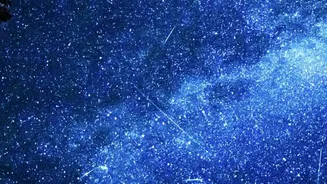
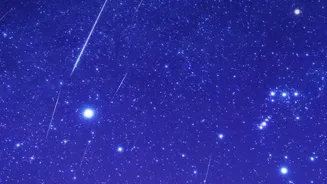
The Orionid meteor shower is considered one of the most beautiful of the year. These shooting stars are actually tiny fragments of space debris left behind by the famous Halley's Comet. Every October, Earth’s orbit passes through this ancient dust trail.
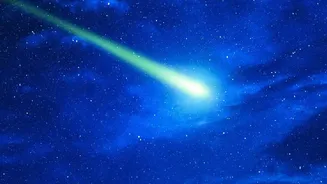
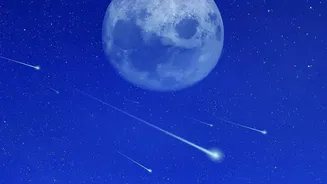
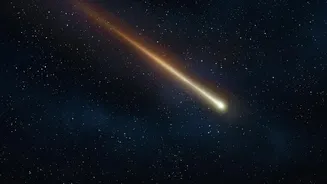
As the particles, some no bigger than a grain of sand, hit our atmosphere at incredible speeds—about 66 kilometres per second—they burn up, creating brilliant streaks of light across the sky. They get their name because they appear to radiate from a point within the constellation Orion, the Hunter.
Mark Your Calendar for Peak Viewing
Timing is everything. The Orionid meteor shower is active from early October to early November. However, the best time to watch in 2026 is during its peak on the nights of October 21-22. The prime viewing window is in the pre-dawn hours, after midnight. This year, a bright waxing gibbous moon will be in the sky during the early part of the night, but it sets around 3 a.m. The dark hours between moonset and dawn will offer the best chance to see the meteors. Under ideal dark-sky conditions, you could see 15 to 25 meteors per hour.
Find Your Urban Observatory
The biggest challenge for city stargazers is light pollution. Your mission is to find the darkest spot possible. Think of large parks, waterfronts, sports fields, or even the top floor of a parking garage with an open view of the sky. The key is to get away from the direct glare of streetlights and buildings. Even finding a spot in the shadow of a building can help shield your eyes from the worst of the city glow, dramatically improving what you can see. The more open sky you have, the better your chances of catching a fleeting meteor.
Forget the Telescope, Not the Comfort
You do not need a telescope or even binoculars to see a meteor shower. In fact, your unaided eyes are the best tool for the job because they offer a wide field of view, and meteors can appear anywhere in the sky. Instead of complex gear, focus on comfort. Meteor watching is a waiting game, so bring a reclining lawn chair or a thick blanket to lie on. Dress in warm layers, as even autumn nights can get chilly in the pre-dawn hours. A thermos of a warm drink can also make the experience much more pleasant.
Let Your Eyes Adjust to the Dark
Your eyes need at least 15 to 30 minutes to fully adapt to the darkness. This process, called dark adaptation, significantly increases your ability to see faint objects like meteors. Protect your night vision at all costs. The biggest enemy is the bright screen of your smartphone. If you must use your phone, turn the brightness down to its lowest setting and enable a red-light filter or night mode if available. Red light has a minimal impact on night vision compared to the standard blue-white light of most screens.
Know Where to Look (and Be Patient)
While the meteors radiate from the constellation Orion, they will streak across the entire sky. You don't need to stare at one specific point. The best strategy is to lie back and look straight up, taking in as much of the sky as possible. Patience is crucial. You won't see a constant downpour of meteors. There will be lulls in activity followed by a sudden, bright streak. If you're with friends, have everyone watch a different section of the sky and call out when they see one. Even catching one or two bright, fast Orionids can make the entire outing worthwhile.