






Meet Roman: Hubble’s Wide-Eyed Cousin
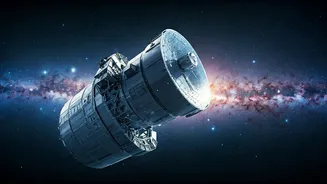
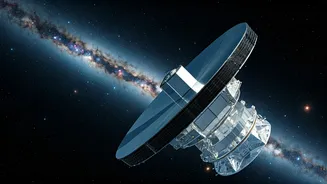
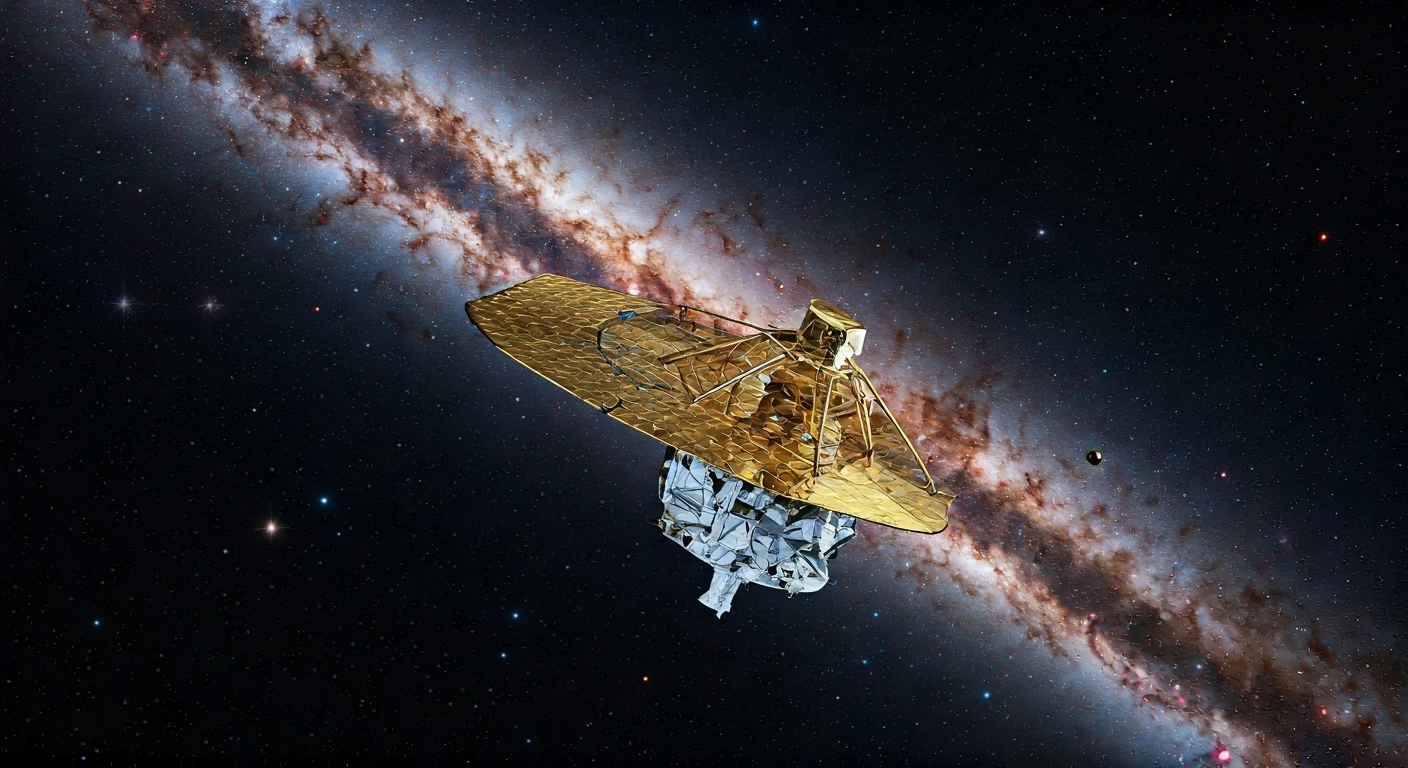
Named after Dr. Nancy Grace Roman, NASA’s first chief of astronomy and the “mother of Hubble,” the Roman Space Telescope is a next-generation observatory. [4] It features a primary mirror that is 2.4 meters (7.9 feet) in diameter, the same size as the Hubble Space Telescope's.
[5] But that’s where the similarities end. Roman’s key advantage is its colossal field of view. Its Wide Field Instrument will be able to capture an area of the sky at least 100 times larger than Hubble can in a single snapshot. [2, 5] This means that an image that would take Hubble years to capture could be completed by Roman in a matter of months. [11] This efficiency transforms it from a magnifying glass into a panoramic camera for the cosmos, designed for sweeping surveys that can map the universe at an unprecedented scale. [15, 18]
Hunting the Universe's Dark Side
Approximately 95% of the universe is made of mysterious substances we can't directly see: dark matter and dark energy. Dark matter provides the invisible scaffolding for galaxies, while dark energy is the enigmatic force causing the universe's expansion to accelerate. [19] Roman is designed to attack these mysteries head-on. [2] By mapping the distribution of hundreds of millions of galaxies, it will trace the structure of dark matter with unparalleled precision. [10] It will also use three distinct methods—including observing distant supernovae and weak gravitational lensing—to measure how the universe's expansion has changed over time. [1] This data could finally help scientists determine if dark energy is a constant force or if it has evolved, a discovery that would fundamentally change our understanding of the cosmos's ultimate fate. [11, 19]
A Census of a Billion Galaxies and New Worlds
Beyond the dark universe, Roman will be a prolific planet hunter. While missions like Kepler and TESS primarily found planets by watching them pass in front of their stars, Roman will employ a different technique called gravitational microlensing. [9] This method, predicted by Einstein, uses the gravity of a foreground star to magnify the light of a more distant one. [20] If the foreground star has a planet, its gravity creates an additional, detectable blip. This technique is sensitive enough to find planets much smaller and farther from their stars than other methods, including worlds with just a few times the mass of Earth's Moon. [1, 3] The mission is expected to discover thousands of new exoplanets, providing a statistical census of worlds in our galaxy and helping us understand how common solar systems like our own truly are. [3, 9]
A New Era of Discovery
The Roman Space Telescope is also equipped with a Coronagraph Instrument, a technology demonstrator designed to block the overwhelming glare of a star to directly image the faint planets orbiting it. [5] This is a crucial step toward future missions that could analyze the atmospheres of Earth-like planets for signs of life. While its primary mission is focused on dark energy and exoplanets, Roman's vast surveys will create a treasure trove of data for all areas of astrophysics. [3] From studying stars in neighboring galaxies to the growth of supermassive black holes, its images will serve as a foundational resource for a new generation of astronomers. [3]
When Do the Mysteries Unravel?
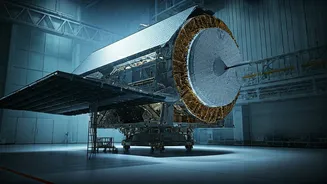
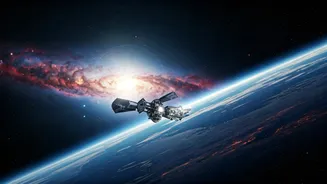
The Nancy Grace Roman Space Telescope has completed its assembly and testing phase at NASA's Goddard Space Flight Center. [11] It arrived at the Kennedy Space Center in Florida on June 21, 2026, for final launch preparations. [13] NASA is targeting a launch date of August 30, 2026, aboard a SpaceX Falcon Heavy rocket. [7, 13] This launch is notably ahead of its original schedule. [13, 14] Once positioned at its orbital point about 1.5 million kilometers from Earth, Roman will begin its five-year primary mission. [5, 12] However, it is carrying enough propellant for a potential ten-year extended mission, promising a long and fruitful period of discovery. [7]