



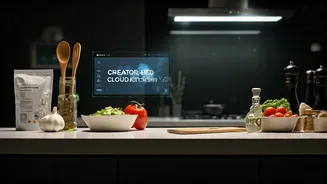


What Exactly is a Cloud Kitchen?
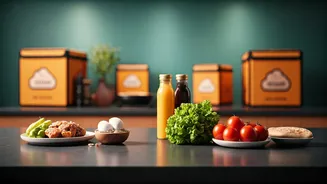
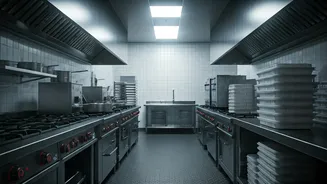
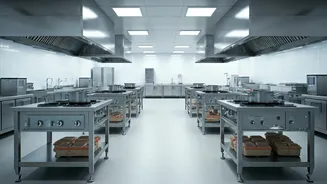
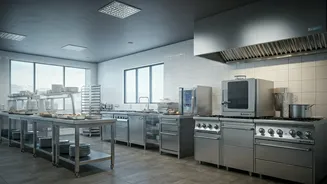
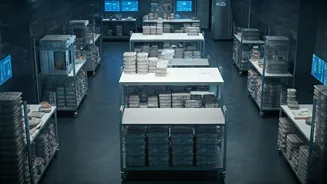
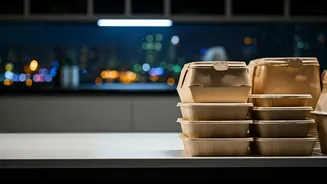
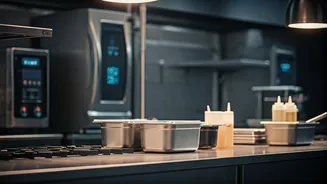
Often called 'ghost kitchens' or 'virtual restaurants', cloud kitchens are commercial food production facilities designed exclusively for delivery. [6, 7] They have no dining area, no storefront, and no physical presence for customers to visit. [7] Instead,
they operate out of shared or private kitchen spaces, often in lower-rent areas, and rely entirely on orders from platforms like Zomato and Swiggy or their own websites. [6, 14] This model allows a single kitchen to house multiple 'virtual brands', each with its own distinct cuisine and menu, all operating from the same infrastructure. [5] By eliminating the high costs of prime real estate, front-of-house staff, and decor, cloud kitchens can be set up for 40-60% less than a traditional restaurant. [5, 14]
The Numbers That Don't Lie
The growth has been explosive. The Indian cloud kitchen market reached USD 1.24 Billion in 2025 and is projected to grow to USD 3.69 Billion by 2034, expanding at a compound annual growth rate (CAGR) of over 12%. [3] Some estimates place the market value even higher, at USD 2.1 billion in 2024 with a projected 12.5% CAGR through 2032. [5] This surge is powered by India's massive online food delivery market, which itself is expected to grow from around USD 55 billion in 2025 to over USD 337 billion by 2034. [23] Major delivery platforms now process over 4 million food orders daily across India, creating a massive pipeline of demand that cloud kitchens are perfectly positioned to fill. [5]
The Recipe for Rapid Growth
Several factors are simmering together to create the perfect environment for cloud kitchens. The primary driver is the seismic shift in consumer behaviour, accelerated by the COVID-19 pandemic, which cemented the convenience of ordering in. [3, 9] This is coupled with India's rising smartphone penetration, increasing disposable incomes, and the logistical muscle of delivery aggregators. [4, 9] For entrepreneurs, the low-cost, asset-light model is a massive draw, allowing them to launch food brands with significantly less risk and capital than a traditional eatery. [8, 14] This flexibility allows cloud kitchens to be more agile, using data to quickly adapt menus, test new concepts, and even launch short-lived experimental brands at a speed traditional restaurants cannot match. [12]
Challenges in the Crowded Kitchen
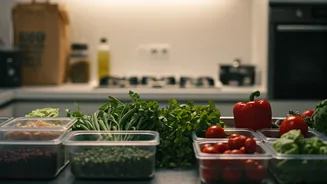
Despite the impressive growth, the path to profitability is fraught with challenges. The biggest is a structural dependency on food delivery aggregators like Zomato and Swiggy. [14, 21] These platforms, while providing access to millions of customers, charge commissions as high as 20-30%, which severely erodes already thin profit margins. [15] This has created a hyper-competitive market where many kitchens compete on unsustainable discounts, leading to high failure rates; some reports indicate 25-30% of cloud kitchens shut down within their first year. [15, 21] Building brand loyalty and customer trust without a physical presence is another significant hurdle, as is ensuring consistent food quality and hygiene—a concern highlighted by recent regulatory inspections. [10, 17]
The Future of How India Eats
Cloud kitchens are now evolving from simple cooking spaces into sophisticated, technology-driven food businesses. [2] Operators are using AI for demand forecasting, leveraging data analytics to optimize menus, and exploring direct-to-consumer channels like WhatsApp and subscription models to reduce aggregator dependency. [2, 14] The rise of the Open Network for Digital Commerce (ONDC) also presents an opportunity to create a more open digital network. [2] The model is also expanding beyond metros into Tier-2 and Tier-3 cities, where organised restaurant infrastructure is limited but online delivery is growing. [5] Rather than a battle of cloud kitchens versus traditional restaurants, the future points towards a hybrid model where established brands use cloud kitchens as a powerful tool for expansion and delivery optimisation. [11]