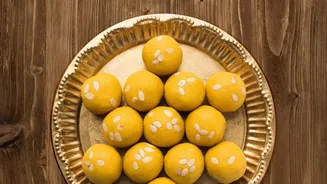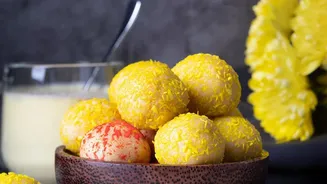



The aroma of besan roasting in ghee is the scent of celebration. But the joy can crumble—literally—if your ladoos don't hold their shape. This guide offers a clear path to crafting perfectly soft, delicious besan ladoos that won't fall apart.
The Foundation: Choosing Your Ingredients
The journey
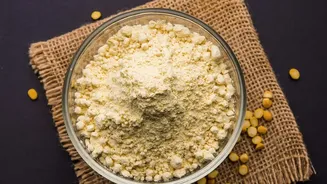
to a perfect ladoo begins with three key ingredients: besan (gram flour), ghee, and sugar. For the best texture, many chefs prefer a slightly coarse variety of gram flour, often sold as 'ladoo besan', as it gives a desirable granular feel and prevents the ladoo from sticking to the roof of your mouth. If you only have fine besan, don't worry—you can add a tablespoon or two of semolina (suji/rava) during roasting to achieve a similar texture. Fresh, high-quality ghee is non-negotiable; it's the soul of the ladoo, providing both flavour and the binding fat. For sugar, while finely powdered regular sugar works, traditional recipes often call for 'tagar' or 'boora', a type of porous, crystalline sugar that gives a superior, melt-in-the-mouth texture without being gritty. You can find it in Indian grocery stores or even make it at home.
The Art of Roasting: Patience is Key
Roasting the besan is the most critical step and cannot be rushed. An under-roasted flour will taste raw and bitter, while over-roasting will burn it, ruining the entire batch. Always use a heavy-bottomed pan or kadhai to ensure even heat distribution. Begin by melting some of the ghee on a low flame and then add the besan. Many experts suggest adding the ghee in batches rather than all at once. This makes the initial stirring easier and allows the flour to roast more evenly. Stir continuously on a low to medium-low flame. This is an arm workout, but it's essential to prevent scorching. After 15-25 minutes, the mixture will transform. You'll notice a nutty, irresistible aroma filling your kitchen, the colour will deepen to a beautiful golden brown, and the mixture will loosen as the besan starts to release the ghee. Some cooks sprinkle a tablespoon of water or milk at the end of roasting; it sizzles and helps create that coveted 'danedar' or granular texture.
The Sweet Spot: Adding Sugar Correctly
Here's a rule that will save your ladoos: never add sugar to a hot besan mixture. If the mixture is too hot, the sugar will melt and turn into a syrup, resulting in sticky, greasy, or flat ladoos that are impossible to shape. Once the besan is perfectly roasted, immediately transfer it to a wide plate or platter to stop the cooking process and allow it to cool down. The ideal temperature for adding the sugar is lukewarm—warm enough that the ghee is still soft but cool enough that you can comfortably handle the mixture with your hands. If you're adding powdered nuts or cardamom, mix them in with the sugar before incorporating them into the besan.
Shaping Ladoos Without Crumbling
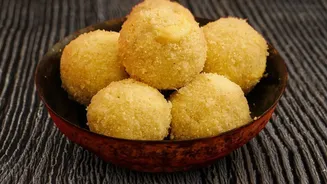
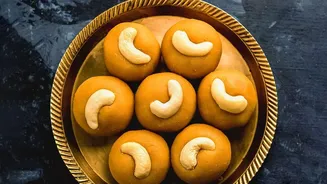
The moment of truth has arrived. The primary reason ladoos crumble is an incorrect ratio of ghee to besan or an improper mixture temperature. If your mixture seems too dry and crumbly, it means you need more ghee. Add a tablespoon of warm, melted ghee, mix it in, and try again. Conversely, if the mixture is too loose and greasy, it likely has too much ghee or the sugar was added when it was too hot. The quickest fix for this is to refrigerate the mixture for 15–30 minutes. This will help the ghee solidify, making the mixture firm enough to shape. To form the ladoos, take a small portion of the warm mixture in your palm and press it firmly, rolling it between your palms to create a smooth, round ball. If they don't hold their shape perfectly at first, let them rest for a few minutes and try reshaping them. Garnish with a sliver of pistachio or almond before letting them set completely.