

Understanding the Lunar Soil, or Regolith
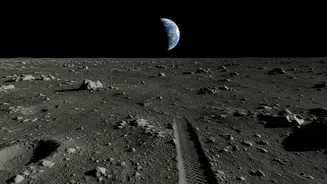
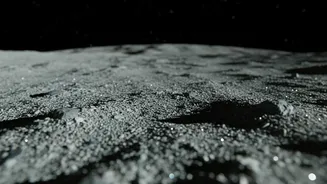
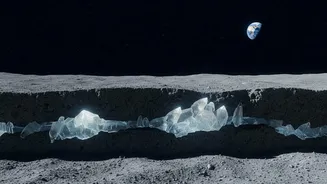
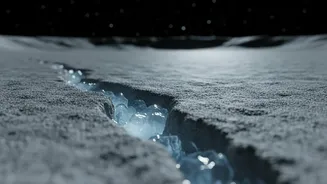
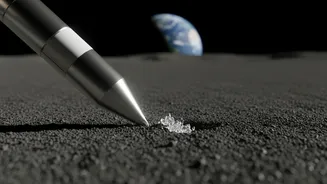
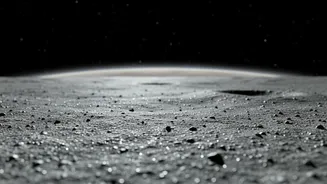
Before searching for water, scientists must understand what they are looking through. The Moon's surface is covered by a layer of loose dust, rock, and mineral fragments called regolith. This material is the product of billions of years of meteorite impacts
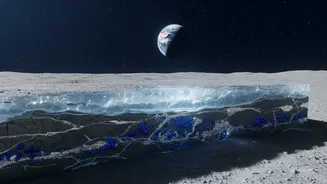
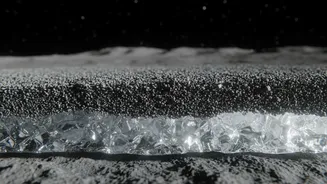
pulverizing the lunar crust. In the permanently shadowed regions near the Moon's poles, where sunlight never reaches, temperatures can plummet to below -240 degrees Celsius. Scientists believe these incredibly cold areas act as 'cold traps', where water ice could remain frozen and stable for immense periods, mixed within the regolith. Recent studies, some involving ISRO scientists, suggest that the amount of subsurface ice could be five to eight times greater than what's on the immediate surface, making the regolith a prime target for exploration.
The Chemical Detective: Spectrometer Analysis
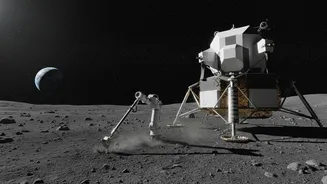
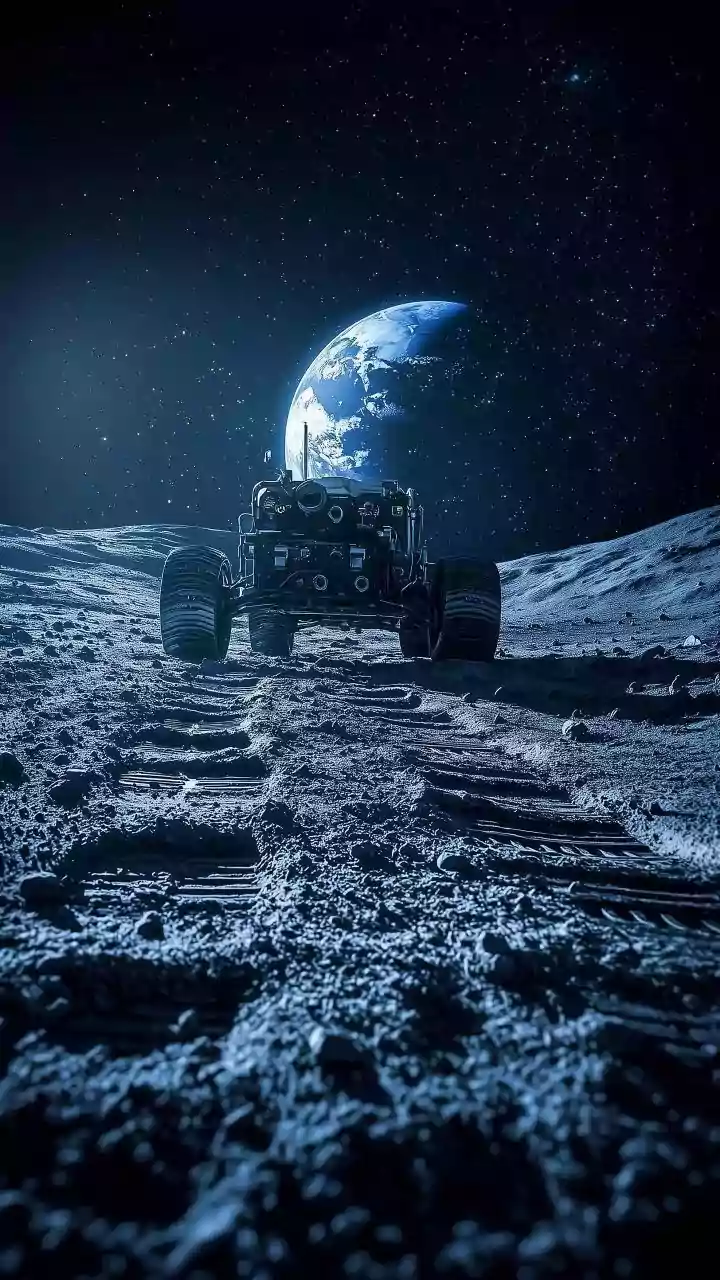
To find evidence of water, you need to know what you're looking for: hydrogen and oxygen. ISRO's Pragyan rover, part of the historic Chandrayaan-3 mission, carries a suite of instruments designed for this detective work. Two key instruments are the Alpha Particle X-ray Spectrometer (APXS) and the Laser-Induced Breakdown Spectroscope (LIBS). The LIBS instrument fires a high-energy laser pulse at the regolith, vaporizing a tiny amount of material. It then analyzes the light emitted from this plasma to determine the elemental composition. The APXS works by bombarding the soil with alpha particles and X-rays from a radioactive source. This causes the elements in the soil to emit their own characteristic X-rays, which the spectrometer can read like a fingerprint, identifying elements like silicon, iron, magnesium, and, crucially, the constituents of water.
Taking the Temperature: Thermal Probes
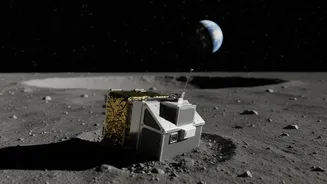
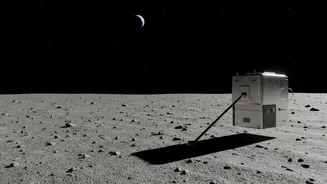
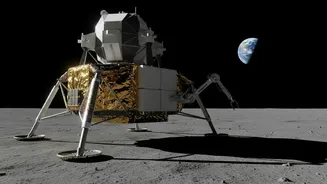
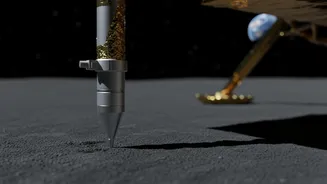
Another ingenious method for detecting subsurface ice involves temperature. Ice has very different thermal properties compared to dry regolith. It takes more energy to heat up and it conducts heat differently. The Vikram lander carried an instrument called Chandra’s Surface Thermophysical Experiment (ChaSTE) for this very purpose. ChaSTE was designed to drill about 10 centimeters into the lunar surface and measure the temperature profile at different depths. By analyzing how temperature changes with depth and how the regolith responds to the intense day-night temperature swings on the Moon, scientists can infer the material's composition. A thermal profile that doesn't match that of dry dust could be a strong indicator of the presence of ice mixed in with the regolith.
Peering Below with Radar
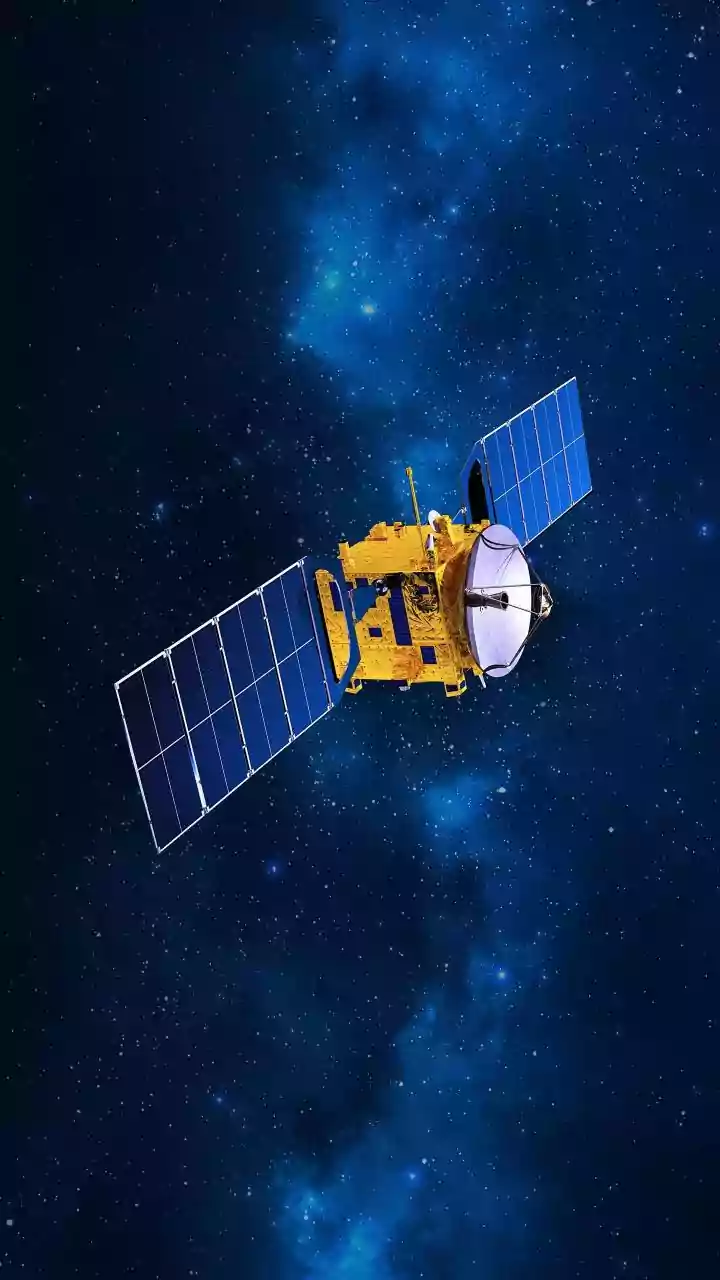
While landers and rovers perform in-situ analysis, orbiters provide a bigger picture. Data from the Dual-frequency Synthetic Aperture Radar (DFSAR) on the Chandrayaan-2 orbiter has been crucial. This powerful instrument can peer beneath the lunar surface from orbit. By sending down radar signals at different frequencies and analyzing the echoes that bounce back, scientists can distinguish between different types of materials. A recent study using this data found radar signatures consistent with subsurface ice in several permanently shadowed craters near the south pole. The way the radar waves scatter can help differentiate rough, rocky terrain from volumetric scattering that could be caused by ice deposits.
Assembling the Puzzle
No single experiment provides a definitive 'yes' or 'no' for water ice. The real strength of ISRO's approach lies in combining data from multiple sources. For example, a region identified by an orbiter's radar as promising can be targeted for a future landing. Once there, a rover's spectrometer can confirm the elemental composition, while a thermal probe measures the soil's physical properties. By layering the data from LIBS, APXS, ChaSTE, and orbital radar, scientists build a comprehensive and convincing case. The elemental analysis from APXS might detect a high abundance of elements expected in a specific type of lunar rock, while the thermal data from ChaSTE simultaneously points to an unusual thermal inertia, suggesting something more than just rock and dust is present. It is this multi-instrument, cross-verifying approach that turns hints into evidence.