




A New Era for Overnight Journeys
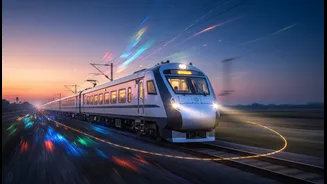
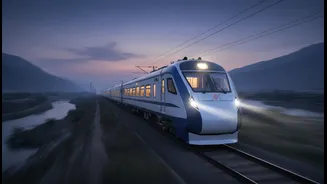
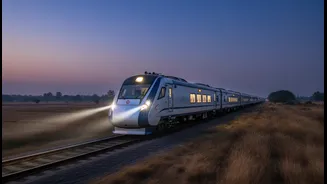
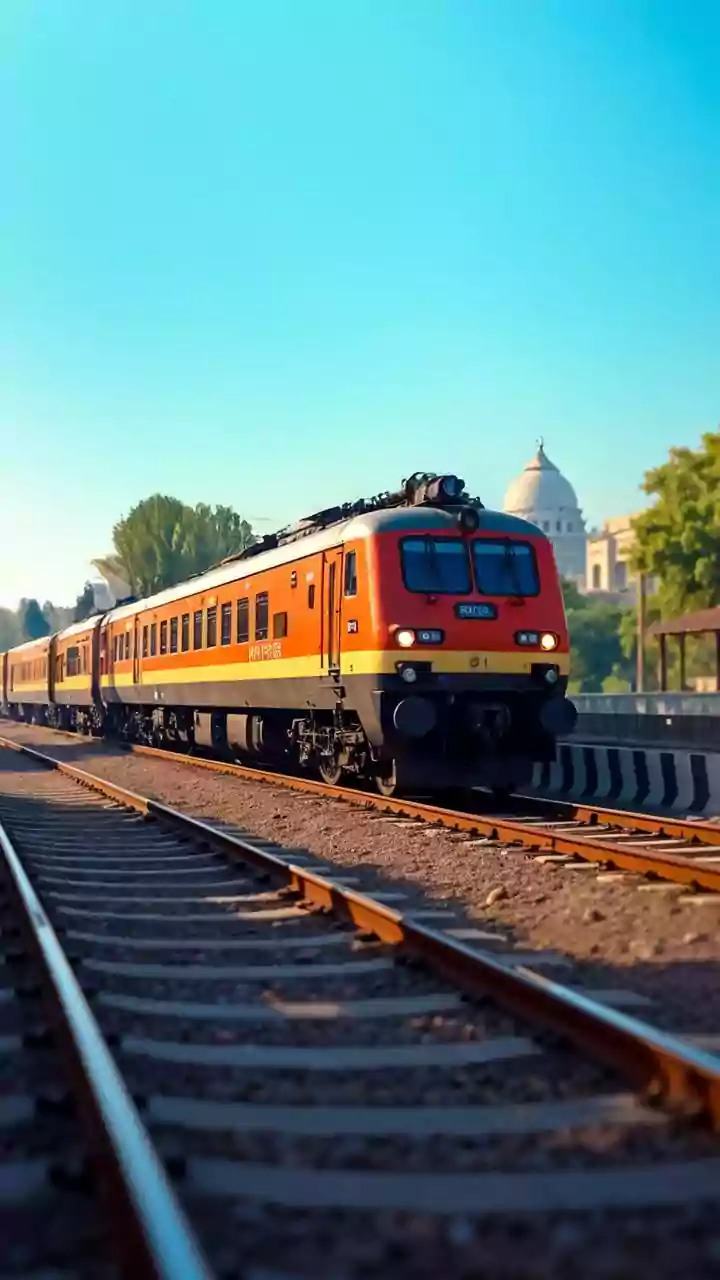
Indian Railways is rolling out the Vande Bharat Sleeper Express, a new class of train designed to transform long-distance overnight travel. These self-propelled trainsets, manufactured in India, are engineered for semi-high speeds and are intended to serve
routes connecting cities between 800 and 1,200 kilometres apart. Unlike traditional locomotive-hauled trains, the Vande Bharat's distributed power system allows for quicker acceleration and deceleration, which helps reduce overall journey times even on tracks where top speeds are limited. The first prototype, built by BEML, was rolled out in September 2024, with the inaugural commercial service launching in January 2026. This development marks a significant step towards modernizing the country's railway network, aiming to provide a superior alternative to existing premium trains.
Inside the Coach: A Focus on Comfort
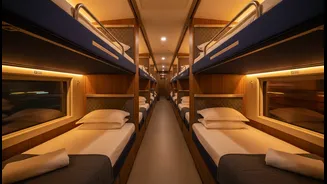
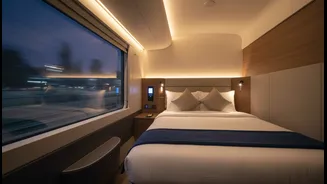
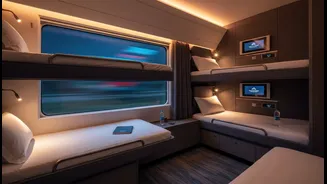
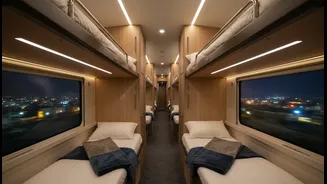
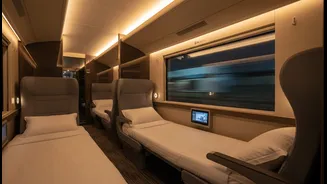
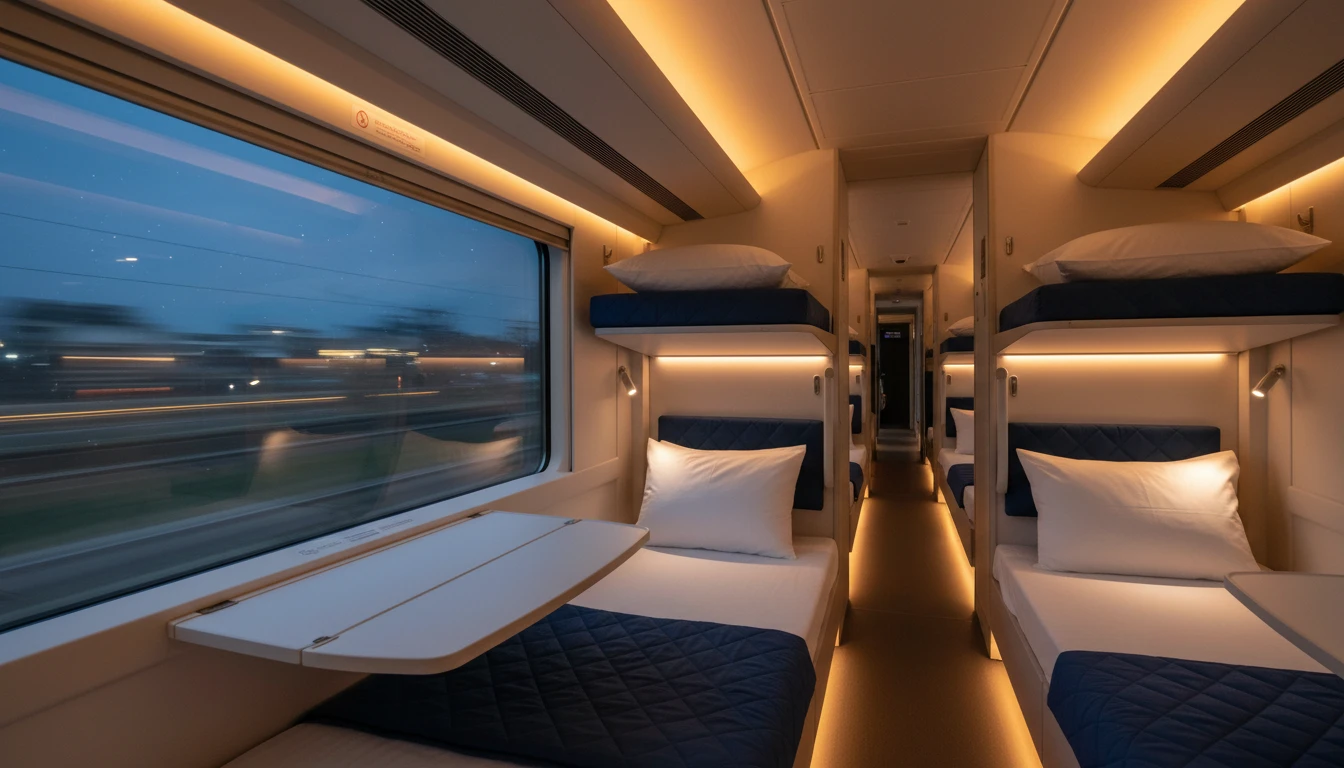
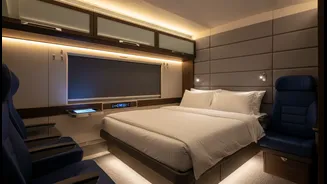
The interior of the Vande Bharat sleeper is a significant departure from conventional designs, focusing heavily on passenger experience. The air-conditioned coaches come in a three-class configuration: AC First, AC Two-Tier, and AC Three-Tier. Berths are designed to be wider and better cushioned, with ergonomic designs for improved comfort. Each berth is equipped with personal reading lights and electrical outlets. To enhance the journey, cabins feature improved soundproofing to reduce noise, while automatic doors and inter-connected vestibules create a quieter, dust-free environment. In a first for Indian Railways, First AC passengers will have access to hot shower facilities. The bio-vacuum toilets are equipped with sensor-based taps and advanced odour-control systems, reflecting a strong emphasis on hygiene.
Redefining Speed and Efficiency
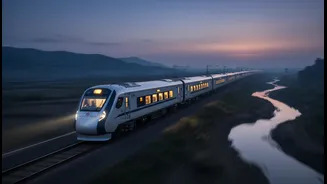
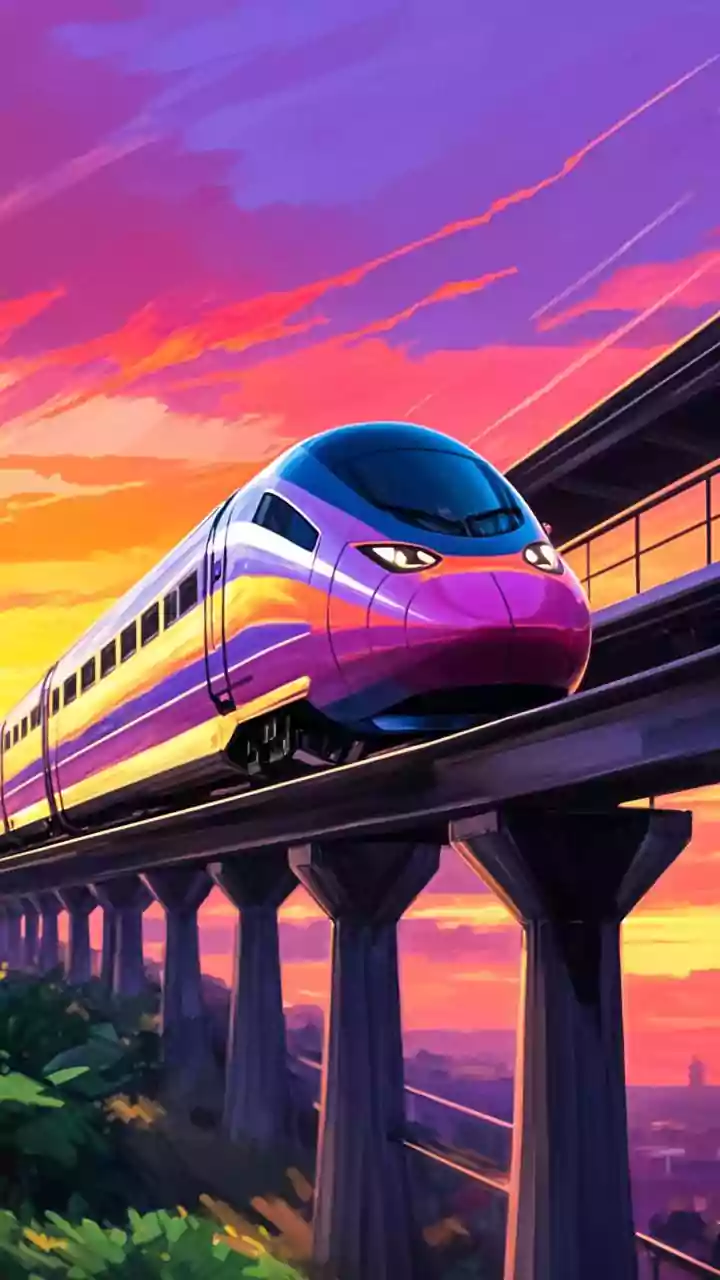
While capable of reaching speeds up to 180 km/h during trials, the primary advantage of the Vande Bharat sleeper lies in its operational efficiency. The train's aerodynamic design and self-propelled multiple units enable it to reach its maximum operational speed of 160 km/h much faster than traditional trains. This capability is crucial for reducing travel time on busy corridors. For instance, the inaugural Howrah-Kamakhya service aims to cut journey times by several hours compared to existing express services on that route. Safety is also a cornerstone of the design, with the indigenous 'Kavach' anti-collision system integrated into the trainsets, alongside CCTV cameras and smoke alarms.
The Challenger to the Rajdhani
For decades, the Rajdhani Express has been the gold standard for premium overnight train travel in India. The Vande Bharat sleeper is positioned as its modern successor. While both offer air-conditioned sleeper accommodation, the Vande Bharat provides a technologically superior experience with smoother rides, better amenities, and a more contemporary design. It can accommodate 823 passengers across its 16 coaches, a configuration that includes one First AC, four Second AC, and eleven Third AC coaches. Early reports suggest that fares for the Vande Bharat sleeper are competitively priced, commanding a premium of about 10-15% over Rajdhani fares for a significantly upgraded experience. The immediate sell-out of tickets for the first services indicates strong public demand for this new offering.
The Road Ahead: Routes and Rollout
The first Vande Bharat Sleeper Express was inaugurated on the Howrah-Kamakhya route on January 17, 2026. Following its successful launch, Indian Railways plans to introduce more services on key long-distance corridors. As of mid-2026, services are operational on major routes like Delhi-Mumbai and Mumbai-Chennai. A highly anticipated Bengaluru-Mumbai service is also expected soon, with two new trainsets already stationed in Bengaluru for pre-commissioning checks as of July 2026. However, the broader rollout has faced some delays. A contract for 120 trains awarded to an Indo-Russian joint venture has been pushed back, with the prototype now expected by the end of 2026. Despite these hurdles, Indian Railways is also leveraging its own manufacturing units to accelerate production, with a long-term vision of having 4,500 Vande Bharat trains in service by 2047.