


Go Beyond Just the Name and Date
A simple label reading "Chicken Soup, July 24" is a good start, but it's incomplete. It tells you what’s inside and when it was frozen, which is crucial for tracking freshness. However, it creates guesswork down the line. Is it a single serving or enough
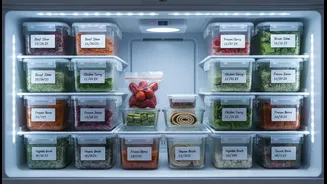
for the whole family? Does it need to be thawed overnight, or can it go straight from freezer to microwave? Answering these questions on the label itself is the key to an efficient and user-friendly freezer. Proper labeling helps you organize your freezer effectively, making it easy to find what you need without a frustrating search. More importantly, it helps reduce food waste by ensuring you use older items first and that everything you freeze is eventually eaten and enjoyed.
The Power of Specifying Portion Size
Adding portion size to your label is a game-changer for meal planning and waste reduction. Freezing a large batch of chilli is economical, but if you live alone, thawing the entire container for one dinner is impractical and wasteful. Noting "Serves 1" or "Serves 4" allows you to pull out exactly what you need. This practice is especially beneficial for managing dietary goals and controlling calorie intake. Pre-portioned meals remove the guesswork from serving sizes, making it a simple tool for consistent eating habits. Freezing food in specific serving sizes means you can safely thaw only what you require, and if you thaw a larger portion in the refrigerator, the rest can often be safely refrozen if it hasn't been heated.
Critical Reheating Instructions for Safety and Quality
This might be the most overlooked—and most important—part of a freezer label. Different foods require different reheating methods to maintain both safety and texture. A delicate fish fillet might need to be thawed in the refrigerator and gently pan-seared, while a hearty stew can be safely reheated from frozen on the stovetop or in the microwave. Including a quick note like "Thaw in fridge, then bake at 350°F for 20 mins" or "Microwave from frozen for 3-4 mins, stir halfway" prevents you from ruining a perfectly good meal. For safety, most leftovers should be reheated to an internal temperature of 165°F (74°C). Providing these instructions on the label ensures that anyone in the household can prepare the meal correctly and safely, preserving its intended flavour and quality.
Creating the Perfect Freezer Label
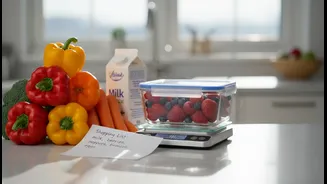
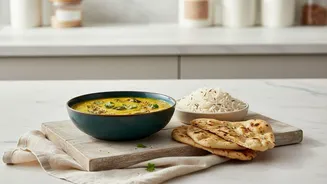
To create a truly effective freezer label, you need four key pieces of information. First, the name of the dish, being as specific as possible (e.g., "Spicy Lentil Soup" instead of just "Soup"). Second, the date it was frozen. Third, the portion size or number of servings. And fourth, concise reheating instructions. Putting this all together, a perfect label might look like this: "Spicy Lentil Soup - Serves 2 - Frozen 24/07/26 - Reheat on stovetop from frozen until boiling." For tools, you have many options. Specialized freezer labels and tape are designed to adhere in cold, moist conditions. Some people prefer reusable containers with erasable labels or simply use a permanent marker on freezer bags. Grease markers, also known as china markers, are another excellent option as they write on almost any surface and can be removed with a simple eraser, making containers easy to relabel.