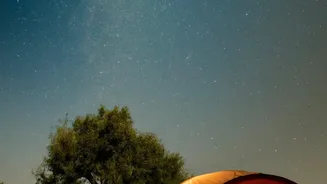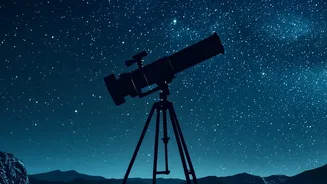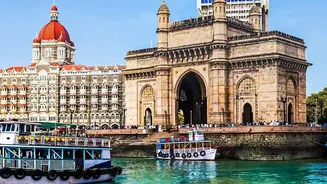





For millions, the dazzling spectacle of the Milky Way is a forgotten sight, erased by the glow of modern cities. In a rapidly developing country like India, finding a truly dark sky is a challenge, but a rewarding one. Here's your guide.
The Modern Obstacle to an Ancient Wonder
For most of human
history, the night sky was a universal spectacle. Today, for over a third of humanity, the Milky Way is completely invisible. The culprit is light pollution—the excessive and misdirected artificial light from cities that scatters in the atmosphere, creating a persistent 'skyglow'. In India, rapid urbanization has made this glow a dominant feature of the night in and around major metros like Delhi, Mumbai, and Bangalore. This bright haze washes out all but the moon, planets, and a few dozen of the brightest stars, hiding the thousands of stars and celestial wonders that lie beyond. This is not just a loss for astronomers; it disconnects us from a fundamental part of our natural heritage and can even impact wildlife that relies on dark cycles.
Your Digital Guide to Darkness
This is where light-pollution maps become an indispensable tool for any aspiring stargazer. Websites like Lightpollutionmap.info use satellite data to create a global map of night-sky brightness. They present this information as a color-coded overlay, showing you exactly where the pockets of true darkness are located. Bright urban centers appear in red, orange, and yellow, while remote, less-polluted areas show up in green, blue, and, ideally, grey or black. Before you even pack your bags, you can digitally scout locations, compare the darkness of two different valleys, or see just how far you need to drive from a city to escape its dome of light. Think of it as a weather map for starlight, allowing you to plan your journey to places where the cosmos can reveal its full glory.
Decoding the Colors: The Bortle Scale
To standardize what these map colors mean for an observer on the ground, astronomers use the Bortle Scale. Created by John E. Bortle in 2001, this nine-level system ranks sky quality from Class 1 (the darkest, most pristine sky on Earth) to Class 9 (an inner-city sky where only the brightest objects are visible). Your typical Indian metro core is a Class 8 or 9. A suburban sky might be a Class 5 or 6, where the Milky Way is faint or invisible. The real magic begins in Class 4 and below. In a Class 3 'rural sky', the Milky Way shows complex structure, and in a Class 1 or 2 sky, it can be so bright it casts a faint shadow. Light-pollution maps often provide the Bortle class for any point you click on, giving you a practical, real-world understanding of what to expect.
Pinpointing Prime Spots in India
Armed with a light pollution map, planning a trip in India becomes a strategic hunt for the darkest patches. The strategy is simple: look for large areas of blue, grey, or black, far from the bright splotches of cities. You'll quickly notice patterns. The high altitude cold deserts of the Himalayas, like in Ladakh and Spiti Valley, are vast zones of darkness. So are the salt flats of the Rann of Kutch in Gujarat and the interiors of large national parks in Central India, like Kanha or Pench. In South India, the Western Ghats mountain range offers refuge from coastal city lights, with places like Coorg in Karnataka providing accessible dark skies. The map empowers you to move beyond famous but crowded tourist spots and find your own slice of pristine night.
From Himalayan Peaks to Salty Plains
This digital scouting translates to real world wonders. Hanle, in Ladakh, is so dark it was designated India's first official Dark Sky Reserve, with Bortle Class 1 skies perfect for both scientific research and astro tourism. Similarly, the remote Spiti Valley in Himachal Pradesh offers some of the most accessible top tier stargazing in Asia. But you don't always need to go to such extremes. The map might reveal a surprisingly dark spot in the Aravalli hills near Sariska for a weekend trip from Delhi, or the clear skies over a desert camp outside Jaisalmer. Even the Andaman and Nicobar Islands, far from mainland light sources, boast incredible nightscapes for those willing to make the journey. Each location offers a unique context for the stars, from Himalayan monasteries to serene coffee plantations.