






What Causes Lifting Imbalances?
Muscular imbalances happen when one side of the body, or one muscle group, is stronger or more developed than its counterpart. This is incredibly common. Most of us have a dominant side—the hand we write with, the leg we kick a ball with. In the gym,
this natural preference can become more pronounced. When you perform bilateral exercises (using both limbs at once), like a barbell bench press or squat, your stronger side often compensates for the weaker one. It takes on slightly more of the load, getting stronger while the weaker side lags. Over time, this can lead to uneven muscle growth, compromised form, and even an increased risk of injury as smaller stabilising muscles are neglected and larger ones are overworked.
The Unilateral Solution
The most effective way to combat these imbalances is through unilateral training. This simply means training one limb at a time. Think of a dumbbell chest press instead of a barbell one, or a single-leg squat. By isolating one side of the body, you remove its ability to rely on the dominant side for help. Your weaker side is forced to pull its own weight—literally. This targeted stress stimulates growth and strength development where it's needed most, allowing it to catch up to the stronger side. The result is a more balanced, symmetrical, and resilient physique. A good rule of thumb is to always start your unilateral sets with your weaker side and let it dictate the number of reps you perform on your stronger side.
Why Resistance Bands Are Ideal
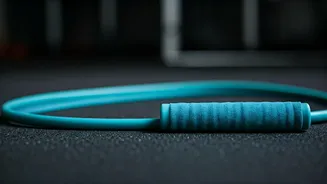
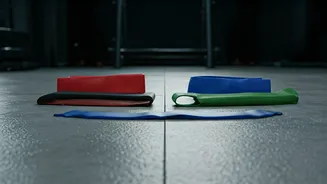
While dumbbells and kettlebells are great for unilateral work, resistance bands offer unique advantages for fixing imbalances. Bands provide what’s called variable resistance—the tension increases as you stretch the band. This means the muscle is challenged through its entire range of motion, especially at the point of peak contraction where it is strongest. This is excellent for building control and stability. Bands are also joint-friendly, making them a safe option for warming up or for those nursing minor aches. They are lightweight, portable, and versatile, allowing you to target almost any muscle group from any angle.
Exercise 1: Single-Arm Banded Press
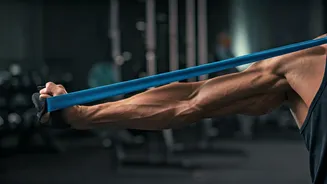
This move directly targets imbalances in the chest, shoulders, and triceps. Anchor a resistance band at chest height to a stable pole or rack. Stand sideways to the anchor point, grab the band with your outside hand, and step away to create tension. Stagger your feet for stability. With your core tight, press the band straight out in front of your chest, resisting the urge to rotate your torso. Hold the contraction for a second, then slowly return to the start. The band will be trying to pull you back and rotate you, forcing your core and stabiliser muscles to work overtime. Perform 8-12 reps on your weaker side first.
Exercise 2: Single-Arm Banded Row
Perfect for balancing out your back muscles, particularly the lats. Face the anchor point, holding the band in one hand with your arm extended. Step back until there is light tension. With your feet shoulder-width apart and a slight bend in your knees, pull the band towards your torso. Squeeze your shoulder blade back and down, keeping your elbow close to your body. Avoid using momentum or rotating your shoulders. Focus on initiating the pull from your back, not your arm. Slowly release back to the starting position. This move corrects the common tendency to pull more with one side during barbell rows or pull-ups.
Exercise 3: Banded Split Squat
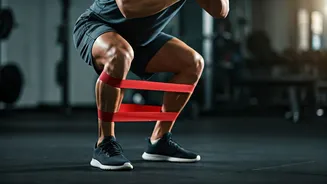
Lower body imbalances are common, and the split squat is a fantastic remedy. Place a resistance band under the arch of your front foot, holding the ends in each hand at shoulder height for resistance. Step your other leg back into a lunge position. Keeping your chest up and core engaged, lower your back knee towards the floor until your front thigh is parallel to the ground. Drive through your front heel to return to the starting position. This exercise hammers the glutes and quads of the front leg, improving single-leg strength and stability without the balance challenges of a full pistol squat.