







What Exactly is an Industrial Corridor?
Think of an industrial corridor as a mega-project designed to supercharge a region's economy. It's essentially a dedicated channel, often hundreds of kilometres long, that connects major industrial centres with ports and economic hubs. The spine of this
corridor is typically world-class infrastructure, including high-speed freight railways and multi-lane expressways. Along this route, the government and private partners develop 'smart' industrial cities and special economic zones. These zones offer 'plug and play' facilities, meaning businesses can set up operations quickly with pre-built infrastructure, reliable power, and streamlined clearances. The National Industrial Corridor Development Programme (NICDP) is overseeing the development of 11 such corridors across India, including the flagship Delhi-Mumbai Industrial Corridor (DMIC).
The Engine of Job Creation
Industrial corridors are fundamentally designed to decentralise economic growth. By building state-of-the-art transport links through underdeveloped or semi-urban areas, they create a magnet for investment far from the overcrowded metros. The process starts with a massive wave of construction jobs needed to build the roads, railways, ports, and industrial townships. Once this core infrastructure is in place, manufacturing companies are incentivised to build factories. The promise of lower logistics costs and easier access to national and global markets makes these smaller towns strategically attractive for the first time. This influx of industry creates a powerful ripple effect, generating sustainable, long-term employment.
A New Spectrum of Local Opportunities
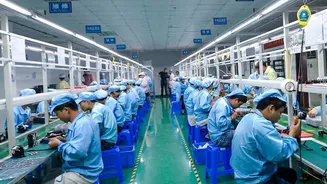
The jobs created by these corridors are diverse, but they are particularly crucial for blue-collar and technical workers. The manufacturing plants and logistics parks that form the heart of these new industrial cities require a vast workforce. Blue-collar roles include machine operators, assembly line workers, warehouse staff, and transport personnel. These positions are vital for the day-to-day running of factories and supply chains. Alongside these, there is a surge in demand for technically skilled individuals. This includes diploma engineers, ITI graduates, and certified technicians needed for machine maintenance, quality control, and supervising complex operations. This focus on both foundational and technical roles provides a broad ladder of opportunity for local populations.
Real-World Impact in Tier-II and Tier-III Towns
The impact is not just theoretical. Along the Delhi-Mumbai Industrial Corridor, new industrial cities like Dholera in Gujarat and Shendra-Bidkin in Maharashtra are transforming the economic landscape. These greenfield projects are designed to become major manufacturing hubs, attracting large-scale investment in sectors like electronics and automotive parts. This development is spurring job creation in surrounding small towns and villages, providing residents with employment opportunities close to home and reducing the need for migration to big cities. The development of industrial nodes in cities like Rajpura in Punjab and Tumakuru in Karnataka under other corridor projects further highlights this strategy of creating economic gravity in Tier-II and Tier-III regions.
Challenges and the Road Ahead
Despite the immense potential, the journey is not without its challenges. The primary hurdles include complex land acquisition processes and ensuring seamless coordination between central and state governments, which can lead to project delays. There is also a critical need to ensure that local communities are equipped with the right skills to take advantage of the new jobs. This involves establishing training centres and vocational institutes in tandem with industrial development. Furthermore, providing adequate and affordable housing for the incoming workforce is a significant operational challenge that needs to be addressed to ensure the long-term sustainability of these new industrial ecosystems. Addressing these issues is key to unlocking the full potential of these transformative projects.