



Why Sensory Stimulation Matters
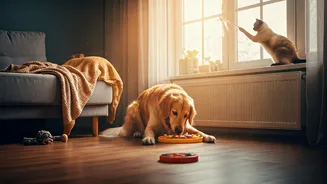
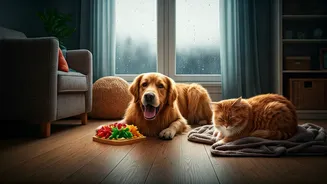
Before we build, let's understand the 'why'. Dogs experience the world primarily through their senses—especially smell and touch. An obstacle course that engages these senses is more than just a game; it's a form of canine enrichment. This mental work
helps reduce anxiety, builds confidence, and prevents problem behaviours like excessive barking or chewing. A simple course can tire a dog out more effectively than a long walk, making it a perfect solution for rainy days, small living spaces, or for older dogs with limited mobility. The goal isn't speed, but engagement. You're building a 'brain gym' for your best friend.
The Cardboard Box Maze
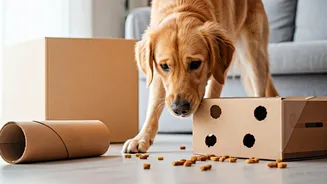
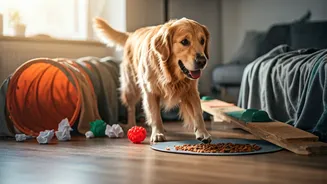
This is a classic for a reason. Gather any cardboard boxes you have from deliveries. Open them up and arrange them in your living room to create a simple maze or tunnel. You can place a few high-value treats (like tiny pieces of boiled chicken or their favourite biscuit) at different points inside the maze. This activity engages your dog's powerful sense of smell as they 'hunt' for the rewards. It also encourages problem-solving and builds body awareness (proprioception) as they navigate the turns and tight spaces. For timid dogs, start with just one or two boxes and let them investigate at their own pace. Always supervise to ensure they don't start chewing and ingesting the cardboard.
The Texture Walkway
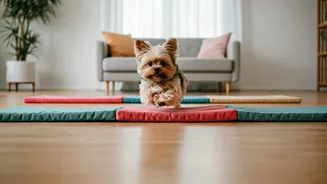
Paws are incredibly sensitive. A texture walkway provides a fantastic sensory experience that most indoor dogs rarely get. Lay out a path using a variety of safe, household materials with different textures. Think towels, a yoga mat, a fluffy blanket, bubble wrap (under supervision!), a doormat, and maybe a flattened-out pile of laundry. The goal is for them to walk across different surfaces. Each new texture is a novel sensation. Guide your dog across the path with praise and treats. This simple exercise builds confidence with new surfaces, which can translate to being calmer at the vet or on unfamiliar walking routes. Never force your dog; let curiosity lead the way.
The Muffin Tin Puzzle
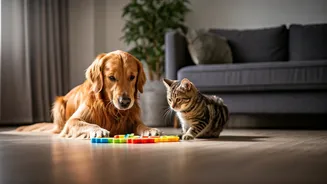
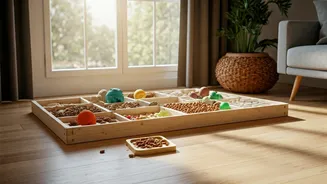
Turn a standard muffin tin into a brilliant puzzle feeder. Place a single, smelly treat in a few of the cups. Then, cover all the cups with tennis balls or other dog-safe toys. Your dog has to use their nose to find which cups contain a treat and then use their snout or paws to move the ball and get the reward. This is a fantastic 'nose work' game that hones their primary sense. It forces them to slow down and think, rather than just gulping down food. It's a low-cost alternative to expensive puzzle toys and takes just seconds to set up. If your dog is new to this, start without the tennis ball covers to make it easier.
The Pillow and Cushion Climb
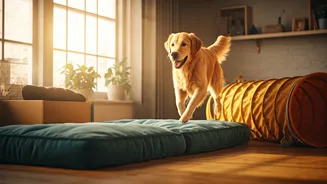
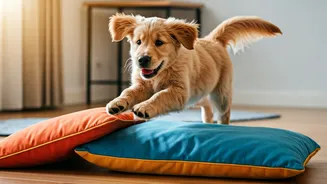
This obstacle focuses on building core strength and body awareness. Gather all your sturdy cushions, pillows, and couch bolsters and pile them up in the centre of the room. Create a small, stable 'mountain' for your dog to climb over. Lure them over the pile with a treat or a favourite toy. As they navigate the unsteady surface, they are constantly making tiny adjustments with their muscles to maintain balance. This is excellent for their physical conditioning and helps them understand where their body is in space. This activity is especially beneficial for canine athletes or puppies learning coordination. Ensure the pile is not too high to prevent falls, especially for smaller or older dogs.
The Towel Burrito Roll
For a game that combines scent work with a bit of fun destruction, try the towel burrito. Lay a large bath towel flat on the floor. Sprinkle a few treats along its length. Then, roll the towel up tightly into a 'burrito'. Present it to your dog and let them figure out how to unroll it to get the treats. They’ll have to use their nose, paws, and problem-solving skills. It's a simple, engaging, and satisfying activity. You can increase the difficulty by tying a loose knot in the middle of the rolled-up towel. Always use an old towel you don’t mind getting pulled and pawed at.