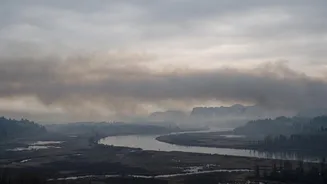









As winter approaches, a familiar haze descends upon Delhi. The air quality often plummets, making it crucial for residents to stay informed. This manual provides the tools and knowledge you need to monitor daily pollutants and make safer choices.
Why Monitoring Air Quality Is Essential
Tracking
the Air Quality Index (AQI) is more than just checking a number; it's a vital health practice in Delhi. Poor air quality, especially during the post-monsoon and winter seasons, can lead to or worsen respiratory issues, cardiovascular problems, and allergies. For vulnerable groups like children, the elderly, and those with pre-existing conditions, knowing the daily pollution levels is critical for managing outdoor activities. By actively monitoring the air, you can decide when it's safer to exercise outdoors, if you need to wear a mask, or whether to use an air purifier at home, empowering you to reduce your personal exposure to harmful pollutants.
Start with Official Government Resources
For the most reliable, government-validated data, two official apps are your best starting point. The first is 'SAMEER', developed by the Central Pollution Control Board (CPCB). It provides hourly AQI updates from a vast network of monitoring stations across the country, including comprehensive coverage in Delhi. It also allows users to register complaints about pollution-related violations. The second is 'SAFAR-Air', a product of the Ministry of Earth Sciences and the Indian Institute of Tropical Meteorology (IITM), Pune. SAFAR provides location-specific data for major metro cities, including Delhi, and offers a three-day forecast, which is invaluable for planning ahead. It uses a simple, color-coded system and health advisories to make the data easy to understand.
Decoding the Numbers: AQI, PM2.5, and PM10
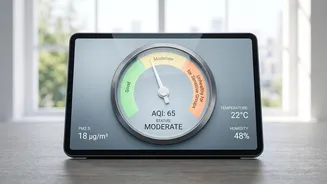
Understanding the terms used in these apps is key. The Air Quality Index (AQI) is a single number used to communicate how polluted the air currently is. India uses a scale from 0 to 500+, with six categories: Good (0-50), Satisfactory (51-100), Moderate (101-200), Poor (201-300), Very Poor (301-400), and Severe (401-500). Each category corresponds to a different level of health risk. The AQI is calculated based on eight major pollutants, but two are of primary concern: PM2.5 and PM10. These refer to particulate matter of different sizes. PM10 includes coarser particles like dust and pollen, which can irritate the nose and throat. PM2.5 are much finer particles from sources like vehicle exhaust and industrial emissions. They are more dangerous because they can penetrate deep into the lungs and even enter the bloodstream, posing serious long-term health risks.
Popular and Reliable Third Party Apps
Beyond government sources, several third party applications offer user friendly interfaces and additional features. 'IQAir AirVisual' is a popular global app with strong coverage in India, providing real time and historical data, multi day forecasts, and a world map to visualize pollution. 'AQI India' is another excellent option known for its user friendly design and for providing highly granular data, sometimes at a micro locality level. 'BreezoMeter' offers street level air quality maps and pollen data, which is useful for those with allergies. Finally, Plume Labs, now part of AccuWeather, gives hyper local forecasts and helps you find the cleanest routes for outdoor activities. These apps often aggregate data from multiple sources, including official government monitors and their own sensor networks.
Making Informed Daily Decisions
Armed with this data, you can take practical steps. When the AQI is in the 'Poor' to 'Severe' range (201+), it's advisable for everyone, especially sensitive groups, to avoid or reduce prolonged outdoor exertion. For AQI levels above 300 ('Very Poor'), consider wearing a high quality N95 mask if you must go outside. Plan children's outdoor playtime for days when the AQI is in the 'Good' or 'Satisfactory' range. Use the forecast features in apps like SAFAR Air and IQAir to schedule activities for cleaner times. On days with particularly bad air quality, keeping windows closed and using an air purifier indoors can significantly reduce your exposure. The goal is not to live in fear, but to use information to navigate the environment more safely.