




Getting Started: The Foundation
Success with kiwifruit begins long before the three-year mark. Your first major decision is choosing the right plants. Most kiwi varieties are dioecious, meaning you need separate male and female plants for pollination and fruit production. A common rule
is to plant one male vine for every six to eight female vines. Some self-fertile varieties exist, which are great for smaller spaces, but even their yield can improve with a male plant nearby. Kiwis thrive in sunny, sheltered locations with well-drained, slightly acidic soil. In India, they grow best in temperate and sub-temperate hill regions like Himachal Pradesh, Uttarakhand, and parts of the Northeast, which provide the necessary winter chilling hours for the plants to set flowers.
Year One: Establishing Strong Roots
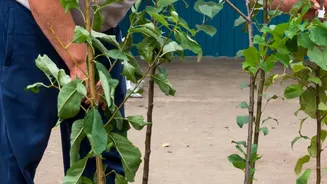
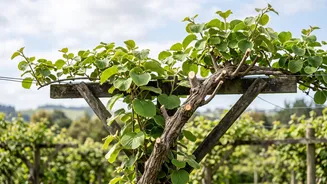
The first year after planting is all about what happens below the ground. Don't be discouraged if you don't see explosive growth on the vine itself. The plant is dedicating its energy to developing a strong, healthy root system, which is crucial for its future vigour and productivity. Your main job during this period is to provide consistent care. Water the young vine regularly, especially during dry spells, but avoid waterlogging the soil as kiwis have shallow roots that are sensitive to rot. It is also the year to begin training the vine. Select the strongest, most vigorous shoot and encourage it to grow straight up a sturdy support, like a T-bar trellis or pergola, which it will need to support its weight in the coming years.
Year Two: Vigorous Growth and Training
The second year is when the kiwi vine's vigorous nature becomes truly apparent. You will see significant growth, with canes potentially extending several feet. This is the critical year for training the vine and establishing its permanent framework. Once the main trunk reaches the top of your trellis, you'll guide two main side branches, or cordons, to grow horizontally along the support wires. This structure is what will support the fruit-bearing shoots in the future. Light pruning is essential. Throughout the summer, remove tangled or weak shoots to allow for good air circulation and sunlight exposure. This helps prevent disease and directs the plant's energy towards building a strong structure rather than messy, unproductive growth.
Year Three: The First Flowers and Fruit
This is the year patient gardeners have been waiting for. Your kiwi vine should be mature enough to produce its first flowers. You can finally identify the male and female plants if you weren't sure before. Male flowers have a bright yellow, pollen-dusted centre, while female flowers have a distinct white ovary at the base with sticky stigmas radiating from the centre. For fruit to form, pollen must travel from the male flowers to the female flowers, a job usually done by bees. If pollination is successful, the female flowers will transform into small berries. Don't expect a massive harvest this first time; the initial crop is usually small. But it's a sure sign that your vine is healthy and has entered its productive phase.
Beyond Year Three: Full Production and Care
While the three-year mark is a major milestone, a kiwi vine's productivity continues to increase, typically reaching its peak after about seven or eight years. Your harvests will become progressively larger and more reliable. From year three onwards, a more structured pruning schedule is necessary. This involves a heavy pruning in winter when the vine is dormant, where you remove much of the wood that fruited in the previous season. You'll also continue with lighter summer pruning to manage the vine's canopy. Regular feeding with a balanced fertiliser and consistent watering will ensure your vine remains healthy and productive for many years to come—often for over 20 years.