








The Deceptive 'Health Halo'
Packaged baked chips often wear what marketers call a “health halo.” Words like “baked, not fried,” “gluten-free,” or “organic” make us perceive them as a guilt-free choice. This psychological effect can be powerful, giving us subconscious permission
to eat larger portions than we otherwise would. Because we believe the item is healthier, we may underestimate its calorie count and pay less attention to the actual nutrition label, leading to overconsumption.
Engineered for a 'Bliss Point'
The irresistible nature of many processed snacks, including baked chips, isn't accidental. Food scientists work to find the “bliss point,” a term coined by psychophysicist Howard Moskowitz. This is the precise, perfect balance of salt, sugar, and fat engineered to create maximum pleasure for our taste buds. This combination is rarely found in nature and can be so intensely rewarding that it overrides the brain's natural “I’m full” signals, encouraging you to keep eating.
The Trick of Vanishing Calories
Baked chips often have a light, airy texture that melts in your mouth. This creates a phenomenon known as “vanishing caloric density.” The term, popularized by food scientist Steven Witherly, describes how foods that dissolve quickly can trick your brain into thinking you've consumed fewer calories than you actually have. Because the food disappears so fast, the brain’s satiety signals don't have enough time to register, delaying the feeling of fullness and making it easy to finish an entire bag without realizing it.
Hijacking Your Brain's Reward System
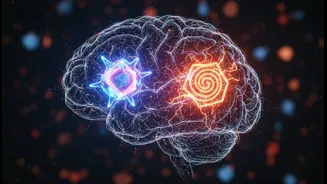
These highly engineered foods have a profound effect on our brain chemistry. Consuming hyper-palatable foods with high concentrations of salt and refined carbohydrates triggers a surge of dopamine, the brain's “feel-good” neurotransmitter, in our reward centres. This creates a powerful sensation of pleasure. Over time, this can lead to a cycle resembling addiction; your brain starts to crave that dopamine spike, driving you to seek out more of the same food to get the same rewarding feeling. The brain may even become desensitized, requiring more of the food to achieve the same level of pleasure.
Missing the Signals for Fullness
Ultimately, the feeling of being full—or satiety—is a complex process. Whole, unprocessed foods are typically rich in fiber, protein, and water, all of which help signal to your brain that you've had enough to eat. The processing that goes into making packaged baked chips often strips away these crucial nutrients. Without sufficient protein and fiber to slow digestion and trigger satiety hormones like leptin, your body's “off switch” for hunger is delayed. You consume a large number of calories, but your body doesn't receive the memo that it's time to stop eating, leaving you reaching for more.