

The Squat: A True Powerhouse
The squat is often called the king of lower-body exercises, and for good reason. It is a compound movement, meaning it engages multiple joints and muscle groups simultaneously. When you perform a squat, you're primarily targeting the major muscles of your
upper legs: the quadriceps (front of the thighs), the hamstrings (back of the thighs), and the glutes (your buttocks). These muscles are vital for everyday movements like walking, standing up from a chair, and running. As you lower your body, your leg muscles work to control the descent, and as you push back up, they contract powerfully to lift your bodyweight, creating the stimulus needed for growth and strength.
How Squats Build Stronger Thighs
Strength isn't built by magic; it's a biological process. When you squat, your muscles undergo stress. This causes microscopic tears in the muscle fibres, which might sound alarming but is a natural part of building strength. During recovery, your body repairs these micro-tears, making the muscles stronger and more resilient than before. Squats are particularly effective because they allow you to progressively add more resistance, whether by increasing repetitions, holding weights, or going deeper into the squat. This progressive overload is the key principle for continuous gains in both muscle size and functional strength. Furthermore, as a major compound exercise, squats can stimulate the release of anabolic hormones like testosterone and growth hormone, which are crucial for muscle development.
Mastering the Basic Squat Form
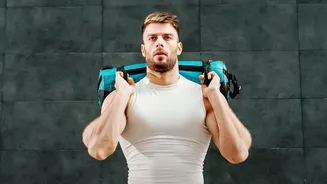
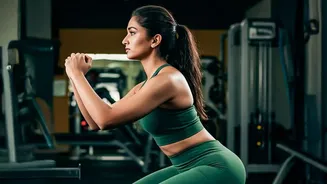
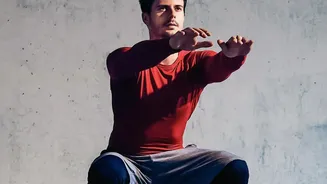
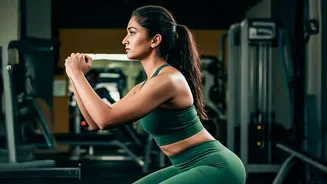
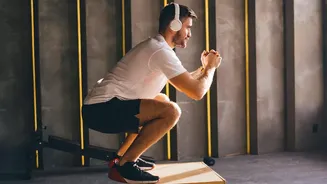
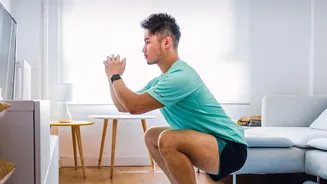
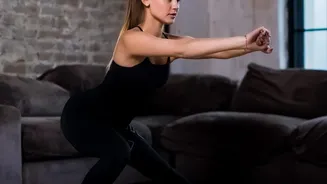
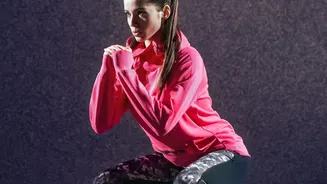
Proper form is crucial to maximize benefits and prevent injury. To perform a basic bodyweight squat, start by standing with your feet shoulder-width apart, toes pointing slightly forward. Keep your chest up and your core engaged. Begin the movement by hinging at your hips and bending your knees, as if you're about to sit in a chair. Lower yourself until your thighs are parallel to the ground, ensuring your knees track over your feet but not past your toes. Your heels should remain flat on the floor. From the bottom of the squat, push through your heels and extend your hips and knees to return to the starting position.
The Lunge: A Unilateral Challenge
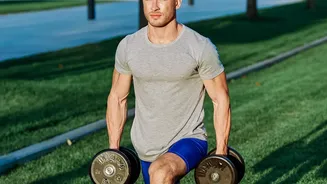
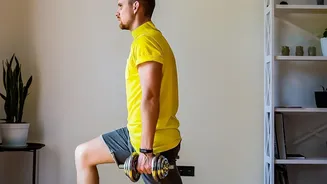
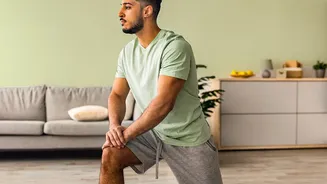
While squats are a bilateral exercise (working both legs at once), lunges are unilateral, meaning they focus on one leg at a time. This single-leg focus introduces a significant balance and stability challenge. Like squats, lunges work the quads, hamstrings, and glutes. However, because you're balancing on one leg, lunges also heavily recruit smaller stabilizing muscles in your hips and core, such as the gluteus medius, to maintain control. This makes them excellent for improving functional fitness, coordination, and correcting muscle imbalances between your left and right sides.
Squats vs. Lunges: What's the Difference?
Both exercises are fantastic for thigh strength, but they offer slightly different advantages. Squats are generally better for building overall maximal strength and muscle mass because their stable, two-footed base allows you to lift heavier weights. They are a go-to for developing explosive power. Lunges, on the other hand, excel at enhancing single-leg stability, balance, and coordination. They are highly effective at identifying and fixing strength discrepancies between your legs. Some research suggests lunges may provide superior glute activation compared to squats when performed at the same relative intensity. While squats may emphasize the quads more, lunges can also heavily target the quads depending on form.