



The Foundation of All Movement
Balance training is frequently the most neglected part of a fitness routine. We chase personal bests in running and lifting, but without a stable base, we limit our potential and increase our risk of injury. Balance is the complex coordination of our muscles,
joints, and sensory systems that keeps us upright and stable. It's the unsung hero behind every step we take, from navigating a crowded market to simply getting out of a chair. Good balance improves coordination, posture, and athletic performance. As we age, maintaining this ability becomes even more critical for preventing falls and preserving independence.
Meet the Balance Block
Enter the balance block, also known as a balance pad or foam cushion. This simple piece of high-density foam is designed to create an unstable surface. When you stand on it, the tiny muscles in your feet, ankles, and legs have to work overtime to keep you steady. This constant process of stabilisation and correction is what builds strength and improves your body's awareness of its position in space, a sense known as proprioception. Because they are small, lightweight, and relatively inexpensive, balance blocks are an ideal addition to any home workout space, offering significant benefits without needing much room or a large budget.
The Core Benefits You Will Feel
Integrating balance work pays dividends far beyond simply not falling over. Regular practice promotes stable knees, ankles, and hips, which can prevent a wide array of injuries like common ankle sprains. It also forces your core muscles to engage, leading to improved posture and a stronger midsection. For those who play sports, enhanced balance translates to better agility, quicker reaction times, and more efficient movement. Some studies even suggest that the concentration required for balance exercises can help improve cognitive function, as it challenges the brain and body simultaneously.
Your First 10-Minute Balance Routine
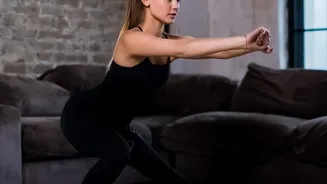
Ready to get started? Find a clear space near a wall or sturdy chair for support if you need it. Perform these exercises on your balance block for a short, effective routine. Aim to do this at least twice a week. 1. Single-Leg Stand: Start by standing on the block with both feet. When you feel steady, slowly lift one foot off the pad. Try to hold for 30 seconds, focusing on a fixed point in front of you. Keep your standing knee slightly bent. Switch legs and repeat. 2. Squats: Stand on the block with your feet hip-width apart. Slowly lower your hips into a squat position, as if sitting in a chair. Go only as low as you can while maintaining control. Keep your chest up and your back straight. Perform 8-12 repetitions. 3. Heel-to-Toe Walk: This requires a bit more space. Place the block on the floor and step onto it. Then, step forward off the block, placing your heel directly in front of the toes of your other foot. While this is often done on the floor, practicing stepping on and off the block challenges stability. Alternatively, simply rock forward and back on the block, shifting weight from heels to toes. 4. Lunges: Stand a foot or two behind your balance block. Step forward with one foot onto the center of the block, lowering your hips until both knees are bent at a 90-degree angle. Push off the block to return to the starting position. Complete 8-10 reps before switching legs.
How to Progress and Stay Challenged
Once you feel confident with the basic movements, you can easily increase the difficulty. Try performing the exercises with your eyes closed; this removes visual feedback and forces your body to rely entirely on its internal sense of balance. You can also add dynamic movements, such as raising your arms overhead or turning your head from side to side while balancing on one leg. Another way to progress is to combine exercises, such as performing a bicep curl while doing a single-leg stand. The key is to consistently challenge your stability in new ways, ensuring your body continues to adapt and get stronger.