



The Social Media Time Machine
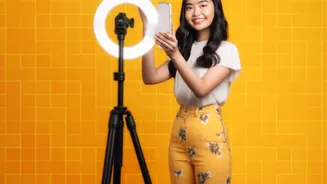
The primary engine driving this rediscovery isn't a streaming service's recommendation engine, but the chaotic, user-driven worlds of Instagram Reels and other short-form video platforms. A 15-second clip of a classic song, a fan-edit of a dramatic scene,
or a dance trend using retro music can go viral overnight, decontextualized from its original film. For Gen Z, the first encounter with a film like 'Rangeela' or 'Pardes' might not be the movie itself, but a viral soundbite or a 'get the look' video. This algorithmic serendipity exposes an entire generation to a century of cinema, not as a history lesson, but as a living, breathing library of content to be remixed and re-shared. It's discovery by meme, not by movie poster.
An Escape into a Different Aesthetic
For a generation raised on the often muted tones of modern realism or the glossy sheen of CGI, the maximalism of old Bollywood offers a potent visual escape. The appeal lies in the unapologetic glamour, the vibrant colour palettes, the elaborate costumes, and the high-drama emotions that feel distinct from today's content. Actors like Kajol have noted that younger audiences are drawn to the passionate, romanticised style of 90s and 2000s films. This isn't just about fashion; it's about a search for what feels authentic and emotionally resonant. Many find the lyrical richness and simpler storytelling of older films a welcome alternative to the hook-driven, often formulaic blockbusters of the present.
Beyond the Passive Algorithm
While social media algorithms surface the initial clips, the trend also signifies a subtle rebellion against the passive consumption model of major streaming platforms. Instead of simply accepting the “what to watch next” queue, Gen Z actively participates in cultural curation. They are not just watchers; they are digital archivists, critics, and promoters, sharing deep cuts and creating new contexts for old media. This peer-to-peer recommendation system is far more powerful than a corporate algorithm because it’s rooted in community and shared taste. Seeing a friend or a trusted creator champion a film from 1985 makes it feel more immediate and relevant than a banner ad on a streaming homepage.
The 'Vibe' Comes Before the Plot
This new mode of discovery has fundamentally inverted the way we approach movies. Traditionally, a viewer would watch a film and then discuss its parts—the music, the style, the story. Today, the process is often reversed. Gen Z consumers might first fall in love with the 'vibe' of a film through its aesthetic on a mood board or the melody of a song in a Reel. The curiosity to seek out the full two-hour movie comes after the snippets have already provided value. This piece-by-piece consumption means that a film's legacy is no longer solely defined by its narrative, but by its most memorable, shareable moments. The plot becomes secondary to the feeling it evokes.
Building a New, Decentralized Canon
Ultimately, Gen Z's interest in old Bollywood is a clear indicator of a larger power shift in film culture. The traditional gatekeepers—film critics, television programming, and studio marketing campaigns—have lost their dominance. In their place, a decentralized, global, and digitally native community is building a new film canon from the ground up. In this new landscape, a 1970s classic can trend alongside a 2026 blockbuster because its elements are just as easy to clip, share, and integrate into online identity. The distinction between 'old' and 'new' media becomes increasingly irrelevant. What matters is what captures attention, fuels creativity, and connects with an audience on its own terms.