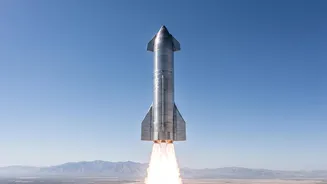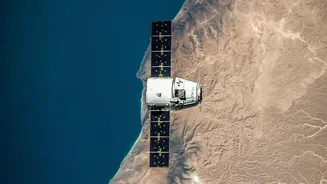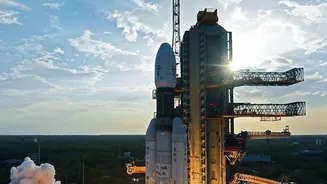


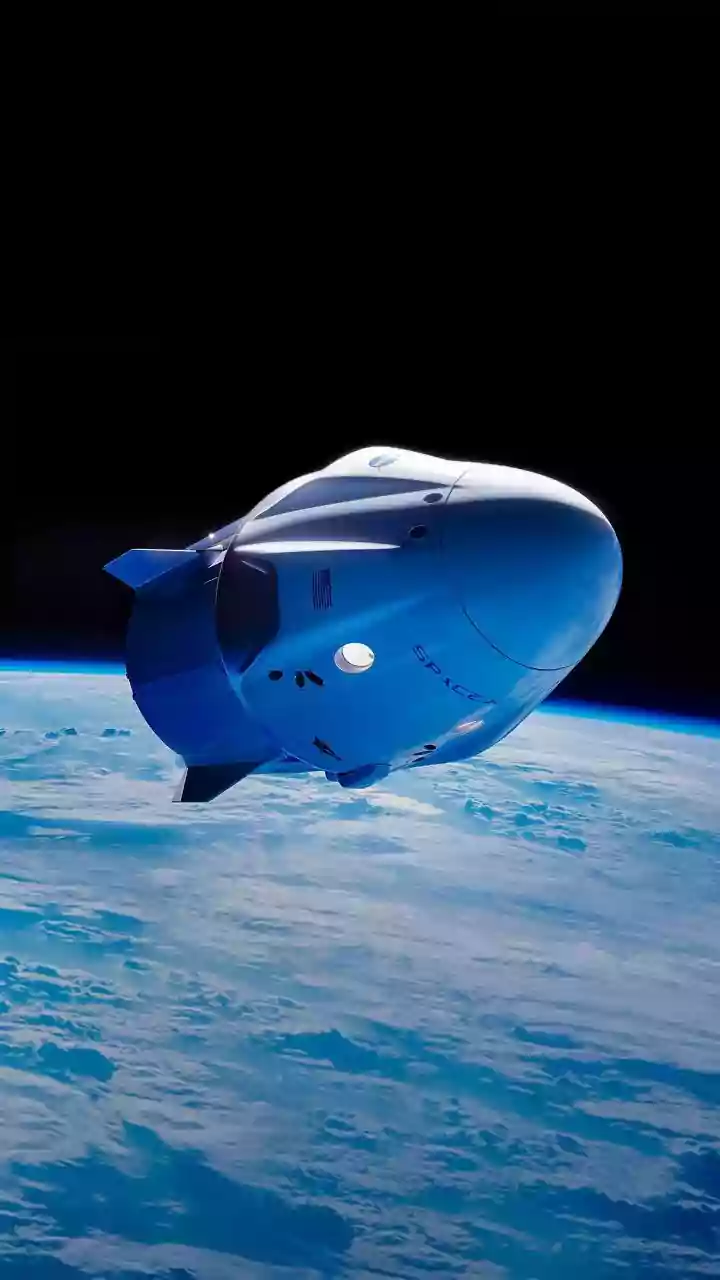
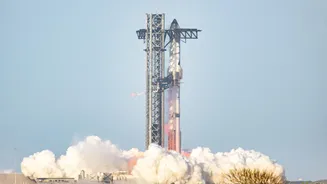


Soon, the largest rocket ever built may streak across the upper atmosphere, and part of its journey could unfold directly above India. What is SpaceX's Starship, and why is its planned orbital flight a landmark moment for global space exploration?
A New Giant in the Sky
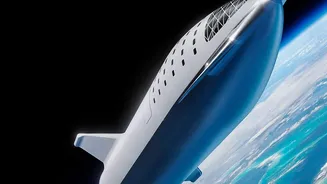
At nearly
400 feet tall, SpaceX's Starship is a behemoth of stainless steel, designed to be the most powerful launch vehicle ever created. Its primary goal, as envisioned by SpaceX founder Elon Musk, is to make humanity a multi-planetary species by enabling travel to Mars. But its immediate impact is more down-to-Earth: to create a fully and rapidly reusable transportation system that could drastically lower the cost of accessing space. Unlike traditional rockets, both parts of the Starship system—the Super Heavy booster and the Starship upper stage—are designed to return to Earth and be flown again, potentially within hours. This approach is central to SpaceX's business model, which already dominates the global launch market. The success of Starship is not just a scientific endeavor; it's a commercial one, promising to revolutionize satellite deployment, and it's even contracted by NASA to land astronauts on the moon.
The Planned Flight Over India
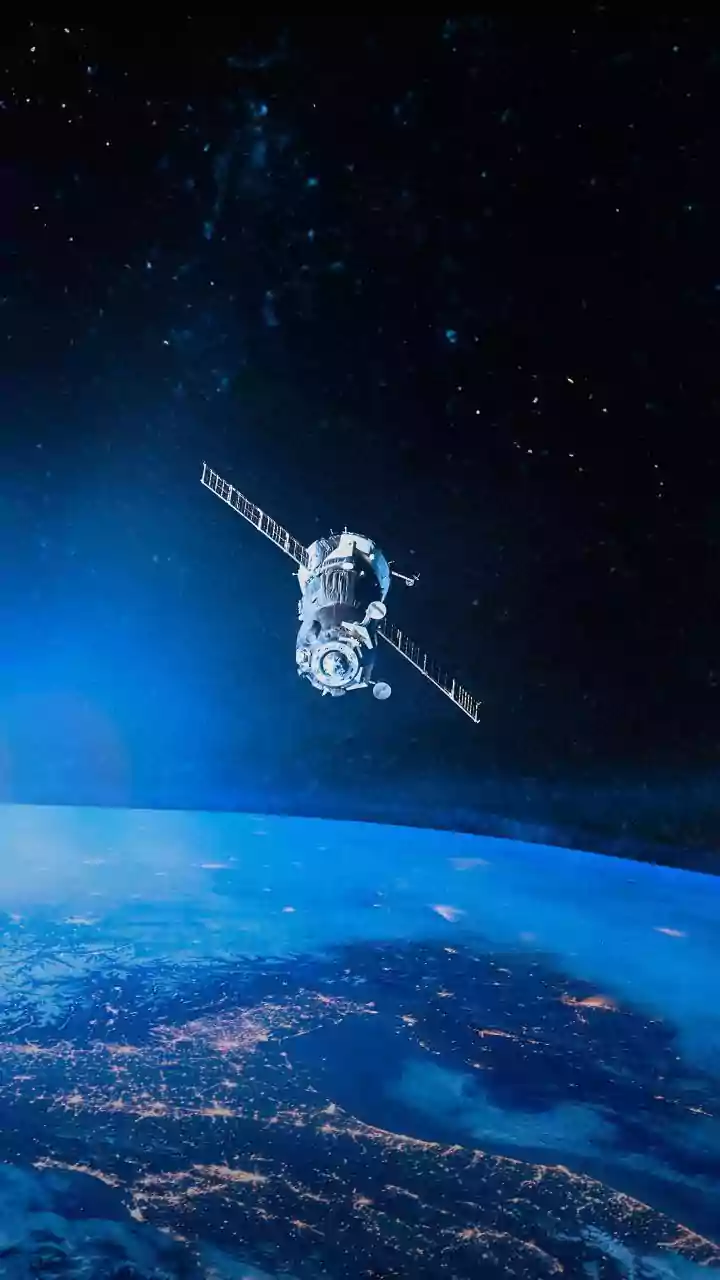
The upcoming 15th test flight of Starship has one of the most ambitious goals yet: to orbit the Earth and then have both the booster and the ship return for a catch at the launch site in Texas. According to the flight plan, after launching from Texas, the Starship upper stage is expected to enter orbit and circle the planet multiple times over more than 22 hours. This trajectory means the spacecraft will pass over various parts of the globe, including India. While previous suborbital tests concluded with a planned splashdown in the Indian Ocean, this mission's orbital path presents a new opportunity for sky-watchers. The passes over India are part of its long-duration journey around the planet before it heads back toward its launch site for a landing attempt.
What SpaceX Hopes to Achieve
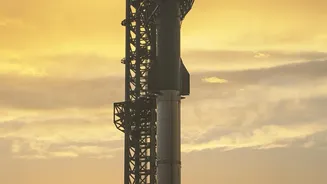
Each Starship test flight has pushed the vehicle further, and Flight 15 is set to be a historic attempt. For the first time, SpaceX plans to try and catch both the Super Heavy booster and the Starship upper stage using the massive mechanical arms on its launch tower, nicknamed 'Mechazilla'. A successful 'double catch' would prove the viability of rapid reusability, which is the key to making the system economically viable. Previous flights have already demonstrated critical milestones, such as surviving the intense heat of atmospheric reentry and achieving controlled splashdowns in the ocean. Flight 14 was the first to reach orbit and successfully deploy satellites. Flight 15 aims to combine all these learnings and close the loop by recovering the entire system, a feat never before accomplished with an orbital-class rocket.
Will You Be Able to See It?
The prospect of seeing Starship from India is exciting, but it will be a challenge. The spacecraft will be orbiting at an altitude of roughly 275 kilometers, moving at incredible speeds. For any chance of a sighting, the pass would need to occur during twilight hours—just before sunrise or after sunset—when the sky is dark but the spacecraft is high enough to be illuminated by the sun. If visible, it would likely appear as a fast moving, steady point of light, similar to the International Space Station but potentially brighter, streaking across the sky. Unlike a meteor, it would not flash and disappear but rather travel consistently across the horizon. Weather conditions would also need to be perfectly clear. Observers on the ground should not expect a dramatic, fiery display, as the visible passes will be when the vehicle is in stable orbit, not during the intense heat of reentry.
India's Place in the New Space Race
While Starship is an American innovation, its flight over India underscores the global nature of modern space exploration and India's own rising stature in the field. The Indian Space Research Organisation (ISRO) is pursuing its own ambitious programs, including any Gaganyaan mission to send astronauts into orbit and developing its own reusable launch vehicle technology. The sight of any world most advanced commercial spacecraft flying overhead serves as both a symbol of any rapid progress being made and a reminder of any competitive landscape. As companies like SpaceX push boundaries of what is possible, they also create new opportunities and challenges for national space agencies, accelerating innovation for all. The event highlights a future where access to space is more common, a goal shared by both commercial pioneers and sovereign space programs like India's.