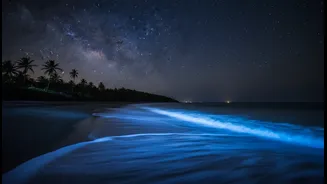









The Sparkle in the Sea
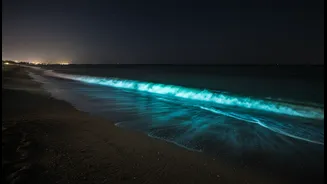
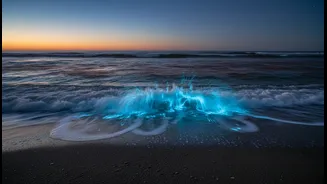
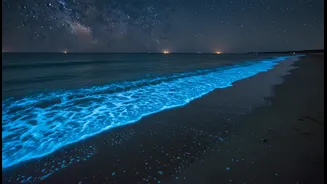
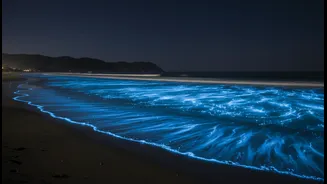
The ethereal blue glow in the waves is a phenomenon called bioluminescence, a chemical light produced by a living organism. In the case of glowing beaches, the culprit is a tiny, single-celled organism called a dinoflagellate, specifically a species named
Noctiluca scintillans, which translates to 'sea sparkle'. When millions of these microscopic organisms are concentrated in the water and then disturbed—by a breaking wave, a swimming fish, or a hand splashing the surface—they flash with light. This light is a defense mechanism, a sudden flash intended to startle and deter predators.
The Perfect Recipe for a Glow
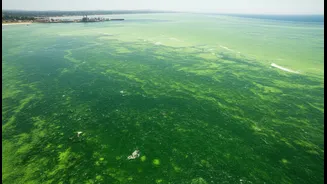
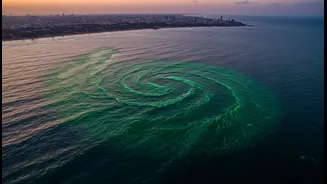
These bioluminescent events, often called 'blue tides', don't happen randomly. They are the result of an algal bloom, a rapid increase in the population of Noctiluca scintillans. This bloom requires a specific recipe of environmental conditions. Key ingredients include an abundance of nutrients in the water, often from agricultural runoff or sewage discharge after heavy rains, which acts as a fertiliser. Warm water temperatures, typically between 25°C and 30°C, and calm seas also encourage the organisms to multiply and accumulate near the surface. These conditions have been increasingly observed along India's west and east coasts.
Eyes in the Sky, Boots on the Ground
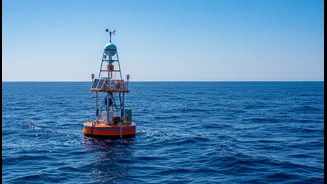
This is where marine science data becomes crucial for prediction. Scientists use a combination of remote and direct monitoring to track the conditions that lead to a bloom. Satellites equipped with advanced sensors act as eyes in the sky, collecting vast amounts of data around the clock. They measure sea surface temperature and 'ocean colour', which can indicate the presence of chlorophyll and other pigments in the algae, even before a bloom becomes visible to the naked eye. This satellite data is then complemented by on-the-ground efforts. Research vessels and autonomous gliders collect water samples to directly measure nutrient levels, salinity, and the concentration of phytoplankton.
From Data Points to Predictions
This stream of data is fed into sophisticated computer models. By analysing historical data on past blooms and cross-referencing it with current satellite and water sample information, these algorithms can identify when and where conditions are becoming ripe for a Noctiluca bloom. While predicting the exact day and beach is still a challenge, these models can create forecast maps highlighting coastal areas at high risk for a bloom in the coming days or weeks. This allows authorities and researchers to be on alert, turning a once-unpredictable event into a forecastable phenomenon.
A Beautiful Warning Sign
While breathtakingly beautiful, these glowing tides are not always a good sign. Noctiluca blooms can have a darker side. Though not toxic itself, the organism feeds voraciously on other phytoplankton, disrupting the base of the marine food web. Furthermore, when a massive bloom dies off, the decomposition process consumes huge amounts of oxygen in the water, creating hypoxic 'dead zones' that can lead to mass fish kills and harm coral reefs. Therefore, predicting these events is important not just for tourists hoping to see the glow, but also for managing fisheries and protecting fragile marine ecosystems.