




A Celestial Meeting in the West
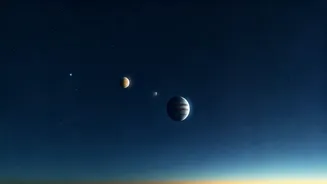
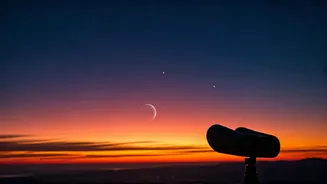
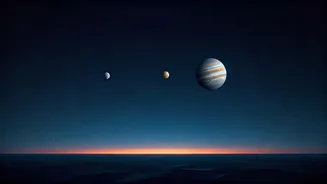
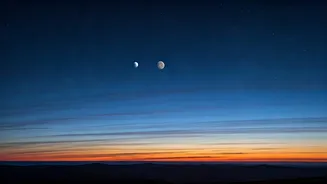
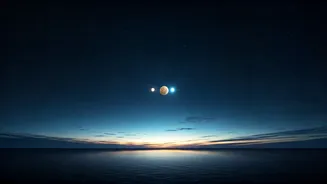
If you’ve recently gazed west after sunset, you’ve likely noticed one or two incredibly bright points of light that outshine everything else. These aren't aircraft or distant stars; they are planets. What you're witnessing is a lineup, or 'conjunction,'
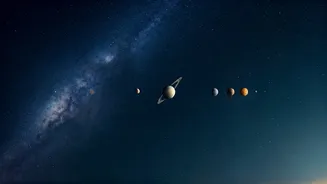
where two or more planets appear close together in our sky. This isn't a cosmic collision, of course. The planets are still millions of kilometres apart in their own orbits around the sun. But from our vantage point on Earth, their orbital paths cause them to occasionally align, creating a beautiful and dynamic celestial display. These gatherings are not rare, but they are always a special sight, reminding us of the grand, clockwork motion of our solar system.
Who's Who in the Evening Sky?
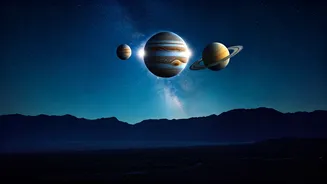
So, how do you know which planet you're looking at? The brightest of them all is usually Venus. Often called the 'Evening Star,' it shines with a brilliant, steady, silvery light and is typically the first 'star' to appear after sunset. It’s so bright it doesn't twinkle like a star does. Another regular visitor to the evening show is Jupiter, the largest planet in our solar system. It appears as a very bright, white, and steady point of light, usually second only to Venus in brilliance. Depending on the time of year, you might also spot Saturn, which offers a calmer, yellowish glow, or the elusive Mercury, which stays very close to the sun and is only visible for a short window in the twilight glow. Unlike the twinkling of stars, caused by Earth's atmospheric turbulence, planets shine with a more constant light because they are much closer to us.
Your Guide to Spotting the Planets
Catching this planetary parade is surprisingly easy. The best time to look is between 30 and 90 minutes after the sun has completely set. Find a spot with a clear, unobstructed view of the western horizon—a balcony, a rooftop, or a local park away from tall buildings and bright city lights is ideal. Your eyes will need about 15-20 minutes to fully adapt to the darkness, so be patient. The planets will be bright enough to be unmistakable against the deepening twilight. You can also use a simple stargazing app on your phone. Just point it at the sky, and it will identify the planets, constellations, and stars for you, turning a casual glance into an informed observation.
Do You Need a Telescope?
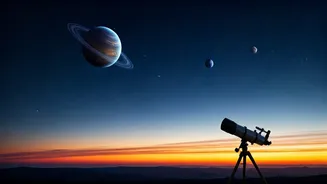
Absolutely not! The beauty of these bright planetary alignments is that they are perfectly visible to the naked eye. In fact, using only your eyes allows you to appreciate the scale of the sky and the position of the planets relative to the horizon and background stars. However, if you have a pair of binoculars, they can dramatically enhance the view. With a steady hand or a tripod, binoculars can reveal the phases of Venus (like a tiny moon) or even resolve Jupiter into a distinct disc. You might even glimpse Jupiter’s four largest moons—Io, Europa, Ganymede, and Callisto—as tiny pinpricks of light flanking the giant planet. A small telescope will, of course, reveal even more detail, like Saturn’s glorious rings, but it's by no means a requirement to enjoy the show.
Why Is This Happening?
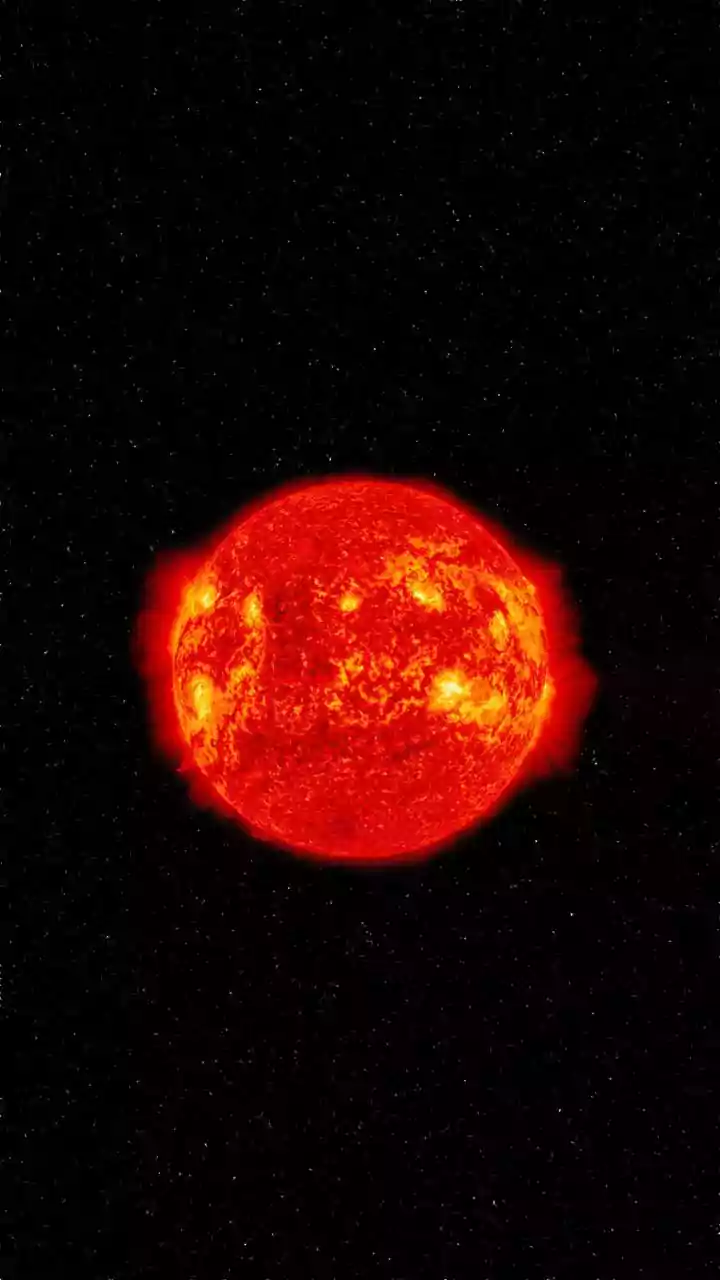
The solar system is a dynamic place. Each planet, including Earth, orbits the Sun at a different speed and on a different path. The inner planets, like Venus and Mercury, move faster than we do, while the outer planets, like Jupiter and Saturn, move much more slowly. This cosmic race means that, from our perspective, the other planets constantly change their positions in our sky. A planetary gathering occurs when Earth, the Sun, and other planets fall into a particular alignment that makes them appear grouped together from our viewpoint. It’s a beautiful illusion created by perspective and orbital mechanics, a fleeting arrangement that changes night after night.