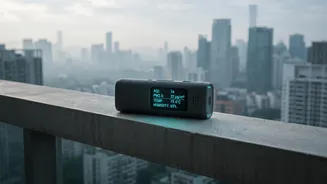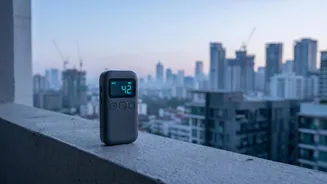







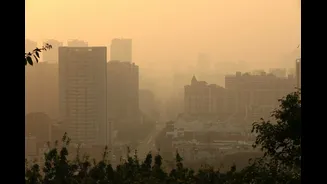
As air quality in many Indian cities remains a pressing concern, real-time data has become a vital tool for public health. Digital displays and mobile apps now offer instant Air Quality Index (AQI) readings, empowering citizens to safeguard their health.
Understanding the Air Quality Index (AQI)
The AQI is a simple, colour-coded scale from 0 to 500 that translates complex data about multiple air pollutants into a single, easy-to-understand number. Launched by the Central Pollution Control Board (CPCB) in 2014, it measures eight key pollutants, including fine particulate matter like PM2.5 and PM10, nitrogen dioxide, and ozone. The final AQI value is determined by the pollutant with the highest reading at a given time. Each colour represents a different level of health concern, ranging from 'Good' (Green) to 'Severe' (Maroon), helping you quickly assess the risk.
Finding AQI Data in Your City
In major metropolitan areas like Delhi, Mumbai, and Ahmedabad, large digital display boards have been installed at busy intersections and public spaces. These screens provide live AQI readings, offering a quick, at-a-glance update for commuters and pedestrians. However, the most convenient and hyperlocal data is now available on your smartphone. The government has developed dedicated apps for this purpose. The 'Sameer' app by the CPCB and the 'SAFAR-Air' app from the Ministry of Earth Sciences are two of the most reliable sources. Both provide real-time AQI data for hundreds of cities, pollutant breakdowns, and even health advisories. Additionally, platforms like Google Maps have also begun integrating AQI layers, making air quality information more accessible than ever.
How to Use AQI to Plan Your Day
Knowing the daily AQI can help you make practical decisions to protect your health. Here’s a simple guide based on the standard categories:
'Good' (0-50): Air quality is excellent. It’s a great day for all outdoor activities.
'Satisfactory' (51-100): Air quality is acceptable, but sensitive individuals (like those with asthma or heart conditions) might experience minor breathing discomfort.
'Moderate' (101-200): People with existing lung or heart diseases, as well as children and the elderly, should reduce prolonged or heavy exertion outdoors.
'Poor' (201-300): Most people may start to feel breathing discomfort with prolonged exposure. Sensitive groups should avoid outdoor activities.
'Very Poor' (301-400): This can lead to respiratory illness on prolonged exposure. Everyone should avoid or significantly reduce outdoor exertion.
'Severe' (401-500): This level affects even healthy people and seriously impacts those with existing conditions. Avoid all outdoor physical activity.
Simple Steps to Reduce Your Exposure
On days with high AQI levels ('Poor' or worse), there are several steps you can take to minimise health risks. The most effective strategy is to stay indoors as much as possible and keep windows closed. If you have an air purifier, run it to improve indoor air quality. If you must go outside, especially for extended periods, consider wearing a high-quality N95 mask, which can filter out fine particulate matter. It's also wise to avoid strenuous exercise like running or cycling outdoors, as this increases the volume of polluted air you inhale. Planning your commute or errands during hours when pollution levels are typically lower can also make a difference.