



Savouring Ilish in West Bengal
For Bengalis, the monsoon is synonymous with Ilish, or Hilsa fish. This prized fish, which migrates upstream from the sea to spawn during the rainy season, is celebrated for its rich, oily texture and distinct flavour. A trip to Kolkata during this time
is incomplete without trying 'Shorshe Ilish,' a fiery preparation where the fish is steamed in a pungent mustard gravy. Another classic is 'Ilish Bhaja,' where slices of the fish are simply fried in mustard oil and served with hot rice, a comforting meal that captures the essence of the season.
The Ritual of Ghevar in Rajasthan
In the arid landscapes of Rajasthan, the arrival of rain is a cause for grand celebration, marked by the appearance of Ghevar. This disc-shaped, honeycomb-like sweet is made by deep-frying a batter of flour and ghee, which is then soaked in sugar syrup. The humidity of the monsoon is essential for achieving its perfect crispy-yet-soft texture. Traditionally associated with the festivals of Teej and Raksha Bandhan, Ghevar is more than a dessert; it's a seasonal ritual symbolizing sweetness and auspicious beginnings.
Healing with Karkidaka Kanji in Kerala
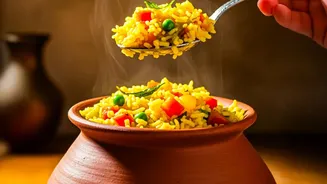
In Kerala, the monsoon month of Karkidakam is traditionally a time for rejuvenation, guided by Ayurvedic principles. A key part of this is the consumption of Karkidaka Kanji, a medicinal rice porridge. Made with Njavara rice, a special local variety, and a blend of herbs and spices like ginger and cumin, this nourishing gruel is designed to boost immunity and aid digestion when the body is considered most vulnerable. It’s a true wellness experience that connects food, health, and climate.
Foraging for Patrode in Coastal Karnataka
Along the coasts of Karnataka and Maharashtra, the monsoon brings a bounty of fresh colocasia leaves (kesuvina ele). These large, heart-shaped leaves are used to make Patrode, a savoury steamed roll. The leaves are layered with a spicy and tangy paste made from rice flour, tamarind, jaggery, and spices, then rolled and steamed. This delicacy is a perfect example of seasonal cooking, using ingredients that are available in abundance only during the rains. It can be eaten steamed or sliced and pan-fried for a crispy snack.
Enjoying Goa’s Rainy Day Cuisine
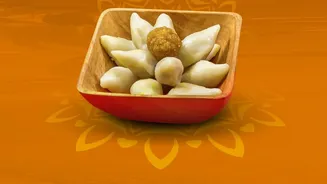
While many associate Goa with sunny beaches, the monsoon transforms it into a lush, green paradise with its own distinct food culture. Fishing bans mean a shift towards preserved fish dishes like 'Kismur,' a dry chutney made with dried shrimp or fish, coconut, and spices. The rains also bring forth wild mushrooms ('Roen Almi') and foraged greens ('ranbhaji'). Another iconic monsoon sweet is 'Patoleo,' a dumpling of rice flour, coconut, and jaggery, steamed in fresh turmeric leaves that are only available during this season.
The Ubiquitous Charm of Bhutta
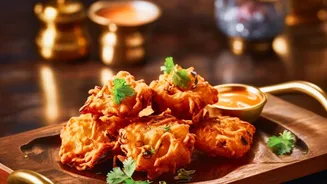
Perhaps the most pan-Indian monsoon experience is enjoying a freshly roasted 'Bhutta' (corn on the cob) from a roadside vendor. As the rain falls, the smoky aroma of corn being roasted over hot coals fills the air. The charred, juicy kernels are then rubbed with a mixture of lemon juice, salt, and chilli powder, creating a perfect balance of sweet, sour, salty, and spicy flavours. It’s a simple, unpretentious snack that is deeply tied to the nostalgia and comfort of a rainy day.
Warming Up with Momos in the Himalayas
In the hill stations of Sikkim, Himachal Pradesh, and other Himalayan regions, the cool, misty monsoon weather is the perfect setting for a steaming plate of momos. These Tibetan-style dumplings, filled with vegetables, paneer, or meat, are a beloved comfort food. Paired with a hot, clear soup like Thukpa, a hearty noodle soup, it becomes the ultimate rainy-day meal that warms you from the inside out. Enjoying these dishes while watching the clouds roll over the mountains is an experience in itself.