








Why Monsoon Heat Feels Different
We often think of monsoon as a relief from the scorching pre-monsoon summer. While the rain might lower the temperature by a few degrees, it dramatically increases the humidity. This combination is what creates that familiar, suffocating feeling. Your
body's primary cooling mechanism is sweating. When sweat evaporates from your skin, it takes heat with it. But when the air is already saturated with moisture, as it is during a humid monsoon day, your sweat can't evaporate efficiently. The result? The heat gets trapped in your body, making you feel far hotter and more stressed than the thermometer reading suggests. This is why a 35°C day in dry May can feel less punishing than a 32°C day in humid July.
The Science We Need: Wet-Bulb Temperature
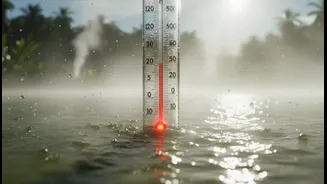
To truly understand the danger, we need to talk about a concept called 'wet-bulb temperature'. It's a combined measure of heat and humidity, essentially telling us how effectively the human body can cool itself down through sweating. Think of it as the lowest temperature your skin can reach through evaporation. While a regular 'dry-bulb' thermometer just measures the air temperature, a wet-bulb reading accounts for the cooling effect of evaporation. When the wet-bulb temperature is high, it means the air is so moist that evaporative cooling has nearly stopped working, both for the thermometer's wet cloth and for your own skin.
When Your Body's Cooling System Fails
This failure of your body's natural air-conditioning system is where the real health risks begin. Without effective cooling, your internal body temperature can rise to dangerous levels. This can lead to a cascade of heat-related illnesses, starting with fatigue, dizziness, and muscle cramps. If the body continues to overheat, it can progress to heat exhaustion and, in the most severe cases, heatstroke. Heatstroke is a life-threatening medical emergency where the body's temperature regulation fails completely, potentially causing organ damage, brain injury, or even death. This strain is particularly hard on the cardiovascular system, which has to work much harder to pump blood to the skin to try and release heat.
The Danger Zone We Are Entering
Scientists have identified a wet-bulb temperature of 35°C as the theoretical upper limit of human survivability for more than a few hours, even for a healthy person resting in the shade. But significant health risks and heat stress begin at much lower wet-bulb temperatures, around 30-32°C. Alarmingly, recent studies show that Indian cities are increasingly experiencing these dangerous conditions not just in summer, but deep into the monsoon season. Densely populated areas like the Indo-Gangetic Plain and coastal cities are particularly vulnerable, with some cities seeing the number of 'dangerously humid days' increase dramatically over the past few decades.
What a Better Public Warning Looks Like
Currently, most weather alerts and public health advisories focus on the maximum daytime temperature, using colour-coded warnings like yellow, orange, and red. While useful, this is an incomplete picture. To truly keep people safe, especially vulnerable populations like the elderly, children, and outdoor workers, we need to communicate the combined threat of heat and humidity. Authorities should start incorporating wet-bulb temperatures or a more intuitive 'feels like' index that accurately reflects humidity's impact into daily forecasts and heat action plans. This would help citizens understand that a 'cooler' but more humid day can be just as, or even more, dangerous than a hotter, drier day, allowing them to take appropriate precautions like staying hydrated, avoiding strenuous activity, and seeking cool spaces.