




What Exactly Is a Dark Sky Reserve?
A Dark Sky Reserve is a designated area where artificial light pollution is actively controlled to preserve the natural darkness of the night sky. Think of it as a national park for the stars. The goal is to protect the pristine view of the cosmos, which
is essential for astronomical research and is becoming an increasingly rare experience for most of humanity. In December 2022, a 22-kilometre radius around the Hanle village was officially designated as the Hanle Dark Sky Reserve (HDSR), the first of its kind in India. This was the result of a partnership between the UT Ladakh administration, the Ladakh Autonomous Hill Development Council (LAHDC), Leh, and the Indian Institute of Astrophysics (IIA). The reserve has strict guidelines to minimise light pollution, including prohibiting high-beam headlights and providing villagers with special dark-sky-friendly curtains and light bulbs to prevent light spillage.
Hanle: India’s Cosmic Oasis
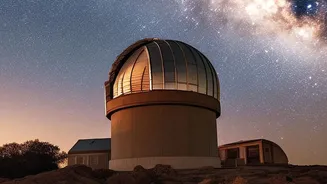
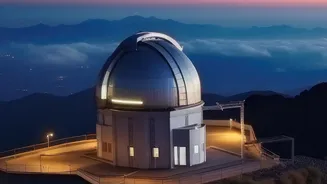
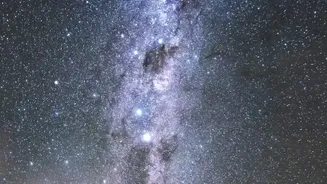
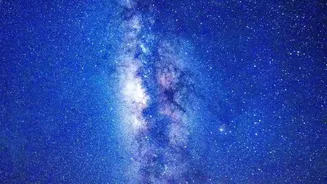
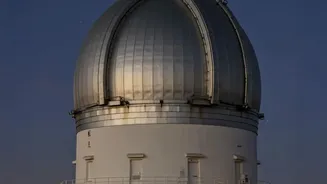
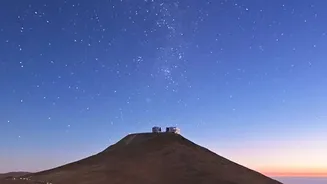
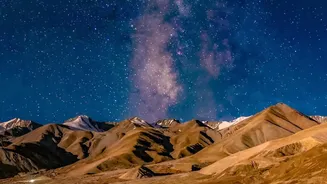
Nestled in the remote Changthang region near the Indo-China border, Hanle sits at a breathtaking altitude of about 4,500 metres (nearly 14,800 feet). This high-altitude cold desert location offers a perfect trifecta for stargazing: thin, dry air, minimal human interference, and over 300 clear, cloudless nights a year. These unparalleled conditions are why it's home to the Indian Astronomical Observatory (IAO), one of the world's highest sites for optical, infrared, and gamma-ray astronomy. The combination of scientific significance and natural advantage gives Hanle a Bortle Class 1 rating, which is the darkest possible sky on the scale. On a clear, moonless night here, the Milky Way can be so bright that it appears as a textured, cloudy river across the sky and may even cast faint shadows on the ground.
An Experience Beyond Astronomy
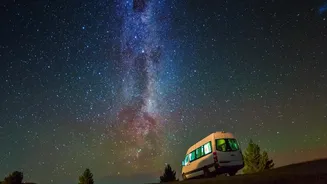
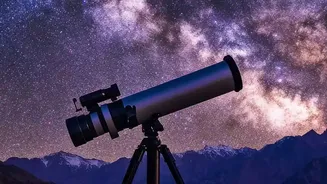
While professional astronomers have long cherished Hanle, the Dark Sky Reserve is transforming it into a unique destination for travellers. The experience is not just about peering through a telescope; it's about connecting with the night sky in a profound way. Local communities are at the heart of this new chapter. Many villagers have been trained as 'Astronomy Ambassadors' or 'astropreneurs', equipped with telescopes and knowledge to guide visitors. They can help you spot the rings of Saturn, the craters on the moon, or distant galaxies like Andromeda, which is visible to the naked eye from here. This initiative creates a sustainable livelihood for the local community, turning them into stakeholders in the preservation of their night sky. Beyond the stars, daytime in Hanle offers its own stark beauty, with opportunities to visit the 17th-century Hanle Monastery or spot wildlife like the Tibetan Wild Ass (Kiang).
Planning Your Celestial Escape
A trip to Hanle requires careful planning. The best time to visit is between May and October when the roads from Leh are generally open and the weather is more manageable. However, even in summer, night temperatures can drop significantly, so packing warm layers is essential. For the best stargazing, plan your trip to coincide with the new moon, when the sky is at its darkest. Reaching Hanle involves a 6-7 hour drive from Leh, so it’s crucial to start your journey early. Most importantly, acclimatisation is non-negotiable. Spend at least two full days in Leh (altitude 3,500 metres) before ascending to Hanle to prevent altitude sickness. All visitors, both Indian and foreign nationals, require a permit to enter this restricted area, which can be arranged in Leh.