

Banana Flower in Vazhaipoo Poriyal
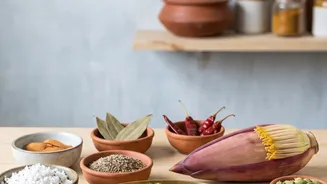
Often discarded, the large, purplish banana blossom (vazhaipoo) is a treasure in South Indian kitchens. Its flaky, layered texture is surprisingly 'meaty' once cooked. In a Vazhaipoo Poriyal, the cleaned and chopped flower is stir-fried with mustard seeds,
lentils, and coconut. The clever part is how cooking transforms its slight bitterness into a mild, absorbent base for spices, turning a floral afterthought into a substantial and nutritious side dish.
Jackfruit Seeds in Curries and Stir-fries
Don't throw away the seeds from a jackfruit. Once boiled, they shed their outer peel to reveal a firm, starchy interior with a texture somewhere between a potato and a chestnut. In regions like Kerala and Bengal, these seeds are a protein-rich addition to everything from simple stir-fries (Chakkakuru Mezhukkupuratti) to rich chicken curries. Their ability to absorb flavours while providing a satisfying, nutty bite is a masterclass in zero-waste cooking.
Colocasia Leaves in Patra
The large, heart-shaped leaves of the taro plant (arbi ke patte) can be itchy if not prepared correctly. But in the hands of a skilled cook, they become Patra, a beloved snack in Gujarat and Maharashtra. The leaves are carefully layered with a spiced gram flour paste, rolled tightly, steamed, and then sliced into pinwheels. The genius lies in the balance; the tangy, sweet, and spicy paste neutralizes the leaves' acridity, creating a tender, multi-layered roll that’s both a textural and flavorful delight.
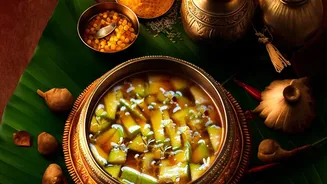
Lotus Stem in Nadru Yakhni
The lotus stem (kamal kakdi or nadru) is not just beautiful with its lace-like pattern, it's a textural marvel. Unlike other vegetables that soften completely, lotus stem retains a unique, tender crunch even after being simmered for a long time. This quality is brilliantly exploited in Kashmiri Nadru Yakhni, a yogurt-based curry. The mild, creamy gravy clings to the porous stem, but each bite still offers a satisfying crispness, proving that texture can be just as important as taste.
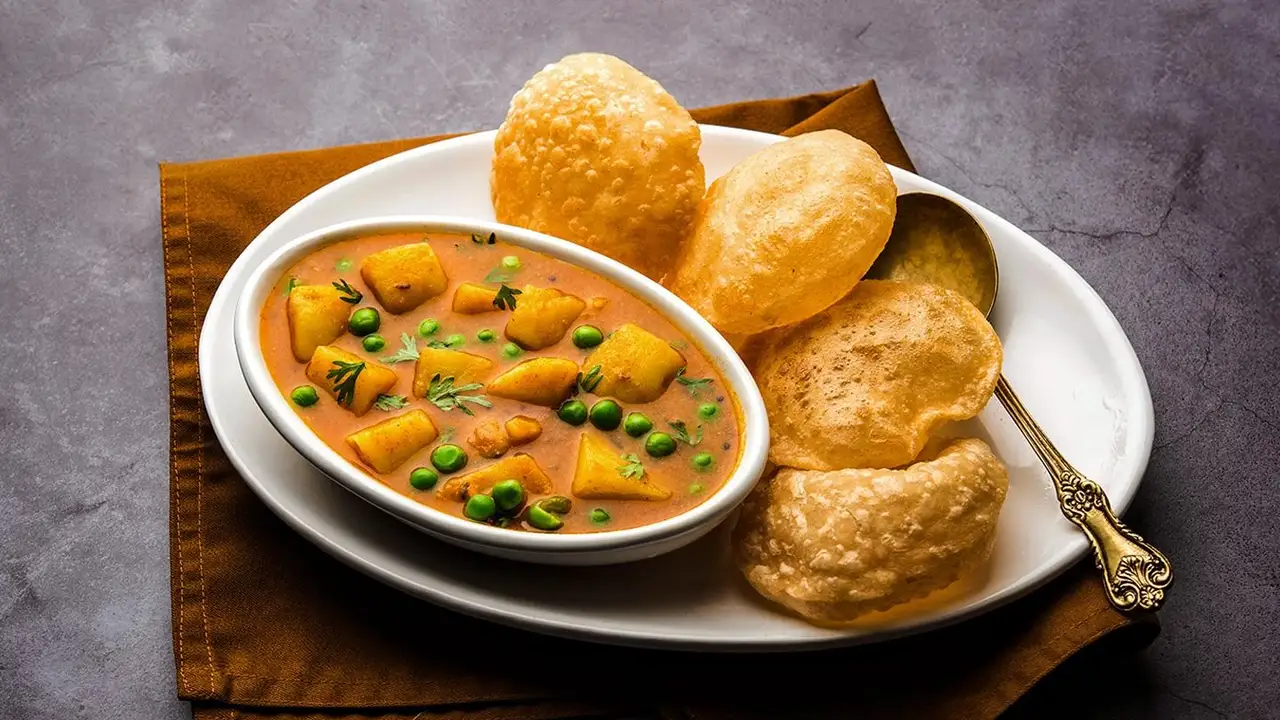
Poppy Seeds as a Thickener in Aloo Posto
Outside of Bengal, poppy seeds (posto) are often just a garnish. But in Bengali cuisine, they are the star. For Aloo Posto, white poppy seeds are soaked and ground into a thick, creamy paste. This paste forms the entire base of the curry for tender potatoes, with minimal other spices. It’s a clever move: the posto provides a nutty flavor and a rich, creamy consistency without any cream, yogurt, or nuts, creating a uniquely comforting and minimalist dish.
Moringa Leaves in Murungai Keerai Poriyal
While the drumstick (a moringa pod) is a common sight in sambar, its tiny leaves are often overlooked despite being a nutritional powerhouse. In South India, these leaves (murungai keerai) are celebrated in simple stir-fries or added to dal. A classic poriyal involves stir-frying the leaves with mustard seeds, onion, and grated coconut. The cleverness is in its simplicity; the dish doesn't mask the leaves' slightly bitter, earthy taste but complements it, turning a foraged green into a quick, healthy, and delicious meal.
Stone Flower in Chettinad Masala
Walk through a spice market and you might miss kalpasi, or stone flower. This papery, lichen-like spice doesn't smell like much when raw. Its magic is unlocked only when it hits hot oil, releasing a complex, earthy, and smoky aroma that is the secret soul of Chettinad cuisine. It’s not a flavour that dominates, but one that adds an unmistakable depth and mystery to masalas. Its use is a testament to the subtle art of layering flavors, where an unassuming ingredient provides the foundational note that makes a dish unforgettable.
Horse Gram in Kulath Dal
Horse gram (kulath) is a rustic, hardy lentil that has fallen out of favor in many urban kitchens but remains a powerhouse of nutrition and flavor. This resilient pulse has an earthy, robust taste that stands up to strong spices. When cooked into a dal, it creates a hearty, warming, and deeply satisfying dish that feels both ancient and nourishing. Its use reflects a time when Indian cooking was deeply connected to the land, celebrating indigenous crops that were built for sustenance.