






The Anatomy of a Rumour
The claim that sent shockwaves through the football world emerged shortly after Germany’s 4-3 shootout loss. Reports alleged that when the shootout went to sudden death, captain Joshua Kimmich struggled to find a volunteer for the sixth penalty. According
to German media outlet Bild, as many as four players—Leon Goretzka, Waldemar Anton, Nathaniel Brown, and Malick Thiaw—hesitated or showed reluctance to take the kick, citing a lack of confidence. The focus quickly zeroed in on Goretzka, an experienced midfielder, who was reportedly asked twice by Kimmich but declined. This apparent reluctance forced defender Jonathan Tah, who had never taken a professional penalty before, to take responsibility. His subsequent miss sealed Germany’s fate, fuelling a narrative of a team unwilling to face the pressure.
What Actually Happened in the Shootout
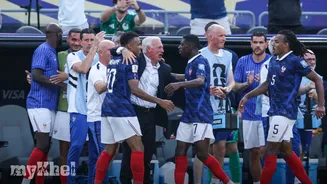
Germany’s first-ever loss in a World Cup penalty shootout was a dramatic collapse. After the match ended 1-1, the shootout began disastrously, with star Kai Havertz missing the opening kick. Nick Woltemade also failed to convert Germany's fourth attempt. The shootout was tied 3-3 after the first five kicks, pushing it into sudden death. After Paraguay missed their sixth attempt, Germany had a chance to extend the contest. It was at this moment that defender Jonathan Tah stepped up and sent his shot over the crossbar. Paraguay’s José Canale then scored to secure the historic upset. The on-field images of Kimmich speaking with teammates, and Tah ultimately taking the kick, provided fertile ground for speculation about who was, and wasn't, willing to take the long walk to the penalty spot.
The Coach's Perspective
In his post-match press conferences, a devastated Julian Nagelsmann focused more on his team's slow play and a controversial disallowed goal in extra time than on the penalty-taker selection. However, he did allude to the immense pressure of the moment. “I don't blame the penalty takers. That has happened to plenty of great players before,” Nagelsmann stated. Crucially, he added, “You have to be willing to face that pressure in the first place, and not everyone does that.” This comment, while not a direct confirmation of a 'refusal', acknowledges that volunteering for a penalty in such a high-stakes scenario is a significant psychological challenge. Nagelsmann also said he had not yet spoken to every player individually but that the dressing room was devastated. His main message was one of collective responsibility, stating the team had 120 minutes to win the game before the shootout.
The Psychology of a Penalty Kick
The idea of players shying away from a penalty is not as simple as a lack of courage. Sports psychologists note that the pressure of a shootout is immense, with success rates dropping significantly compared to penalties in regular play. The fear of being the one to lose the match for your team can be paralyzing. Research shows players are far more successful when taking a penalty to win a game (around 92% success) than when they have to score to avoid immediate elimination (below 60%). This concept, known as loss aversion, highlights how the fear of failure can outweigh the prospect of success. A player's confidence, fatigue, and ability to control their heart rate and breathing all play a critical role. In this context, a player admitting they are not in the right mental state could be seen not as a refusal, but as an honest self-assessment to not hurt the team.
Verdict: Refusal or Reluctance Under Pressure?
While reports strongly indicate that several players, including the veteran Leon Goretzka, were reluctant to take the sixth penalty, labelling it an outright 'refusal' might oversimplify a complex psychological moment. The evidence points to a crisis of confidence within the German squad at a critical juncture. Jonathan Tah confirmed he stepped up because he felt it was important to take responsibility in difficult moments. The fact that a central defender with no prior experience was required speaks volumes about the hesitancy of others. This was less an act of mutiny and more a symptom of a team crumbling under the weight of expectation and fear. The narrative of refusal is more dramatic, but the reality appears to be a collective psychological failure, where experienced players felt unable to perform, forcing a less-qualified teammate to face the defining moment of their World Cup campaign.