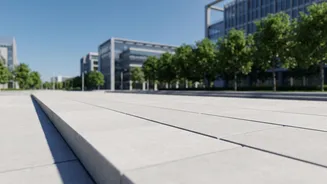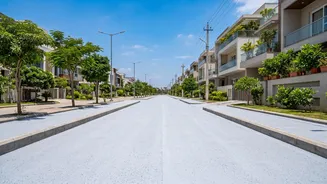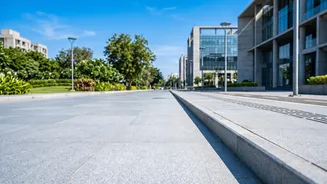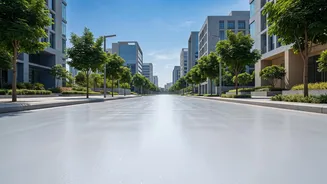






What Are Cool Pavements?
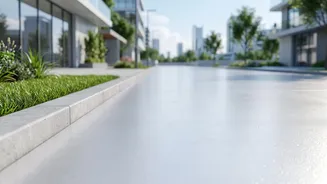
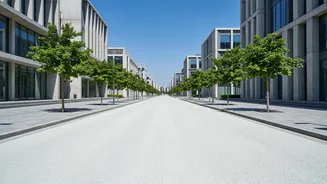
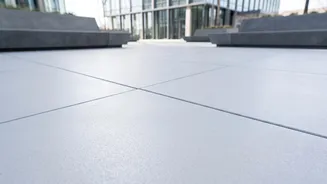
A 'cool pavement' is any road surface that is engineered to stay cooler in the sun than traditional black asphalt. While there are several methods, the most common approach involves applying a special reflective coating over existing asphalt. Think of
it like sunscreen for the street. These coatings, which can be clear or coloured, are designed to reflect a significant portion of the sun's radiation instead of absorbing it. Traditional dark pavements can absorb up to 95% of sunlight, reaching blistering surface temperatures and creating 'urban heat islands' that keep cities warmer, even at night. Cool pavements are designed to counteract this effect by simply bouncing that energy back towards the sky.
The Science of Reflection
The principle behind cool pavements is a scientific measure called albedo, which is simply the ability of a surface to reflect sunlight. A surface with a high albedo, like fresh snow, reflects a lot of sunlight and stays cool. A surface with a low albedo, like standard black asphalt, absorbs sunlight and heats up. By applying a coating with a higher albedo, the pavement's surface temperature can be significantly lowered. For example, new concrete has a solar reflectance of 30-50%, while some cool coatings can reflect about 50% of sunlight. This prevents the pavement from acting like a giant thermal battery, storing heat during the day and slowly releasing it throughout the evening and night, a process which contributes significantly to the urban heat island effect.
How Much of a Difference Does It Make?
Multiple studies and pilot projects have shown that this technology delivers on its core promise. On a hot, sunny day, conventional asphalt can reach surface temperatures as high as 65°C. In contrast, cool pavement surfaces in the same conditions have been found to be 5-8°C cooler. Some studies have recorded even more dramatic reductions. One case study in Los Angeles revealed that the coatings could lower ambient air temperatures by as much as 2°C during extreme heat events. While a few degrees might not sound like much, it can have a significant impact. Experts suggest that a city-wide temperature reduction of just 1 degree could lead to massive savings in air conditioning costs and slow the chemical reactions that produce smog.
The Downsides and Challenges
Cool pavements are not a perfect solution. One of the main concerns is that the reflected heat has to go somewhere. While the pavement itself is cooler, the redirected solar radiation can sometimes make pedestrians feel hotter. There are also concerns about glare, which could be unpleasant for pedestrians and potentially dangerous for drivers, similar to the effect of bright sun on snow. The effectiveness of the coatings can also decrease over time as they get dirty from tyre marks and dust, reducing their reflectivity. Finally, the cost and manufacturing process must be considered. While the price of the sealant itself may only be slightly more than traditional options, large-scale deployment and maintenance can be a significant investment, and some materials used have their own environmental footprint from production.
Relevance for Indian Cities
The potential for this technology in India is immense, as the country faces severe and prolonged heatwaves. India has already emerged as a champion of passive cooling strategies, such as reflective 'cool roofs', particularly in cities like Delhi and within affordable housing schemes. The 'cool corridor' concept—which combines cool pavements with trees, shading, and other measures—is seen as a highly adaptable strategy for Indian urban contexts. While research into specific 'cool pavement' pilot projects in India is emerging, with academic studies examining its potential for cities like Bhubaneswar, the focus is growing. Furthermore, institutions like IIT Jodhpur are actively researching more sustainable and cost-effective road technologies, signalling a clear move towards infrastructure that is resilient to India's climate realities.