
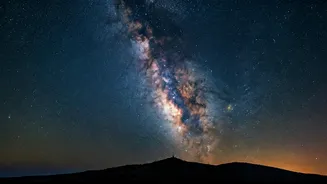



Understanding the 'Glowing Core'
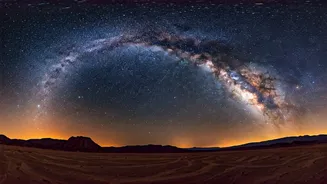
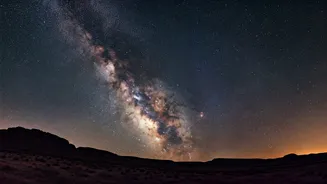
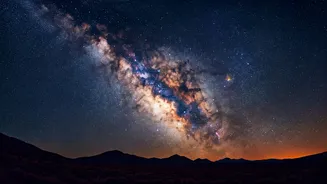
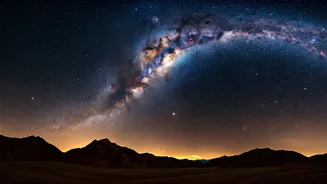
Our solar system is located in a spiral arm of the Milky Way galaxy. When we look towards the galactic centre, in the direction of the Sagittarius constellation, we're seeing the densest concentration of stars, gas, and dust. This is the 'glowing core'—a
bright, milky band that stretches across the sky. Due to rampant light pollution, over 80% of the world's population, including most of India, can no longer see it from their homes. To witness this marvel, you must travel to a 'dark sky zone', an area with minimal artificial light, where the cosmos reveals its true grandeur.
The Best Time for Galactic Views
Timing is everything. The Milky Way’s core is only visible in the Northern Hemisphere for part of the year. In India, the prime viewing season runs from March to early October. The core becomes most prominent and sits highest in the sky during the summer months of May, June, and July. The other critical factor is the moon. Plan your trip around the New Moon, when the sky is at its darkest. The week before and after the New Moon provides a good window. A bright, full moon will wash out the faint light of the galaxy, rendering it invisible even in the darkest locations.
Hanle, Ladakh: India's Official Sanctuary
For the ultimate stargazing experience, head to the Hanle Dark Sky Reserve in Ladakh. Officially designated as India's first such reserve, this high-altitude cold desert offers unparalleled clarity and darkness. At over 4,500 metres, the thin, dry atmosphere results in minimal atmospheric distortion. The area is home to the Indian Astronomical Observatory, a testament to its pristine skies. The journey to Hanle is an adventure in itself, but the reward is a view of the Milky Way so clear and detailed that it feels almost within reach. This is the gold standard for astrotourism in India.
Spiti Valley, Himachal Pradesh: A High-Altitude Haven
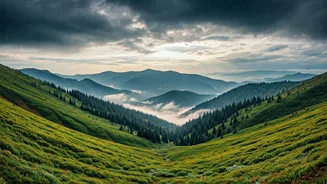
Another gem in the Himalayas, Spiti Valley is a remote, sparsely populated region that boasts some of the darkest skies in the country. Villages like Komic, Hikkim, and Langza are famous among astrophotographers and stargazers. The combination of high altitude, clear weather for most of the summer, and negligible light pollution makes it an ideal spot. You can join organised stargazing tours or simply step outside your homestay on a clear, moonless night to be humbled by the sheer number of stars and the vivid structure of the galactic core.
Rann of Kutch, Gujarat: A Salty Canvas
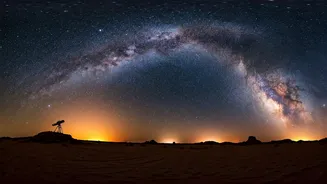
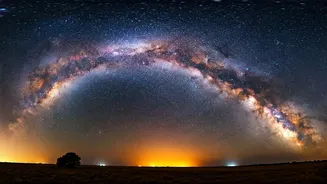
You don't always need to climb a mountain for a great view. The vast, flat expanse of the Great Rann of Kutch offers a unique stargazing experience. During the cooler months (October to March), when the salt desert is dry, the landscape provides an unobstructed 360-degree horizon. Far from major cities, the darkness here is profound. The sight of the Milky Way arching over the surreal white desert is a photographer's dream and a deeply moving experience. Aim for a spot deep inside the Rann, away from the lights of the tourist-heavy Rann Utsav.
Coorg, Karnataka: A Southern Escape
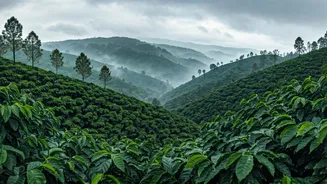
For those in South India, finding truly dark skies can be challenging due to population density. However, the Western Ghats offer pockets of darkness. The hills of Coorg (Kodagu), away from the main towns of Madikeri or Virajpet, provide a decent opportunity. Choose a remote estate or a secluded hilltop. While it may not rival the clarity of Ladakh, the experience of seeing the Milky Way emerge over the misty, coffee-covered hills is magical in its own right. It’s a more accessible option for a quick weekend getaway dedicated to the stars.
Essential Gear and Tips
You don't need expensive equipment to enjoy the view. Your eyes are the primary tool. Allow them at least 20-30 minutes to fully adapt to the darkness—avoid looking at your phone screen. Use a red torchlight, as red light doesn't spoil your night vision. For finding the Milky Way, apps like Stellarium, Star Walk, or PhotoPills are invaluable. They use your phone’s compass to show you exactly where to look. A pair of binoculars can enhance the view, revealing star clusters and nebulae within the galactic band. Finally, dress in warm layers, even in summer, as nights in these locations can get very cold.