

Venus Shines as the Evening Star
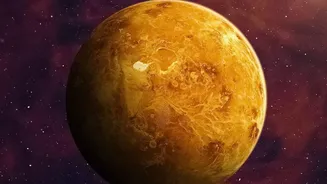
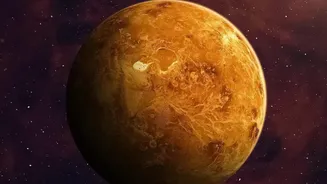
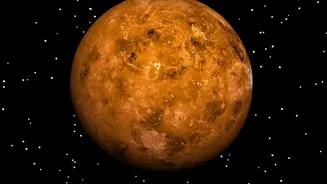
Throughout August, Venus will be the unmistakable, brilliant jewel in the western sky after sunset. You can't miss it. The planet reaches its greatest elongation—its farthest apparent distance from the sun—around August 15, making it exceptionally easy
to spot in the evening twilight. Look to the west about 45 to 90 minutes after sunset. Venus will be shining with a brilliant, steady light. Through the month, you can also watch it dance with other celestial objects. On August 16, it will form a stunning trio with the crescent Moon and the bright star Spica. As we move into late August, from the 21st to the 24th, Venus will appear very close to Spica, the brightest star in the constellation Virgo, creating a beautiful pairing that is easily visible without a telescope. This is a perfect opportunity for even the most casual observer to identify a planet and a prominent star.
The Spectacular Perseid Meteor Shower
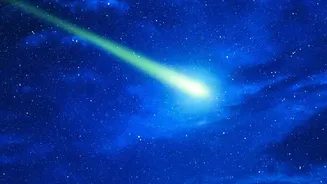
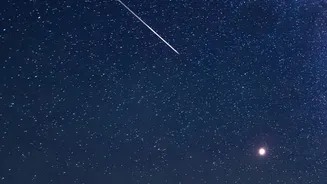
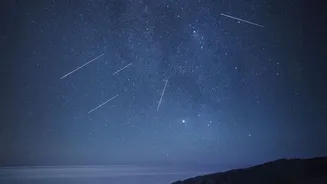
August is famous for the Perseid meteor shower, and 2026 offers a perfect opportunity to watch it. The shower is active from mid-July to late August, but its peak occurs on the night of August 12-13. This year, the timing is ideal because the peak coincides with the New Moon, meaning the sky will be completely dark, free of any moonlight to wash out the fainter meteors. Under clear, dark skies away from city lights, you could see between 50 and 100 meteors per hour. For the best show, find a comfortable spot after midnight, preferably between 2 a.m. and dawn. Lie back, let your eyes adjust for about 30 minutes, and look generally toward the northeast. While the meteors appear to radiate from the constellation Perseus, they can streak across any part of the sky.
A Full Moon and a Partial Lunar Eclipse
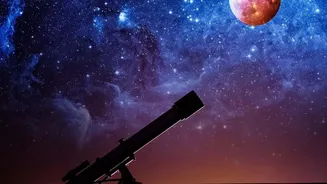
The month concludes with another major event: the full Sturgeon Moon on August 28. This full moon gets its name from the large fish that were easily caught in North American lakes during this time of year. But this isn't just any full moon. On the night of August 27-28, a deep partial lunar eclipse will occur. During this event, the Earth will pass between the sun and moon, casting its shadow on the lunar surface. At its peak, about 96% of the moon will be covered by Earth's dark umbral shadow, leaving only a thin sliver of light. This will cause the eclipsed part of the moon to take on a reddish hue, often called a "Blood Moon." Unlike a solar eclipse, a lunar eclipse is completely safe to view with the naked eye. This beautiful event will be visible across North and South America.
Other Planets on Parade
Venus isn't the only planet gracing our skies. Saturn will be visible for much of the night, rising in the east as the sun sets. While its opposition—its brightest and closest point to Earth for the year—isn't until October, late August provides excellent viewing opportunities. Around August 28-31, the nearly full moon will pass close to Saturn, making the ringed planet easy to find. Additionally, a planetary alignment will be visible before sunrise around August 12, featuring Jupiter, Mercury, Mars, Uranus, Saturn, and Neptune spread across the sky. While some of these require binoculars or a telescope, Mars and Saturn will be visible to the naked eye.
Simple Tips for Stargazing Success
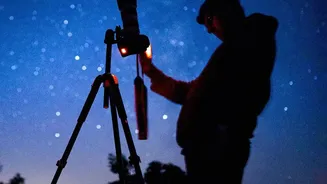
You don’t need expensive equipment to enjoy these events. The most important tool is a dark sky, so try to get away from city lights for the best experience. Give your eyes at least 20 to 30 minutes to fully adapt to the darkness; this will help you see fainter stars and meteors. Patience is key, especially when watching for meteors. Get comfortable in a reclining chair or on a blanket. While you can use stargazing apps on your phone to identify planets and constellations, be sure to use their red-light mode to preserve your night vision. Most of all, take the time to simply look up and enjoy the show.