


We all want to breathe cleaner air at home, but the advice can be confusing. Should you throw open the windows, invest in a pricey air purifier, or fill your space with houseplants? Each path has its pros and cons. Let's simplify the science.
Open Windows: The Double-Edged Sword
The simple
act of opening a window is the original air freshener. It’s a ventilation strategy, and it’s excellent for one thing in particular: reducing the buildup of indoor-generated pollutants. Cooking fumes, chemicals from cleaning products known as volatile organic compounds (VOCs), and the carbon dioxide we exhale can all accumulate in a sealed home, making the air feel stale. Opening a window flushes these out, replacing stagnant air with fresh air from outside. However, this is only a good strategy when the outdoor air is clean. If you live near a busy road, in an area with high pollen counts, or when air quality alerts are in effect for smoke or smog, opening a window invites those very pollutants inside. Fine particulate matter (PM2.5) from traffic or wildfires can easily enter and make your indoor air quality worse than when you started. So, while ventilation is crucial, it depends entirely on what’s happening outside your door.
Air Purifiers: The High-Tech Filter
Unlike opening a window, which is about ventilation, an air purifier is all about filtration. It works by pulling indoor air through a series of filters to trap pollutants before recirculating the cleaner air back into the room. The gold standard for this is the HEPA (High-Efficiency Particulate Air) filter. A true HEPA filter is certified to capture at least 99.97% of airborne particles that are 0.3 microns in size. This makes them extremely effective against common irritants like dust, pet dander, pollen, mold spores, and even the tiny PM2.5 particles found in smoke. However, a standard HEPA filter alone is not effective at removing gases, odors, or VOCs. For that, you need a purifier that also includes an activated carbon filter, which is designed specifically to trap those gaseous pollutants. Running an air purifier with the windows open can significantly reduce its efficiency, as it is forced to constantly clean an endless supply of new outdoor pollutants.
Houseplants: The Green Myth?
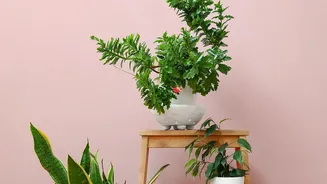
The idea that houseplants are nature's air purifiers is incredibly popular, largely thanks to a 1989 NASA study. The study showed that certain plants could indeed remove VOCs like benzene and formaldehyde from the air. The catch? These experiments were conducted in small, sealed laboratory chambers—not in a typical home or office with drafts and air exchange. More recent analysis has concluded that you would need an impossibly large number of plants to make a meaningful difference in a real-world room. Researchers estimate it could take anywhere from 10 to 1,000 plants per square meter to match the air-cleaning rate of a building's standard ventilation system. While plants are not the air-cleaning powerhouses they are often claimed to be, they do offer other benefits, such as boosting mood, reducing stress, and adding a touch of natural beauty to a space. But for removing airborne particles, their effect is negligible compared to an air purifier.
The Verdict: A Layered Strategy Is Best
So, which is the winner? The truth is, there isn't one. The best approach to clean indoor air is not a single solution but a smart, layered strategy that combines all three methods. Ventilation is not the same as filtration, and both are important. On days when the outdoor air quality is good (check your local Air Quality Index, or AQI), open your windows to ventilate your home and reduce built up CO2 and VOCs. When outdoor air is polluted with smoke, pollen, or traffic fumes, keep windows closed and rely on an air purifier with both a HEPA and a carbon filter to remove particles and gases from your indoor air. And as for houseplants? Absolutely keep them around. Enjoy them for their aesthetic and mental wellness benefits, but don't rely on them to do the heavy lifting of air purification. By understanding what each tool does best, you can create a healthier and more comfortable environment inside your home.