
The First Leg of a National Ambition
The focus is squarely on the southern part of Gujarat, with the government targeting the operational launch of the section connecting the bustling cities of Surat and Vapi by the last quarter of 2027. This strategic decision to open the corridor in phases
allows the public to experience the benefits of high-speed rail while construction continues on the more complex parts of the route, particularly in Maharashtra. Recent progress has been significant, with the successful energisation of the overhead electrical systems on the 50-km Surat-Bilimora stretch, a crucial step paving the way for trial runs. Officials have confirmed that trial runs on this segment are planned for mid-2027, following the completion of signalling work.
What is the Mumbai-Ahmedabad Corridor?
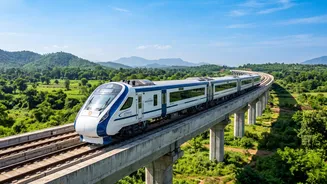
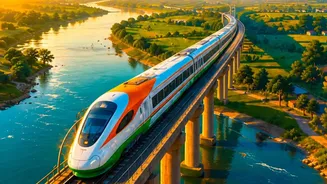
This initial section is a key part of the larger 508-kilometre Mumbai-Ahmedabad High-Speed Rail (MAHSR) corridor, a flagship infrastructure project. Once fully complete, the line will feature 12 stations, connecting Maharashtra's financial capital with Gujarat's largest city. The project is being executed by the National High Speed Rail Corporation Ltd (NHSRCL). The vast majority of the corridor, about 465 km, is elevated on viaducts to ensure an uninterrupted path, eliminating level crossings and allowing for consistent high-speed travel. The route also includes several engineering marvels, such as 21 km of tunnels, one of which is India's first undersea rail tunnel beneath Thane Creek.
Japanese Technology, Indian Execution
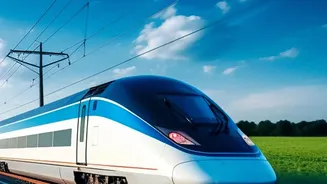
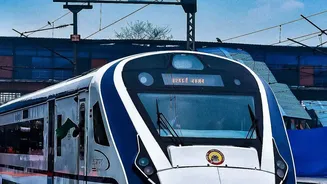
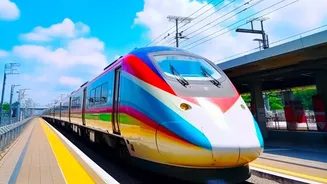
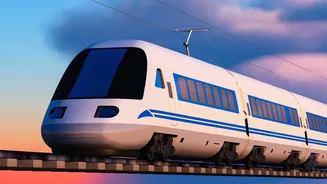
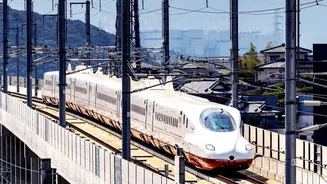
The project uses Japan's world-renowned Shinkansen technology, specifically the E5 series trains, known for an impeccable safety record. These trains are designed for an operational speed of 320 km/h and boast advanced features for passenger comfort and safety. This includes a body-tilting system to counteract centrifugal force on curves and a distinctive long-nose design that mitigates the 'tunnel boom' sound effect. While the initial trains will be based on Japanese models, they will be adapted for Indian conditions, with features like extra-spacious toilets and multi-purpose rooms. The eventual goal is to manufacture trainsets indigenously.
A New Era of Travel
The impact on travel time will be transformative. The entire Mumbai to Ahmedabad journey, which currently takes seven to eight hours, is expected to be reduced to just under three hours with limited stops, and around two hours for the fastest service. For the Surat-Vapi section, the a journey of a couple of hours will be reduced to minutes. This leap in connectivity promises not just convenience for passengers but a significant boost for business and tourism. The 'morning out, evening back' scenario becomes a viable option for professionals and traders between these major economic hubs.
Economic Corridors and Future Growth
Beyond speed, the bullet train is envisioned as an engine for economic growth. Officials believe it will unify the cities along the route—including Surat, Vapi, Vadodara, and Anand—into a single, large economic zone. This integration is expected to stimulate industrialisation, attract private investment around the stations, and create new business opportunities. The construction phase itself has been a major source of employment. The success of the MAHSR project is also seen as a blueprint for India's wider high-speed rail ambitions, with seven other corridors proposed in the 2026-27 Union Budget, covering nearly 4,000 km.