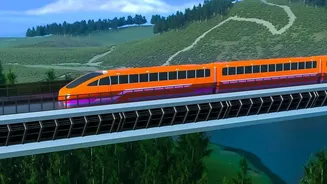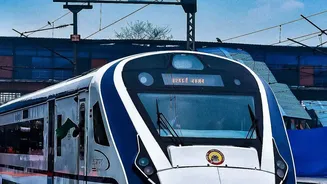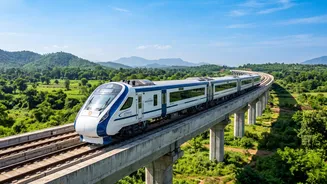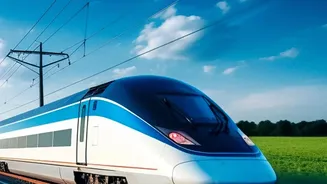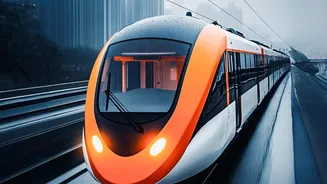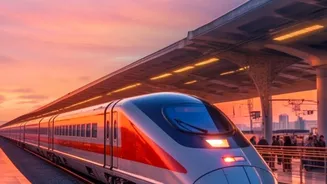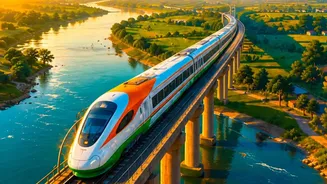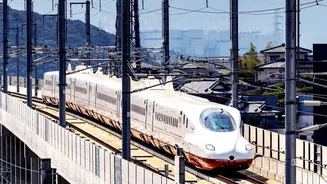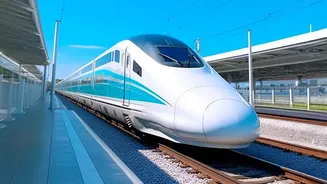






India's long-held dream of a high-speed 'bullet train' is shifting from blueprint to reality. The nation is set to launch its first-ever high-speed rail service on the Surat-Vapi route in Gujarat, a major milestone for the ambitious project.
The First Journey
The inaugural
run of India's first bullet train is slated for the last quarter of 2027 on the approximately 100-kilometre stretch between Surat and Vapi in Gujarat. This section is part of the larger 508-kilometre Mumbai-Ahmedabad High-Speed Rail (MAHSR) corridor. Railway Minister Ashwini Vaishnaw has confirmed this timeline, highlighting that this initial phase will pave the way for a phased opening of the entire line. The decision to operationalise the Gujarat section first is strategic, as construction of elevated tracks, stations, and related infrastructure has progressed more rapidly in this region. Recently, a critical 50-km segment between Surat and Bilimora was successfully 'energised', meaning the overhead electrical systems that will power the trains are now active, readying the line for trial runs.
A New Era of Speed and Technology
The bullet train promises a paradigm shift in Indian travel. The service will initially use the indigenously developed B28 trainset, designed for speeds up to 280 kmph. This 'Made-in-India' train is being manufactured by BEML and the Integral Coach Factory (ICF), with track trials expected by mid-2027. The project employs Japanese Shinkansen technology, renowned for its safety and efficiency over six decades. Key features include an advanced 2 x 25 kV overhead traction system for power and a ballast-less track system (J-Slab) being used for the first time in India. To ensure safety at high speeds, the corridor incorporates systems for detecting earthquakes early and monitoring wind and rainfall.
Building the Corridor Brick by Brick
The scale of the MAHSR project is immense. As of late 2026, substantial progress has been made, with hundreds of kilometres of piers and viaducts (elevated track structures) already constructed. Eight stations, including Surat and Vapi, have completed civil construction and are now undergoing architectural finishing. The full corridor will feature 12 stations connecting the economic hubs of Maharashtra and Gujarat. One of the project's most remarkable engineering feats is a 7-kilometre undersea rail tunnel at Thane Creek, the first of its kind in India. While construction faced initial delays due to land acquisition challenges in Maharashtra and the COVID-19 pandemic, work has gained significant momentum since 2021.
Economic Engine and Future Connectivity
The bullet train is more than just a transportation project; it is a catalyst for economic growth. By drastically reducing travel time—the full Mumbai-Ahmedabad journey will take just under two hours compared to the current eight by road—it will forge stronger economic links between two of India's most productive states. The project is expected to create over 90,000 jobs during its construction phase. Furthermore, it is transforming real estate dynamics in emerging cities like Vapi, which are becoming more attractive residential destinations due to their newfound high-speed connectivity. The success of this corridor is seen as a blueprint for future high-speed routes, with several other corridors announced to connect major Indian cities and fuel regional development.