








Whispers From the Deep
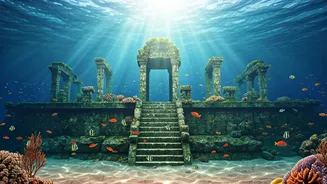
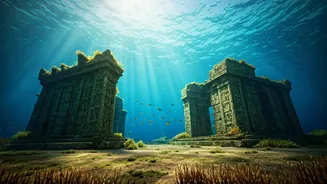
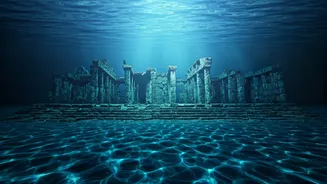
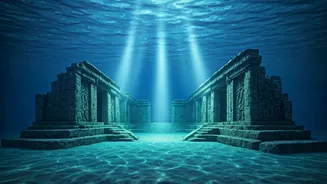
The legend of the Seven Pagodas of Mahabalipuram, where six of seven magnificent temples were said to have been consumed by the sea, is one of India's most enduring coastal myths. Today, that legend is being revisited with scientific rigour. The Archaeological
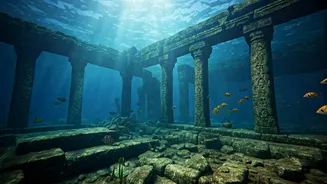
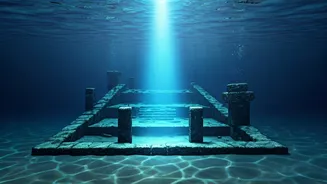
Survey of India (ASI) has resumed underwater explorations off the Mahabalipuram coast after a gap of nearly two decades. This new phase of fieldwork aims to solve the riddle of the submerged structures, believed to belong to the great Pallava dynasty of the 7th and 8th centuries. Early explorations in the 2000s, especially after the 2004 tsunami temporarily exposed hidden structures, confirmed the presence of man-made walls and scattered architectural elements under the water. Eyewitnesses during the tsunami reported seeing a long row of large rocks emerge from the receded waters, which later surveys confirmed was a wall nearly 70 metres long. The current mission builds on these tantalizing clues, promising a clearer picture of this submerged world.
The Science of Seeing With Sound
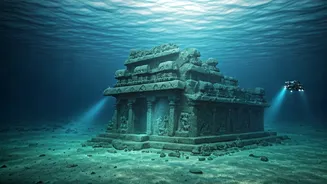
This renewed push into the depths is powered by significant technological advancements. While earlier searches in the early 2000s by the ASI and the Indian Navy also used sonar, the current mission is equipped with more sophisticated tools. The star of the new operation is a Remotely Operated Vehicle (ROV). Think of it as a high-tech underwater drone that can venture into challenging marine environments safely. The ROV provides high-resolution imagery and video footage without physically disturbing the delicate, centuries-old remains on the seabed. This is a major leap from previous methods that relied more heavily on divers working in difficult conditions. This technology allows archaeologists to create precise maps of the submerged area, identifying structures that are otherwise obscured by sand, sediment, and thick aquatic growth. These modern tools are essential for distinguishing between natural rock formations and the handiwork of Pallava-era builders.
A Legend Submerged in Time
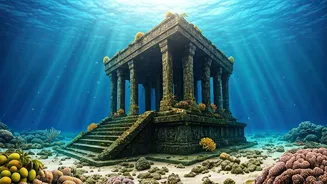
The story of the Seven Pagodas has been passed down through generations of local fishermen and was noted by early European travellers like Marco Polo. The legend tells of a magnificent city so beautiful that the gods grew jealous and sent a great flood to submerge it, leaving only the Shore Temple standing. For a long time, this was dismissed as mere folklore. However, the 2004 tsunami dramatically changed that perception. As the sea pulled back, it not only revealed submerged walls but also left behind previously buried statues, including a large stone lion, on the beach. These discoveries ignited widespread interest and prompted joint explorations by the ASI and National Institute of Oceanography (NIO). These efforts found submerged walls, remains of other temples, and even a cave temple within 500 meters of the shore, suggesting a large temple complex once existed.
Separating Myth from Masonry
The findings so far are extraordinary, but archaeologists remain cautious. The evidence points to a significant, sprawling complex that was lost to the sea over time. Explorations have identified submerged walls, dressed stone blocks with tell-tale joinery marks, and platforms that strongly suggest temple construction. Some structures are found in water as deep as 9 meters. Radiocarbon dating of marine growth on these ruins suggests submergence happened in different phases, with some structures going under as early as the 1st century CE and others much later, possibly around the 14th century. This indicates that the loss of the city was not a single cataclysmic event but a gradual process, likely due to a combination of tsunamis, coastal erosion, and rising sea levels. While these ruins confirm a major ancient settlement was submerged, directly linking them to the 'six pagodas' of legend requires more definitive proof.
The Next Chapter for Mahabalipuram
The current ASI mission, led by its Underwater Archaeology Wing, marks a new chapter in this historical detective story. The goal is not just to find ruins, but to understand the context: Who built these structures? Where was the ancient port of Mahabalipuram located? And what can these ruins tell us about India's ancient maritime history? Union Minister of Culture and Tourism, Gajendra Singh Shekhawat, has praised the mission for its role in bringing India's hidden heritage to light. As the ROV continues its methodical scan of the seabed, each new image and data point helps piece together a puzzle that is over a thousand years old. The work is slow and painstaking, but it holds the promise of transforming a beloved legend into documented history, finally revealing the full story of the magnificent city that once stood on the shores of the Bay of Bengal.