

The Powerhouse in the Tiny Seed
Flaxseeds, known in India as 'Alsi', are one of the richest plant-based sources of alpha-linolenic acid (ALA), a type of Omega-3 fatty acid. These tiny seeds are nutritional powerhouses, packed not only with healthy fats but also with fibre and lignans,
which are powerful antioxidants. For centuries, they have been used in traditional medicine, but their modern acclaim comes from this impressive Omega-3 profile, which is particularly valuable for vegetarian and vegan diets that don't include fatty fish.
Why Your Body Needs Omega-3
Omega-3 fatty acids are essential fats, meaning the body cannot produce them on its own and must get them from food. They are crucial for maintaining heart health, reducing inflammation, supporting brain function, and promoting overall well-being. While fish provide the Omega-3s EPA and DHA, plant sources like flaxseeds offer ALA. Your body can convert some ALA into EPA and DHA, but the conversion rate is limited. Nonetheless, a consistent intake of ALA from sources like flaxseed is strongly associated with a lower risk of cardiovascular disease and contributes significantly to your daily needs.
Ground vs. Whole: The Secret to Absorption
Here is the most critical tip: you must use ground flaxseeds. The hard outer shell of a whole flaxseed is difficult for the human digestive system to break down. If you eat them whole, they are likely to pass through your body undigested, and you will miss out on the Omega-3s and other nutrients locked inside. Grinding the seeds just before use is ideal, as the healthy fats can start to oxidise once exposed to air. You can easily grind a small batch in a coffee grinder or mixer and store it in an airtight container in the refrigerator for up to a week to maintain freshness and potency.
The Perfect Dal-Flaxseed Method
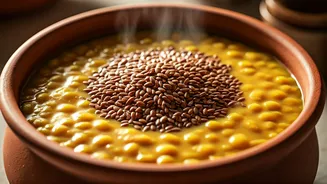
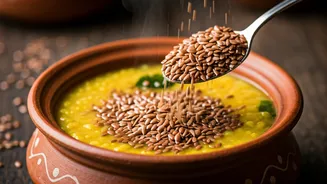
Integrating flaxseeds into your dal is incredibly simple and won't drastically alter its beloved flavour or texture. The best method is to stir in the ground flaxseed powder at the very end of the cooking process, just before serving. A good rule of thumb is to add one to two tablespoons of ground flaxseed per large bowl or serving of dal. Simply take your dal off the heat, stir in the powder until it dissolves, and then proceed with your final tadka if you wish. Adding it at the end helps preserve the delicate Omega-3s, as prolonged high heat can degrade them. The ground seeds act as a slight thickening agent, adding a subtle, nutty richness without overpowering the taste of the lentils and spices.
Beyond Dal: Other Simple Ideas
This simple health hack isn't limited to just dal. You can apply the same principle to a variety of other everyday Indian dishes. Try mixing a tablespoon of ground flaxseed into the dough for your rotis or parathas. Sprinkle it over your morning bowl of poha, upma, or yoghurt. Blend it into chutneys, raitas, or even the batter for cheelas and dosas. Its mild, nutty flavour is versatile enough to complement both savoury and slightly sweet preparations, making it one of an easiest and most affordable 'superfoods' to incorporate into your diet.