




The Science of Brown Sugar
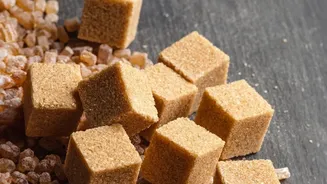
To understand why brown sugar acts this way, we need to look at what makes it unique. Brown sugar is simply white granulated sugar combined with molasses. This molasses coating is what gives it its distinct colour, flavour, and moist, pliable texture.
However, the moisture in that molasses is also the source of its two most common problems. When exposed to air, the moisture evaporates, causing the sugar crystals to dry out and clump together into a hard mass. Conversely, in a very humid environment, the sugar can absorb excess moisture, leading to a clumpy, syrupy consistency.
Diagnosing the Problem: Hard vs. Wet
First, assess the situation. Is your brown sugar hard as a rock? This means it has dried out. You won't be able to scoop or measure it, and small chunks will be difficult to break apart with your fingers. This is the most common issue bakers face. The other problem is excess moisture. If your sugar feels overly damp, sticky, or has developed a syrupy layer, it has absorbed too much water from its environment. While less common than hardening, it can still make accurate measuring difficult and affect the outcome of your recipes.
Quick Fixes for Hardened Sugar
When you need soft brown sugar right now, your microwave is your best friend. Place the hardened lump in a microwave-safe bowl. Cover the bowl with a damp paper towel and microwave on high for 20-second intervals, checking and breaking up the sugar with a fork between each burst. Be careful not to overheat, as this can melt the sugar, which will harden again as it cools. Another option is brute force: place the sugar in a sturdy, sealed plastic bag and give it a few firm whacks with a rolling pin or meat mallet to break up the solid mass. You can also use a food processor to pulse the hardened sugar back into granules, though this can be loud and tough on your machine.
Overnight Solutions for Softening
If you have a little more time, you can rehydrate your brown sugar slowly and effectively. The most popular method involves adding a moisture source to an airtight container with the sugar. A slice of fresh bread is a classic choice; the sugar will absorb moisture from the bread, leaving it soft in about 12 to 24 hours. A few apple slices work just as well, but be sure to remove them after a day to prevent mould. For a dedicated, long-term solution, consider a terracotta brown sugar saver. These small, reusable discs are soaked in water and then placed in your sugar container, where they slowly release moisture to keep the sugar perfectly soft.
Handling Overly Moist Sugar
If your brown sugar has become too wet and clumpy, the solution is the opposite of softening: you need to gently dry it out. Spread the damp sugar in a thin layer on a baking sheet. Preheat your oven to its lowest temperature, around 150-200°F (or 65-95°C), and then turn it off. Place the baking sheet in the warm oven for about 15-20 minutes. This gentle heat will help evaporate the excess moisture without melting the sugar. Keep a close eye on it, and remove it once it has returned to a more manageable, crumbly texture. Let it cool completely before returning it to its container.
Prevention Is the Best Strategy
The secret to avoiding these problems altogether is proper storage. Air is the enemy of fresh brown sugar. Once opened, transfer your brown sugar out of its original bag and into a truly airtight container. Glass jars with locking lids or high-quality plastic containers are excellent choices. For extra protection, you can add a marshmallow or two to the container; they act like the bread slice, providing a tiny amount of moisture to maintain the perfect texture. Storing the airtight container in a cool, dark pantry is ideal. Avoid the refrigerator, as the environment can be too dry.