

Beyond the Roving Pioneers
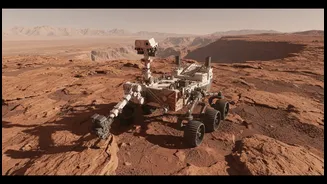
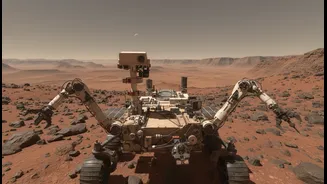
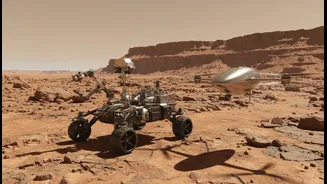
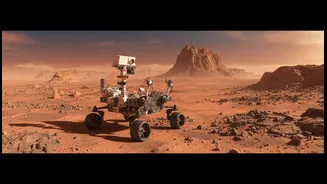
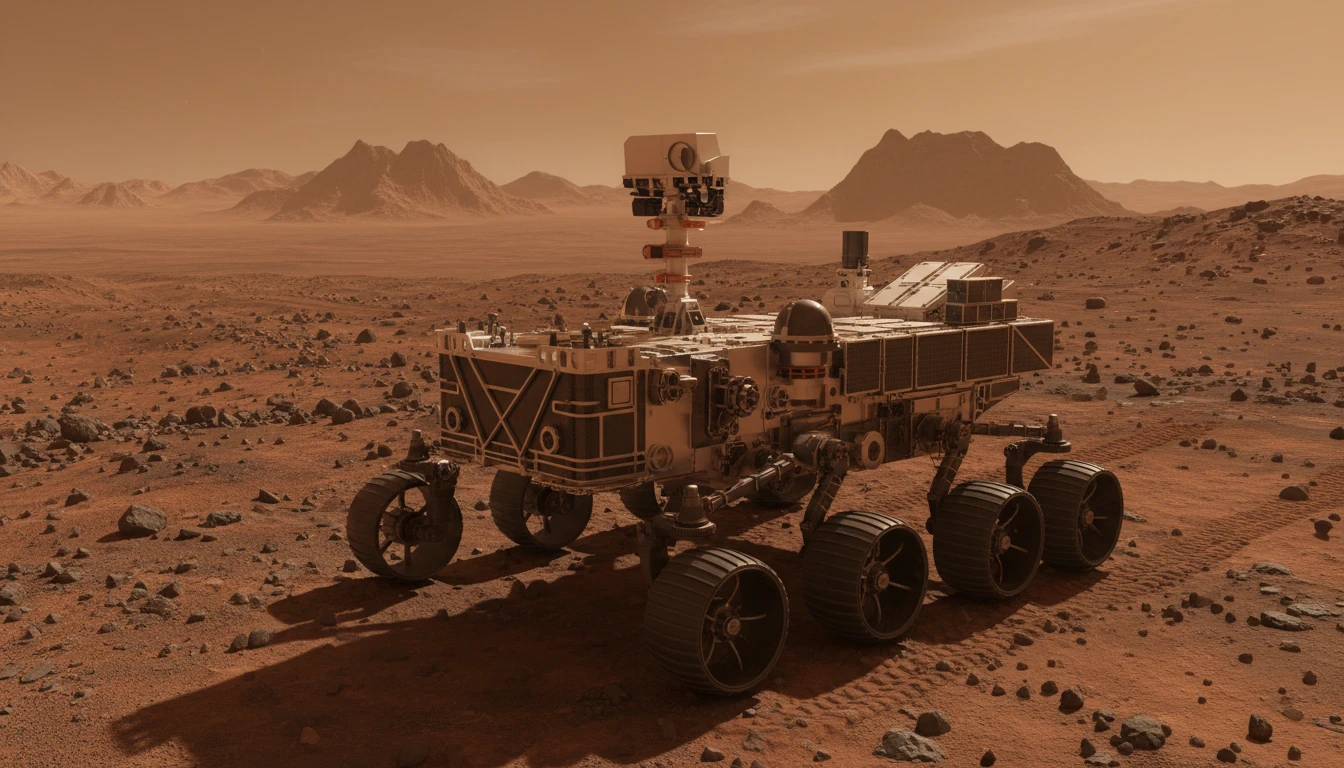
For decades, NASA has successfully placed robotic geologists on Mars. From the microwave-sized Sojourner in 1997 to the SUV-sized Perseverance rover currently exploring Jezero Crater, these machines have revolutionized our understanding of the Martian
environment. Perseverance and its predecessor, Curiosity, have traversed miles of terrain, analyzed rocks, and sent back breathtaking images. The Ingenuity helicopter even proved that powered flight is possible in Mars's thin atmosphere. However, these remarkable rovers have their limitations. They are slow, methodical, and restricted to relatively flat, safe terrain. The most scientifically tantalizing locations on Mars—steep crater walls, deep canyons, and potential cave entrances known as lava tubes—remain frustratingly out of reach. To take the next great leap in Martian exploration, NASA needs robots that can go where no rover has gone before.
The Martian Obstacle Course
Mars presents a unique and brutal set of challenges for any machine. The fine, abrasive Martian dust, or regolith, is a notorious menace. It can clog moving parts and cover solar panels, as it did with the Opportunity rover, ultimately degrading its power source. Extreme temperature swings, which can plummet to -150°C, demand advanced thermal management systems to protect sensitive electronics. Beyond the environment, a fundamental challenge is autonomy. The communication delay between Earth and Mars can be up to 20 minutes each way, making real-time control impossible. Current rovers have a degree of autonomy for avoiding immediate hazards, but future robots will need to make complex decisions on their own, navigating vast distances and conducting science without constant human oversight. This is a huge leap from simply avoiding a rock to independently identifying a scientifically interesting target and deciding how best to analyze it.
Designing the Next Generation
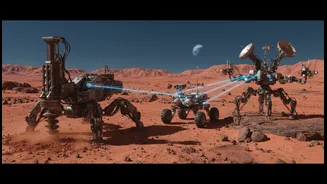
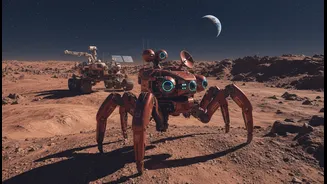
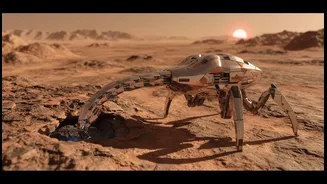
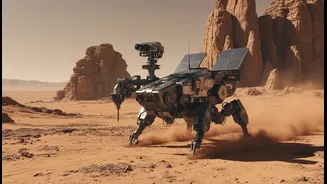
To meet these challenges, NASA and its partners are rethinking what a planetary explorer looks like. The agency recently selected seven private companies for its STRIDE initiative, aimed at developing innovative robotic mobility systems. Instead of relying solely on six-wheeled designs, engineers are experimenting with a variety of new forms. Prototypes like ERNEST (Exploration Rover for Navigating Extreme Sloped Terrain) feature four wheels and an active suspension system that allows them to lift wheels independently to clamber over obstacles that would stop Perseverance in its tracks. Other concepts draw inspiration from nature. Legged robots, sometimes called dog-bots, offer greater stability on uneven ground, while climbing robots like the LEMUR prototype were designed to scale rock walls using micro-grippers. There is also significant research into swarms of smaller, cooperative robots that could spread out to cover more ground or work together on construction tasks.
Smarter, Faster, and More Autonomous
Advanced mobility is only half the battle. The true revolution will come from artificial intelligence. Future Mars robots must be able to think for themselves. This means using AI to analyze terrain, plan long-distance routes, and manage their own power and health without intervention. The ERNEST rover, for example, recently traveled 26 kilometers in the California desert with minimal human input, demonstrating a level of autonomy far beyond current Mars rovers. This enhanced intelligence will allow robots to travel faster and farther. While Perseverance moves at a crawl, ERNEST has been tested at speeds up to 1 kph, an order of magnitude faster. This capability will be crucial for precursor missions that will scout landing sites and deploy infrastructure like solar arrays before the first human explorers arrive.
Paving the Way for Humans
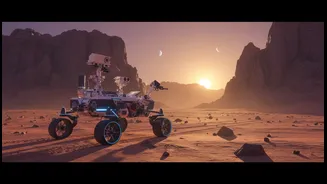
Ultimately, these advanced robots are not just about better science; they are about preparing for humanity's arrival on Mars. NASA's plans for sending astronauts to the Red Planet rely on robotic precursors to do the dangerous and dirty work first. Robots will be tasked with everything from building habitats and landing pads to deploying power systems and scouting for resources like water ice. Through programs like the Lunabotics Challenge, NASA is already engaging the next generation of engineers to solve these complex construction problems. By developing robots that can handle the toughest challenges Mars can throw at them, NASA is not only extending our reach across the solar system but also laying the essential groundwork for the day humans walk on another planet.