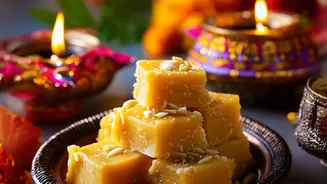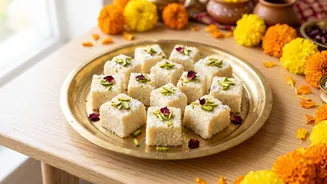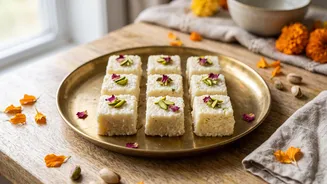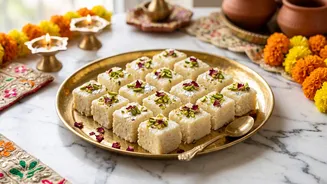





As Diwali approaches, the air fills with joy and the sweet aroma of festive treats. Making mithai at home adds a personal touch to your celebrations. This simple Kalakand recipe is your perfect shortcut to a delicious, homemade sweet platter.
An Introduction to Kalakand
Kalakand
is a beloved Indian milk cake, cherished for its unique texture and delicate sweetness. Originating from Alwar in Rajasthan, this sweet is a star on festive occasions. Unlike a smooth, dense barfi, Kalakand is celebrated for its moist, juicy, and grainy consistency, often described as 'danedaar' in Hindi. The traditional method involves hours of reducing and stirring milk, but this modern, simplified version delivers the same delightful results with much less effort, making it perfect for busy festive preparations. It uses paneer and condensed milk as a shortcut, coming together in under 30 minutes of active cooking time.
Gather Your Simple Ingredients
This quick recipe relies on a few key ingredients. For the best results, use fresh, high-quality components. You will need:
Paneer: 400 grams. You can use homemade or store-bought paneer. If using store-bought, ensure it's fresh and soft. Grate it or crumble it finely to achieve the signature grainy texture. Soaking a store-bought block in warm water for 15-20 minutes can help soften it before crumbling.
Sweetened Condensed Milk: One 400g tin. This is the secret to the quick cooking time and creamy consistency.
Cardamom Powder (Elaichi): 1 teaspoon. Freshly ground cardamom offers the best aroma and flavour.
Optional Flavourings: 1 teaspoon of rose water or a few strands of saffron can be added for an extra layer of fragrance.
* Garnish: 2-3 tablespoons of chopped nuts, such as pistachios and almonds.
Step-by-Step Cooking Instructions
First, prepare a tray or a plate by greasing it lightly with ghee and lining it with parchment paper. This will prevent the Kalakand from sticking and make it easy to remove. In a heavy-bottomed, nonstick pan, combine the crumbled paneer and the sweetened condensed milk. Turn the heat to low or medium-low and begin to cook, stirring continuously. Initially, the mixture will become runny as the condensed milk heats up. Continue to stir frequently to prevent it from sticking to the bottom of the pan and burning. After about 8–15 minutes, the mixture will start to thicken and pull away from the sides of the pan, forming a soft, moist mass. This is the crucial stage; do not overcook it, or the Kalakand will become dry and hard. The final consistency should be thick but still visibly moist and juicy. Turn off the heat and stir in the cardamom powder and any other optional flavourings like rose water.
Setting, Garnishing, and Serving
Immediately transfer the hot mixture to your prepared tray. Use a spatula to spread it evenly into a layer about half to three–quarters of an inch thick. Sprinkle the chopped pistachios and almonds evenly over the top. Gently press the nuts down with the back of a spoon so they adhere to the surface of the sweet. Let the Kalakand cool to room temperature first. Then, refrigerate it for at least 3 to 4 hours, or until it is firm enough to cut cleanly. Chilling is essential for it to set properly. Once set, slice it into squares or diamonds. You can serve Kalakand chilled directly from the refrigerator or at room temperature.
Tips and Storage
For the perfect Kalakand, always cook on low to medium–low heat and stir constantly. Using a heavy–bottomed or nonstick pan is highly recommended to prevent the milk solids from burning. The most common mistake is overcooking; the moment the mixture gathers into a mass but remains moist, it's done. As a milk–based sweet, Kalakand is perishable. It should be stored in an airtight container in the refrigerator. It will stay fresh for about 4 to 6 days when refrigerated. For longer storage, you can also freeze Kalakand for up to a month by wrapping individual pieces and placing them in a freezer–safe container.