



Sailing on Beams of Sunlight
Imagine a boat on the ocean, its sails catching the wind to push it forward. A solar sail works on a similar principle, but the 'wind' is sunlight itself. Light is made of particles called photons which, despite having no mass, carry momentum. When billions
of these photons bounce off a large, reflective, and ultra-thin sail, they transfer their momentum, giving the spacecraft a tiny but continuous push. Over time, this constant acceleration can propel a craft to incredible speeds without using a single drop of rocket fuel. This eliminates the need for heavy, bulky propellant tanks, allowing for lighter, cheaper, and longer-duration missions. Early pioneers of this technology, like Japan's IKAROS mission and The Planetary Society's LightSail 2, proved that controlled solar sailing was possible.
The New Generation of Sails
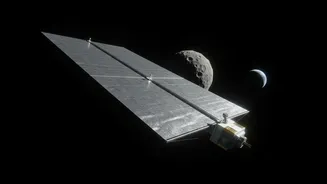
The latest leap forward comes from NASA's Advanced Composite Solar Sail System, or ACS3. Launched in April 2024, ACS3 is a technology demonstrator designed to test new materials and deployment systems. Its key innovation lies in its booms—the spars that extend to hold the sail open. Instead of heavier metal, ACS3 uses lightweight, stiff carbon fiber composite booms that can be packed into a tiny space (the whole spacecraft is about the size of a microwave oven) before unfurling a sail roughly the size of a small apartment. Successfully deploying these advanced booms is a critical step, proving that we can build the large, stable structures needed for more ambitious future missions. This technology could enable sails up to 500 square meters, and future versions may reach 2,000 square meters.
A Breakthrough in Steering and Speed
Propulsion is only half the battle; navigation is the other. Steering a craft propelled by a constant, gentle push requires incredibly precise control systems. A major part of the ACS3 mission and related research is to refine these guidance and navigation techniques. By slightly changing the angle of the sail relative to the sun, operators can alter the craft's trajectory, much like a sailor trimming their sails. Another exciting concept being explored is 'extreme solar sailing'. This involves performing a 'slingshot' maneuver close to the sun, using the intense solar radiation pressure to accelerate lightweight probes to immense speeds, potentially over 300 km/s. This would reduce a trip to the outer planets from years to mere months.
Unlocking New Destinations
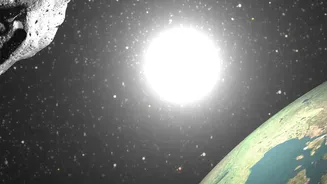
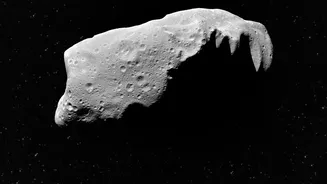
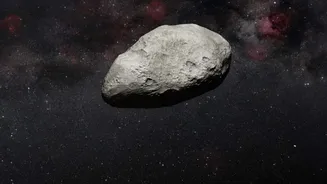
This technology doesn't just make existing missions cheaper; it makes entirely new ones possible. For example, solar sails are ideal for missions that need to 'hover' in unusual orbits that are impossible with conventional rockets, such as maintaining a fixed position to provide early warnings of solar storms. They open up the possibility of sending swarms of tiny, 10-gram microprobes to explore thousands of near-Earth asteroids, collecting data at a fraction of the cost of a single large mission. Furthermore, this continuous, low-thrust propulsion is one of the few technologies currently feasible for sending probes on the long journey into interstellar space, far beyond our solar system. Concepts for an Interstellar Probe using a massive solar sail aim to reach 200 AU (astronomical units) in just 15 years—five times faster than the Voyager spacecraft.