


The Salt-Powered Solution
At the heart of this revolution is the sodium-ion battery. Instead of relying on lithium, which is relatively rare and expensive, these batteries use sodium—the same element found in common table salt. Sodium is about a thousand times more abundant in the Earth's
crust than lithium, which dramatically lowers the cost of raw materials and reduces dependence on complex global supply chains that are often subject to geopolitical tension. This fundamental advantage in material cost and availability is the primary driver behind the push for sodium-ion technology as the key to unlocking truly budget-friendly electric vehicles.
Beyond the Lithium Bottleneck
For years, the EV industry has been dominated by lithium-ion batteries, particularly chemistries like Lithium Iron Phosphate (LFP) and Nickel Manganese Cobalt (NMC). While effective, their reliance on lithium, cobalt, and graphite has created significant challenges. Prices for these minerals can be volatile, and mining is concentrated in a few countries, creating supply chain risks. China, for instance, dominates the processing of these materials. Sodium-ion technology offers a strategic alternative, allowing countries like India to build a more self-reliant battery ecosystem from the ground up, leveraging domestic chemical manufacturing capabilities and reducing import dependency.
Price vs. Performance: The Trade-Offs
So, what's the catch? Historically, it has been energy density. Sodium ions are larger and heavier than lithium ions, which means sodium-ion batteries have traditionally stored less energy for their size and weight. This translates to a shorter driving range compared to premium lithium-ion EVs. However, recent advancements have closed this gap significantly. Leading manufacturers like CATL have developed sodium-ion cells with energy densities approaching that of mainstream LFP batteries, enabling ranges of over 400 km. Furthermore, sodium-ion batteries have some key performance advantages. They perform exceptionally well in cold weather, retaining over 90% of their capacity at temperatures where lithium-ion performance degrades significantly. They are also considered safer and more stable under extreme conditions.
Who Is Using Them Today?
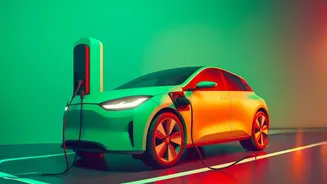
This is no longer a laboratory concept. The revolution is already hitting the roads. In early 2026, automakers CHANGAN and CATL unveiled what they called the world's first mass-production passenger EV equipped with a sodium-ion battery, with market launch planned for mid-2026. This move signals a major shift, proving the technology is ready for mainstream consumer vehicles. Several other major players, including BYD, are also heavily invested, with plans for large-scale production facilities. While the initial applications are focused on smaller, city-focused EVs and two-wheelers where extreme range is less critical, the technology is expected to expand rapidly as it matures. Some manufacturers are even developing hybrid packs that combine both lithium-ion and sodium-ion cells to balance cost and performance.
The Road Ahead for India
For India, sodium-ion technology presents a monumental opportunity. The Indian government and private sector are actively pursuing this path to energy self-sufficiency. Companies like IndiEnergy and Macsen Laboratories are pioneering domestic production of sodium-ion cells and materials, some even using agricultural waste to create key components. In August 2026, officials noted that Indian researchers had advanced the technology to a high level of maturity, suggesting commercial production could be just a few years away. This local manufacturing capability, combined with the abundance of raw materials, could make India a leader in affordable energy storage and electric mobility, creating a 'battery of India, for India, by India'.