


The Myth of 'Filling the Space'
When faced with compact living quarters, many of us feel an impulse to use every inch of wall space. The thinking goes that a collection of small art prints, photos, and decor will make a room feel personal and complete. However, this approach often backfires.
A wall scattered with many small items creates what designers call “visual noise” or clutter. Instead of a cohesive look, the eye jumps between dozens of tiny focal points, which can make a room feel chaotic, restless, and even smaller than it is. The common mistake is to match a small space with small-scale items, but this can result in a room with no clear focus.
The Power of a Single Statement Piece
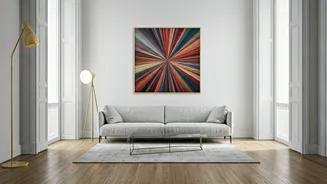
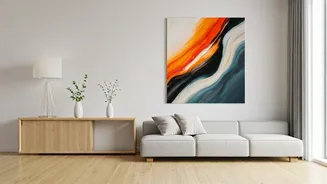
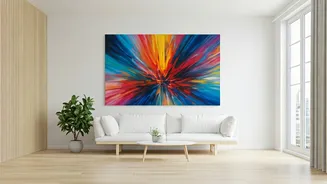
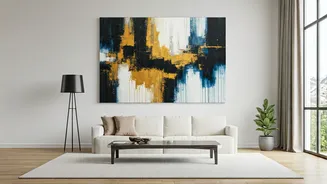
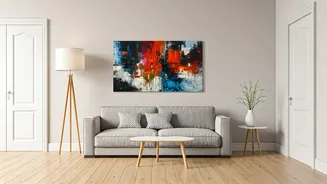
Interior design wisdom often subverts expectations. Instead of a dozen small prints, consider one large, impactful piece of art. This strategy is effective for several reasons. Firstly, a single, oversized artwork creates a clear and immediate focal point, anchoring the entire room. This commands attention and gives the space a curated, intentional feel. Secondly, a large piece can trick the eye into perceiving the room as bigger. It draws the eye upward and outward, focusing on the volume of the space rather than its limited footprint. This one bold move eliminates the clutter factor of arranging multiple frames and gives the room a sophisticated, polished look.
Finding the Right 'Visual Weight'
The term 'balance' doesn't just mean perfect symmetry. It’s about distributing 'visual weight' harmoniously. A large, dark, or vividly coloured painting has more visual weight than a small, pale sketch. To create balance with a single statement piece, placement is everything. A common rule of thumb is to hang art so it’s roughly two-thirds the width of the furniture beneath it, like a sofa or headboard. This connects the art to the furniture, creating a cohesive and anchored vignette. Hanging art at eye level also ensures it connects with the viewer and feels integrated into the room. This thoughtful positioning makes the entire wall feel purposeful rather than randomly decorated.
But What If You Love a Gallery Wall?
Embracing a 'less is more' philosophy doesn't mean you have to abandon the idea of multiple prints entirely. A gallery wall can work in a small space, but it requires discipline. The key is to create order out of the potential chaos. For a small room, limit the gallery to three to five pieces to avoid looking cluttered. Create a sense of unity by using frames that are all the same colour and style. This makes the collection read as a single, cohesive unit. Arranging the frames in a structured grid pattern, with consistent spacing between each one, also prevents the wall from feeling visually messy. This approach gives you the variety you love without overwhelming the compact space.
Choosing Art That Expands Your Space
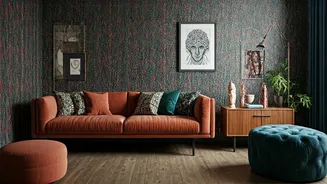
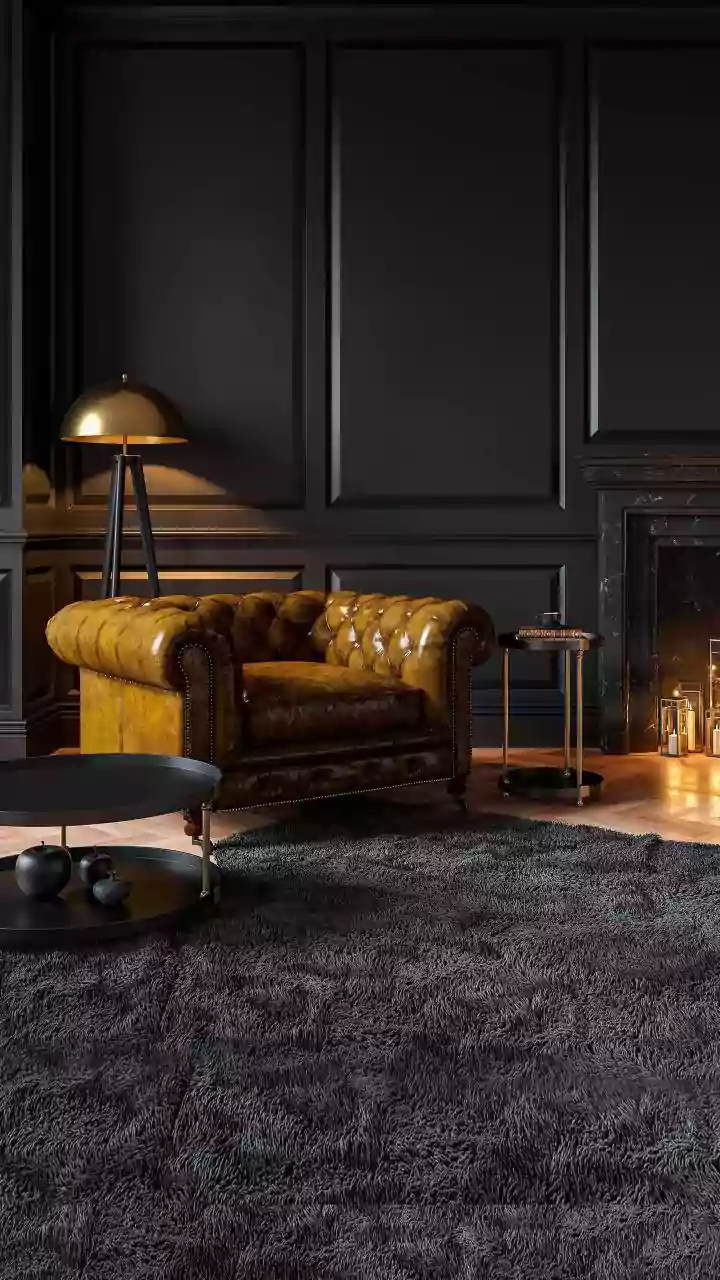
The subject matter and colour palette of your art also play a role. Artworks with light, airy colours or a lot of negative (empty) space can help a room feel more open. Think soft abstracts or serene coastal scenes. Vertical pieces can create an illusion of height, which is perfect for rooms with low ceilings, while horizontal art can make a narrow room feel wider. However, don't be afraid of darker, moodier art. In a room with good lighting, a dramatic piece can add depth and sophistication, making the walls seem to recede. Ultimately, the goal is to choose a piece that resonates with you and gives your room a single, powerful voice.